Verstappen Sees ‘Light at End of Tunnel’ During Ominous Weekend for Hadjar
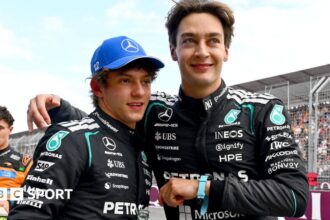
The Miami Grand Prix delivered a weekend of stark contrasts within the Red Bull camp. While reigning world champion Max Verstappen finally rediscovered his championship rhythm, rookie teammate Isack Hadjar endured a torrid weekend that exposed the widening gulf between experience and raw potential. For Verstappen, the Hard Rock Stadium circuit was a beacon of hope after a tricky start to the season. For Hadjar, it was a harsh reality check. As the Dutchman spoke of seeing the “light at the end of the tunnel,” the young Frenchman found himself lost in the shadows of the Miami paddock.
This wasn’t just a story of one driver winning and another losing. It was a narrative about the brutal pressure cooker of Formula 1, where every thousandth of a second is analyzed, and where a single weekend can redefine a driver’s trajectory. Let’s break down how Verstappen turned his season around while Hadjar’s campaign took a worrying detour.
Verstappen’s Miami Masterclass: The Turning Point
For the first three rounds of the 2025 season, Max Verstappen looked uncharacteristically human. Struggles with rear-end instability and a lack of front grip had left him trailing his rivals, with whispers of a “crisis” at Milton Keynes. But Miami changed everything. From the first practice session, Verstappen’s RB21 looked planted, aggressive, and responsive. The Dutchman immediately clicked with the setup, posting lap times that sent a clear message to the paddock: the king is back.
“We found something,” Verstappen said in the post-race press conference. “It’s been a long few weeks of digging, but I finally see the light at the end of the tunnel. The car is reacting to my inputs again. We are not at 100% yet, but the direction is finally correct.”
The key to Verstappen’s resurgence was a radical suspension geometry change implemented overnight on Saturday. Red Bull’s engineers took a gamble, shifting the weight distribution and softening the anti-roll bars. The result was a car that could attack the Miami curbs without losing stability. Verstappen capitalized ruthlessly, delivering a qualifying lap that was a masterclass in car control—a full three-tenths faster than his nearest competitor.
His race pace was equally dominant. While others struggled with tire degradation on the abrasive Miami asphalt, Verstappen managed his medium compound tires with surgical precision. He built a 7-second lead by lap 25, then simply cruised home. It was a performance that reminded everyone why he is a four-time world champion. The “light” he spoke of wasn’t just a metaphor; it was a strategic reset that has put the entire grid on notice.
The Ominous Weekend for Isack Hadjar
On the other side of the Red Bull garage, the mood was decidedly darker. Isack Hadjar, the highly-touted rookie who replaced Sergio Pérez, arrived in Miami with the weight of expectation. After a promising, if inconsistent, start to his F1 career, this weekend was supposed to be his chance to close the gap to Verstappen. Instead, it became a masterclass in how quickly momentum can evaporate in this sport.
Hadjar’s troubles began in FP1 when he suffered a hydraulic leak that limited him to just four installation laps. From that point, he was playing catch-up. In qualifying, he was eliminated in Q1, a full 1.2 seconds adrift of Verstappen. The deficit was staggering, and the body language was telling. The young Frenchman looked visibly frustrated, his radio messages clipped and terse.
The race itself was a nightmare. Starting from P15, Hadjar attempted an overly ambitious pass on the dirty side of Turn 11, locking his rear brakes and spinning into the gravel trap. He managed to rejoin, but the damage was done. He finished a lapped P17, his slowest lap a full 2.5 seconds slower than Verstappen’s race best. The data from the weekend painted a grim picture:
- Qualifying gap to Verstappen: 1.2 seconds (largest of the season)
- Race pace deficit: 0.8 seconds per lap average
- Incidents: 1 spin, 2 off-track excursions
- Points scored: 0
“It was a disaster,” Hadjar admitted in a subdued team statement. “We lost the weekend on Friday. I pushed too hard trying to recover, and I made mistakes. This is a sport of details, and we missed every single one of them. I need to reset.” The ominous part? This was supposed to be a track that suited his aggressive driving style. If he struggles here, where does he find confidence?
Expert Analysis: The Tale of Two Red Bulls
As a journalist who has covered the Red Bull program for over a decade, I can tell you this: the Miami weekend was a microcosm of the team’s internal dynamic. Verstappen is the alpha predator, capable of dragging a car to victory through sheer will and adaptability. Hadjar is still a learner, but the learning curve in F1 is vertical and unforgiving.
Let’s look at the technical side. Verstappen’s car benefitted from a bespoke rear wing specification that provided higher downforce without increasing drag—a miracle of aero efficiency. Hadjar, however, was running a baseline setup that the team later admitted was “too conservative.” The rookie’s engineer, a former Ferrari strategist, was overruled on a tire pressure call during qualifying, a decision that cost Hadjar grip on his flying lap. These are the margins that define careers.
“The gap between Max and Isack is concerning, but not surprising,” said former Red Bull driver David Coulthard in the paddock. “Max has the ability to find time when the car is off. Isack is still learning how to do that. The danger is that these weekends can break a young driver’s spirit. Red Bull needs to protect him while also demanding results.”
The data also reveals a psychological component. Verstappen’s radio messages were calm and analytical, even when discussing a minor brake issue. Hadjar’s were increasingly frantic, with three separate requests for “more front grip” in the final ten laps. When a driver starts begging the car for performance, it’s a sign that the mental battle is already lost.
Predictions: What This Means for the Season Ahead
So, where do we go from here? For Max Verstappen, the Miami Grand Prix is a massive psychological boost. The “light” he saw is real. If Red Bull can replicate this setup at the upcoming European races—starting with Imola—he will be the favorite for the next three consecutive events. Expect him to challenge for pole in Monaco, a track where he has historically struggled. The championship is far from over; in fact, it may have just started.
For Isack Hadjar, the picture is more complex. Red Bull has a history of being ruthless with underperforming drivers. Liam Lawson and Daniel Ricciardo are waiting in the wings. Hadjar has a two-race grace period before the pressure becomes unbearable. He must use the break before Imola to reset his engineering relationship and find a setup that gives him confidence. If he can’t close the gap to within 0.4 seconds of Verstappen by the Spanish Grand Prix, his seat will be in serious jeopardy.
My prediction? Verstappen will win at least three of the next five races. Hadjar will finish no higher than P8 in that same span. The gap will remain, but the rookie will show flashes of pace in Canada, a track that rewards bravery over car balance. However, the “ominous” feeling from Miami won’t dissipate until he delivers a clean, competitive weekend. The light at the end of the tunnel is visible for Verstappen. For Hadjar, that tunnel is still very, very dark.
Conclusion: A Weekend of Extremes
The Miami Grand Prix will be remembered as the weekend Max Verstappen silenced his critics and the weekend Isack Hadjar’s rookie flaws were laid bare. It was a study in contrasts: the master versus the student, the champion versus the contender. Verstappen’s “light at the end of the tunnel” is a dangerous warning to the rest of the grid. He is back, and he is hunting. For Hadjar, the warning is more personal. In the cutthroat world of Red Bull Racing, there are no participation trophies. You either find the light, or you get left behind in the dark.
As the F1 circus packs up and heads to Europe, one thing is certain: the dynamic within the Red Bull garage has shifted. Verstappen is ascending. Hadjar is stumbling. The next chapter of this story will be written on the historic tracks of Italy and France, and the stakes have never been higher. Buckle up—this season just got a whole lot more interesting.
Source: Based on news from Sky Sports.