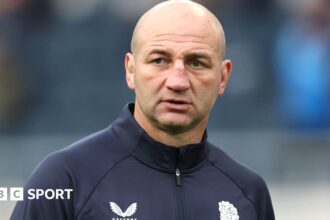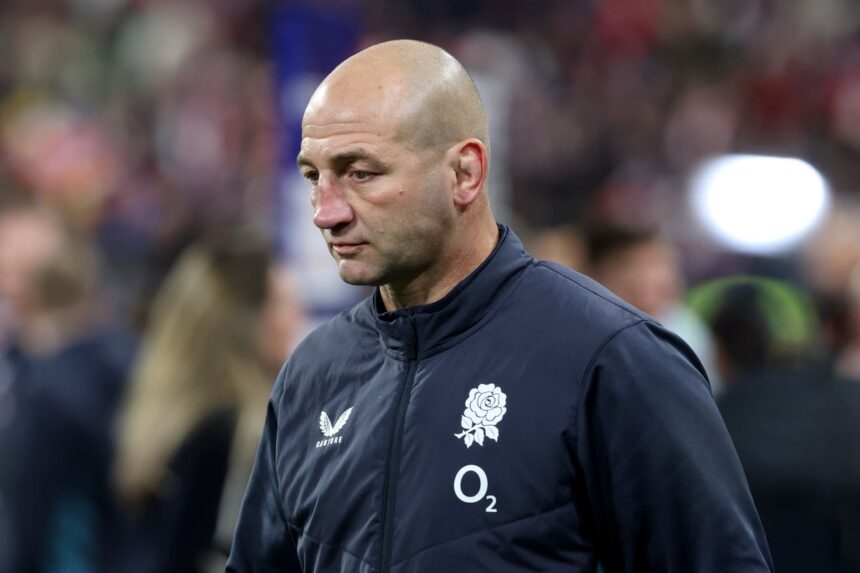
Steve Borthwick backed by RFU: The gamble that could define England’s 2027 Rugby World Cup destiny
The Rugby Football Union (RFU) has officially thrown its weight behind head coach Steve Borthwick, confirming he will lead England into the 2027 Rugby World Cup. This decision arrives on the heels of a “thorough and honest” internal review of what was statistically England’s worst-ever Six Nations campaign. For a nation that entered the tournament as title hopefuls, the final table—a solitary win, a historic first defeat to Italy, and a fifth-place finish—was a seismic shock to the system.
Yet, behind closed doors at Twickenham, the narrative is not one of panic, but of patience. RFU CEO Bill Sweeney and the board have opted for continuity over crisis. This article dissects the review’s findings, the rationale behind the backing, and what it means for England’s trajectory toward the next World Cup in Australia.
Inside the RFU review: Why Borthwick survived the axe
The RFU’s statement was careful to avoid the language of a crisis. Instead, it framed the review as a “detailed and robust process” that looked beyond the scoreboard. The key takeaway? The underperformance was not the result of a “singular failure or issue.” This is a critical distinction. It suggests the RFU does not see Borthwick as a tactical saboteur, but rather as a manager who inherited a system with systemic cracks.
The review highlighted “interconnected performance areas” that need urgent correction. These include:
- Discipline: England conceded a tournament-high number of penalties, often at critical moments.
- Execution of opportunities: The side created chances but failed to convert pressure into points.
- Making the most of key moments: Close losses to Scotland and France were defined by a failure to close out tight matches.
From a journalist’s perspective, this reads like a board that has decided the structural issues—player depth, scrum stability, and a disjointed attack—are bigger than any single coach. By backing Borthwick now, the RFU avoids the chaos of a mid-cycle sacking. They are betting that a man who rebuilt Leicester Tigers from the ashes can do the same for England, but on a tighter timeline.
Expert analysis: “The RFU is essentially saying, ‘We see the problem, but we trust the builder,’” says former England international and analyst Will Greenwood in a recent podcast. “Borthwick’s strength is detail and structure. The Six Nations exposed a lack of attacking flair, but that’s a player-execution problem as much as a coaching one. The question is whether he can evolve his game plan fast enough.”
Anatomy of a disaster: What went wrong in the Six Nations?
To understand the RFU’s gamble, we must revisit the wreckage. England entered the 2025 Six Nations on a 12-game winning run. They were ranked among the top three teams globally. By the end of the tournament, they had lost to Italy for the first time in history—a result that sent shockwaves through the sport.
The numbers are brutal:
- 1 win (against Wales, by a narrow margin).
- 4 losses, including defeats to Scotland, France, Ireland, and a humbling 20-17 reversal in Rome.
- Fifth place in the final standings, below Italy for the first time.
What went wrong? The review points to a lack of composure under pressure. England’s discipline crumbled in the second half of matches. Against Scotland, they led at half-time but folded after the break. Against France, a late penalty kick drifted wide. In Rome, they were out-fought at the breakdown by an Italian side playing with nothing to lose.
Bold truth: This was not a team that was physically outclassed. It was a team that lost its nerve. Borthwick’s game plan—built on territorial kicking and set-piece dominance—looked outdated when opponents disrupted the maul and countered with speed. The attack lacked creativity, and the backline struggled to generate line breaks.
Yet, the RFU’s statement suggests they believe these are fixable issues. “The review concluded that the underperformance was not the result of a singular failure,” the statement read. This is a coded message: we are not firing the coach because the problem is multi-layered. It includes player selection, fitness, and mental resilience.
Predictions: Can Borthwick turn the ship around before 2027?
Backing Borthwick is a high-risk, high-reward move. Here are three scenarios for England’s trajectory:
Scenario A: The slow rebuild (most likely)
Borthwick will double down on fundamentals. Expect a summer tour focused on set-piece stability and defensive organization. The attack will remain pragmatic, but with more emphasis on quick ruck ball. England will likely finish second or third in the 2026 Six Nations—a respectable improvement, but not a title. The real test will be the 2027 World Cup, where Borthwick’s system, refined over two more years, could peak. This is the RFU’s bet: steady progress over flashy results.
Scenario B: The tactical revolution (unlikely but possible)
Pressure from fans and media could force Borthwick to hire a new attack coach. If he brings in a creative mind—someone like an attack specialist from the southern hemisphere—England could pivot to a more expansive game. This would be a huge gamble, as it would require unlearning the current system. But if it works, England could become a genuine World Cup contender.
Scenario C: The collapse (worst case)
If England start the 2025 autumn internationals with more losses, the RFU’s patience will evaporate. By Christmas 2025, Borthwick could be gone. The review’s backing is not a lifetime guarantee. It is a conditional vote of confidence. Another fifth-place finish in 2026 would be catastrophic.
Expert prediction: “I see England finishing third in the 2026 Six Nations,” says former England captain Dylan Hartley. “Borthwick is a pragmatist. He will grind out results. But the real judgment comes in 2027. If the players buy in, they could be a dark horse. If they don’t, this will be remembered as the moment the RFU chose loyalty over ambition.”
The bigger picture: What this means for English rugby
The RFU’s decision sends a clear message to the entire English rugby ecosystem: stability matters more than short-term noise. In an era where international coaches are fired after one bad tournament, the RFU is betting that Borthwick’s long-term vision will pay dividends.
But this is not just about Borthwick. The review also implicitly criticizes the player pool. England’s Premiership clubs have struggled to produce world-class props and dynamic backs. The RFU’s backing of Borthwick is also a call to action for the clubs: produce players who can execute at the highest level.
Key takeaway for fans: The 2027 World Cup is not a given. England will need to address the discipline issues immediately. The next 12 months are critical. Borthwick must prove that the Six Nations was an anomaly, not a new norm.
From a journalistic standpoint, this is one of the most fascinating periods in recent English rugby history. Borthwick has the board’s trust. He has a 12-game winning streak in his rearview mirror. But he also has a fifth-place finish that will haunt him until he wins something meaningful.
Conclusion: The verdict on Steve Borthwick’s future
The RFU’s decision to back Steve Borthwick is a calculated gamble. It is not a blind leap of faith, but a strategic bet on a coach who has proven he can rebuild a team from the ground up. The review’s findings—that the problems are interconnected and not singular—provide a roadmap for improvement, not an excuse for failure.
For England, the path to 2027 is now clear: fix the discipline, improve the attack, and win back the trust of a disillusioned fanbase. Borthwick has the backing. Now he must deliver.
Will he succeed? The answer lies in the next two years. If England can return to the top of the Six Nations table and show genuine progress in the 2027 World Cup, the RFU’s patience will be vindicated. If not, this review will be remembered as the moment English rugby chose comfort over change.
For now, the ball is in Borthwick’s court. The 2027 World Cup is his to win—or to lose.
Source: Based on news from Yahoo Sports.