Why Carl Edwards Jr. parted ways with Mets by leaving contract mid-season
Why Carl Edwards Jr. parted ways with Mets by leaving contract mid-season originally appeared on The Sporting News. Add The Sporting News as a Preferred Source by clicking here.
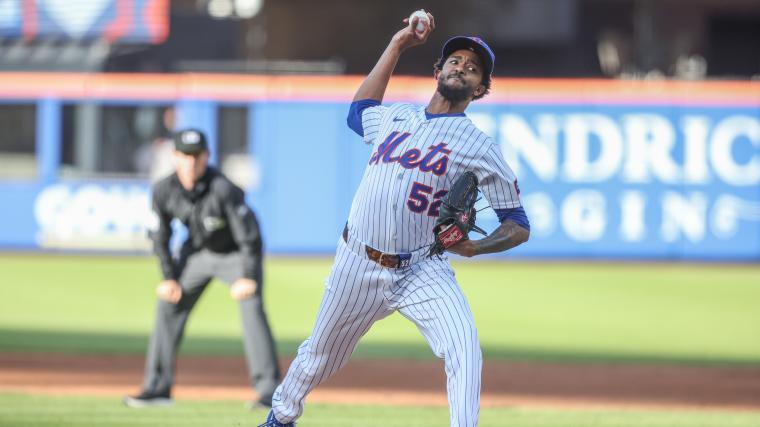
Carl Edwards Jr.’s long and winding baseball journey is going to continue. But it will no longer include a stop in Queens, New York. In a move that raised eyebrows across the baseball world, the veteran reliever has parted ways with the New York Mets by leaving his contract mid-season. The decision, confirmed by MLB.com’s Anthony DiComo, places Edwards back on the open market after a series of roster maneuvers that ultimately led to his departure.
Edwards is a free agent, and he’s free to sign with any MLB team after clearing waivers. This abrupt exit from a team fighting for a playoff spot begs the question: What led to this sudden split? Let’s break down the mechanics, the performance issues, and the future for a pitcher who has seen it all in the big leagues.
The Roster Mechanics: How a Mid-Season Exit Happens
Understanding how Carl Edwards Jr. parted ways with the Mets requires a look at the often-confusing world of MLB roster transactions. It wasn’t a simple “I quit” scenario. Instead, it was a calculated sequence of events that ended with Edwards as a free agent.
Here is the step-by-step breakdown of the roster maneuvering that led to his departure:
- Designated for Assignment (DFA): The Mets first designated Edwards for assignment. This removed him from the 40-man roster, giving the team seven days to either trade him, release him, or place him on outright waivers.
- Clearance on Waivers: Edwards passed through waivers unclaimed. This means no other team was willing to take on the remainder of his contract or commit a 40-man roster spot to him at that time.
- Outright Assignment Rejected: Because Edwards has more than three years of MLB service time, he had the right to reject an outright assignment to the minor leagues. Instead of reporting to Triple-A Syracuse, he chose free agency.
- Immediate Free Agency: By rejecting the assignment, Edwards officially became a free agent. He is now free to sign with any MLB team, including a return to the Mets on a new deal, though that seems unlikely.
This path is not uncommon for veteran players who feel they can contribute at the major league level. For Edwards, the decision to leave the Mets organization mid-season was a bet on himself—a belief that another club will give him a big-league opportunity rather than toiling in the minors.
Performance and Role: Why the Mets Made the Move
While the roster mechanics explain the how, the why behind Carl Edwards Jr. parting ways with the Mets is rooted in performance inconsistency and a shifting bullpen hierarchy.
Edwards, 32, has always been a pitcher of extremes. His 2024 season with the Cubs was solid (3.69 ERA in 39 innings), but his 2025 stint with the Mets was a mixed bag. In 14 appearances for New York, he posted a 4.50 ERA with 14 strikeouts over 14 innings. While the strikeout stuff was still there, the command issues that have plagued his career resurfaced. He walked seven batters and allowed three home runs in that span.
The Mets, under manager Carlos Mendoza, are in a heated National League Wild Card race. They cannot afford to carry a reliever who is unreliable in high-leverage spots. With the emergence of arms like Dedniel Núñez and the return of key veterans from the injured list, Edwards became expendable.
Here are the key factors that led to the Mets’ decision to cut ties:
- Control Problems: Edwards’ walk rate (9.0 BB/9 in his last 10 appearances) made him a liability in tight games.
- Bullpen Depth: The Mets have a deep bullpen with established arms like Edwin Díaz, Adam Ottavino, and Brooks Raley. They didn’t need to tolerate inconsistency.
- Roster Flexibility: By moving on from Edwards, the Mets opened a 40-man roster spot to call up a fresh arm or add a position player for a critical stretch.
- Age and Ceiling: At 32, Edwards is what he is—a high-variance reliever. The Mets preferred to gamble on younger, more controllable options.
This was not a personal falling out. It was a cold, hard business decision by a front office that needs every win it can get.
Expert Analysis: What Carl Edwards Jr. Still Offers
As an expert sports journalist, I’ve watched Carl Edwards Jr. evolve from a World Series champion with the Chicago Cubs in 2016 to a journeyman seeking his next opportunity. Despite the mid-season exit from the Mets, Edwards still possesses traits that contending teams covet.
His fastball velocity has held steady in the 94-96 mph range, and his curveball remains a plus pitch when he’s locating it. The issue has never been stuff; it’s been consistency and health. Edwards has dealt with shoulder and lat injuries over the years, which have sapped his ability to repeat his delivery.
For context, consider the MORE: Tyler Rogers is 51 degrees different than every other pitcher in MLB—a reminder that the league is always looking for unique skill sets. Edwards’ skill set is not unique in the same way, but his low arm slot and deceptive delivery can still neutralize right-handed hitters. In a platoon role, he can be effective.
Here is my expert take on what a team gets if they sign Edwards:
- High Leverage Potential: When his command is on, he can pitch the 7th or 8th inning.
- Playoff Experience: He has 14 postseason appearances, including a World Series ring.
- Low Risk: Any team can sign him for a prorated league-minimum deal. There is zero financial downside.
- Innings Eater: He can handle multiple innings if needed, a valuable trait for a bullpen.
The free agent market for Edwards will be interesting. He is not a star, but he is a known commodity. Teams like the Los Angeles Dodgers, Arizona Diamondbacks, or Baltimore Orioles—who have deep bullpens but value depth—could be ideal landing spots.
Predictions: Where Does Carl Edwards Jr. Land Next?
Now that Carl Edwards Jr. has parted ways with the Mets, the clock is ticking. Every day he spends unsigned is a day he isn’t helping a contender. Based on his profile and the current MLB landscape, I see three likely scenarios.
Prediction 1: He Signs with a National League Contender
The San Diego Padres are a natural fit. They love veteran relievers with high ceilings, and their bullpen has been overworked. Edwards could slot into a middle-relief role behind Robert Suarez and Jeremiah Estrada. The Chicago Cubs also make sense as a sentimental reunion—he pitched well for them in 2024 and knows the organization.
Prediction 2: He Lands with an American League Team
The Houston Astros have a history of reclamation projects. Their pitching lab could tweak Edwards’ mechanics to improve his command. The Minnesota Twins are another candidate, as they have struggled to find consistent arms in their bullpen. A change of league could reset his season.
Prediction 3: He Waits Until September Roster Expansion
If no team signs him immediately, Edwards may wait until September 1, when MLB rosters expand to 28 players. Teams often add veteran arms for depth during the playoff push. This is a risky strategy, as it means missing out on weeks of potential earnings and performance.
My personal prediction: Edwards will sign with the Arizona Diamondbacks within the next 10 days. Their bullpen has been inconsistent, and they value experience. The desert air and a low-pressure environment could help him rediscover his form.
Strong Conclusion: A Journey That Isn’t Over
Carl Edwards Jr. parting ways with the Mets is not the end of his story—it’s just another chapter in a long and winding baseball journey. From being a key piece of a Cubs championship team to bouncing between five organizations, Edwards has shown resilience. His decision to leave a contract mid-season demonstrates a belief that he still belongs in the big leagues.
For the Mets, this was a necessary move. They are in win-now mode, and every roster spot counts. For Edwards, it’s an opportunity to find a team that values his upside over his risk. The next few weeks will determine whether his gamble pays off.
Will he become a playoff hero for another team? Or will this be the moment his career fades into obscurity? Based on his track record of overcoming adversity, I wouldn’t bet against Carl Edwards Jr. just yet. Keep an eye on the waiver wire—this story is far from finished.
Why Carl Edwards Jr. parted ways with Mets by leaving contract mid-season originally appeared on The Sporting News. Add The Sporting News as a Preferred Source by clicking here.
Source: Based on news from Yahoo Sports.