Groves Calls for Fury vs. Joshua at Wembley: The Mega-Fight That Must Happen
The British boxing landscape is once again buzzing with a familiar, electrifying demand. Former super-middleweight world champion George Groves has thrown his considerable weight behind the call for the long-awaited heavyweight showdown between Tyson Fury and Anthony Joshua. But Groves isn’t just calling for the fight to happen; he is demanding it be staged at the hallowed turf of Wembley Stadium. In an exclusive analysis, we break down why this venue is the only logical choice, the state of both fighters, and what a victory would mean for the winner.
Why Wembley Stadium Is the Only Venue That Makes Sense
George Groves knows a thing or two about fighting in front of massive crowds. The Londoner fought in front of 80,000 fans at Wembley against Carl Froch in 2014. He understands the unique pressure and the unparalleled atmosphere that only a national stadium can provide. When Groves speaks about staging Fury vs. Joshua at Wembley, he is not just being sentimental; he is being practical.
“It has to be Wembley,” Groves stated recently. “You can’t put a fight of this magnitude in a small arena. This is the biggest fight in British boxing history, arguably the biggest in world boxing right now. You need the stage to match the occasion.”
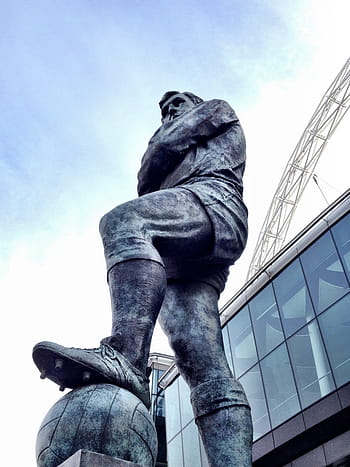
The logic is undeniable. While Saudi Arabia has hosted many recent mega-fights, including Fury vs. Francis Ngannou and Joshua vs. Otto Wallin, the emotional and cultural resonance of a British blockbuster cannot be replicated in the desert. A Fury-Joshua fight at Wembley would not just be a sporting event; it would be a national holiday. The roar of 90,000 British fans, the walk to the ring under the iconic arch, and the history of the venue itself add an intangible value that a neutral site simply cannot offer.
Furthermore, the economics work. A sell-out at Wembley generates a gate revenue in excess of £15-20 million. Combined with a massive UK pay-per-view audience (potentially breaking the 2 million buy mark), the financial incentive to keep the fight on home soil is enormous. Groves’ call is a reminder that sometimes, the biggest fight deserves the biggest, most iconic stage.
Expert Analysis: The State of Fury and Joshua
To understand why this fight is so critical, we must examine the current trajectories of both men.
Tyson Fury: The Gypsy King’s Need for Redemption
Tyson Fury’s career has been a rollercoaster of high highs and confusing lows. After his dominant victory over Deontay Wilder in 2021, he looked invincible. However, his performance against Francis Ngannou in October 2023 was a major red flag. Fury was dropped and barely scraped a split decision win over a debutant. Many pundits, including Groves, noted that Fury looked slow, heavy, and vulnerable.
- Momentum: Stalled. The Ngannou fight exposed flaws in his defense and conditioning.
- Motivation: Questionable. Fury has often spoken about retirement, and his lack of activity is concerning.
- Advantage: Size, reach, and unorthodox movement. When fit, he is the most elusive heavyweight in the division.
For Fury, a win over Joshua would silence the critics who say he is in decline. It would re-establish him as the true king of the heavyweight division, especially if he can do it in spectacular fashion at Wembley.
Anthony Joshua: The Rebuilding Warrior
Anthony Joshua has undergone a significant transformation. After losing his titles to Oleksandr Usyk twice, many wrote him off as a finished product. However, his last two performances—a brutal knockout of Robert Helenius and a comprehensive, disciplined win over Otto Wallin—have shown a new, more calculated version of AJ. He is no longer the reckless puncher; he is a boxer-puncher with a point to prove.
- Momentum: Building. He has looked sharp under new trainer Ben Davison.
- Motivation: Sky-high. Joshua has made it clear he wants to become a three-time heavyweight champion.
- Advantage: Athleticism, power, and a renewed jab. He is younger and appears to be hungrier than Fury.
Groves believes Joshua’s recent form makes this a dangerous fight for Fury. “Joshua is moving better, he’s boxing smarter. He’s not just looking for the knockout. That’s a scary version of AJ for Fury because it takes away Fury’s mind games.”
Predictions: How the Fight Plays Out
Predicting a Fury-Joshua fight is a minefield. Both fighters have shown vulnerability, but both have also shown incredible resilience. Here is how a potential 12-round war at Wembley might unfold:
Early Rounds (1-4): Fury will use his jab and movement to establish distance. He will try to frustrate Joshua, talk to him, and break his concentration. Joshua will be patient, using his own jab to set up the right hand. Expect a feeling-out process with both men respecting each other’s power.
Middle Rounds (5-8): This is where the fight truly begins. If Joshua can cut off the ring and land body shots, he will slow Fury down. If Fury can land his long right hand and tie Joshua up on the inside, he will take the steam out of AJ’s offense. This is the critical phase. Groves’ analysis suggests Joshua’s new discipline will be tested here. “Can AJ stay calm when Fury starts his nonsense? That’s the question.”
Championship Rounds (9-12): Both men have great chins. Fury has never been stopped; Joshua has been stopped twice but came back stronger. In the later rounds, conditioning will be key. Fury’s gas tank has been questioned after the Ngannou fight. Joshua’s stamina has improved dramatically under Davison.
Prediction: It is a pick-em fight. However, given Fury’s recent poor performance and Joshua’s upward trajectory, the momentum slightly favors AJ. A middle-round stoppage is possible if Joshua lands cleanly, but the most likely outcome is a close, competitive decision. I predict Anthony Joshua by split decision in a fight that will be remembered as the greatest British heavyweight contest of all time.
The Legacy Stakes: What a Win Means
This fight is about more than just a belt. The WBC, WBO, IBF, and WBA titles may or may not be on the line depending on the governing bodies, but the true prize is legacy.
- For Tyson Fury: A win would cement his status as the best heavyweight of his generation. He would have beaten Wilder (twice), Wladimir Klitschko, and Anthony Joshua. That is a Hall of Fame resume. It would also allow him to retire on his own terms as the undisputed king of Britain.
- For Anthony Joshua: A win would be the ultimate redemption story. He would go from being a two-time loser to a three-time champion. He would unify the division (assuming the belts are on the line) and silence every critic who said he was mentally fragile. It would be the single greatest achievement in British heavyweight history.
George Groves summed it up perfectly: “This fight is bigger than any title. It’s about pride. It’s about who is the best British heavyweight of this era. That’s why it has to be at Wembley. You don’t take that fight to another country. You bring it home.”
Conclusion: The Time Is Now
The calls from George Groves are not just the musings of a former champion; they are the voice of the British boxing public. The Tyson Fury vs. Anthony Joshua fight has been discussed, negotiated, and fallen apart multiple times. But the window is closing. Fury is 35, Joshua is 34. Both are in the twilight of their prime years.
If this fight does not happen in 2025, it may never happen. And that would be a tragedy for the sport. Groves’ insistence on Wembley Stadium is the final piece of the puzzle. The venue is ready. The fighters are ready. The fans are ready. Now, it is up to the promoters—Frank Warren, Eddie Hearn, and the Saudi backers—to make the deal.
For the sake of boxing history, let’s hope they listen to George Groves. Let the Battle of Britain begin under the Wembley arch. It is the only way it should be.
Source: Based on news from Sky Sports.
Image: CC licensed via www.hippopx.com