Rory McIlroy: Relaxed, Refocused, and More Motivated Than Ever After Masters Repeat
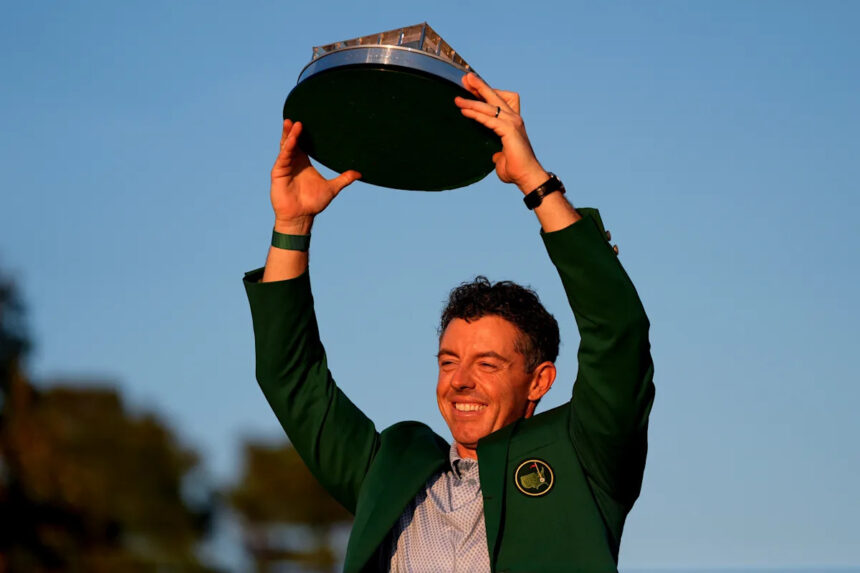
CHARLOTTE, N.C. — The green jacket hangs in the closet, the champagne has long been chilled, and the echoes of Augusta National’s final roar have faded into the Carolina pine straw. Rory McIlroy is back at Quail Hollow, the site of his first PGA Tour victory 16 years ago, and if you look closely, you’ll see a man who has found a new gear.
On the surface, the world’s No. 2-ranked player appears utterly relaxed. He joked with reporters after his Pro-Am round Wednesday, smiled through questions about his historic Masters repeat, and spoke with a calmness that borders on serene. But do not mistake that calm for complacency. McIlroy, the six-time major champion, is sending a clear message as he prepares for the Truist Championship: he is more motivated than ever.
“I’m excited for the road ahead,” McIlroy said, his eyes betraying a hunger that his relaxed posture cannot hide. That road is a brutal major gauntlet—the PGA Championship next week outside Philadelphia, followed by the U.S. Open at the punishing Shinnecock Hills in June. But first, he must navigate Quail Hollow, a course where he has won four times and where his legend first began to crystallize.
The Masters Repeat: A Historic Feat That Changed Everything
It has been just over three weeks since McIlroy slipped on the green jacket for a second consecutive year, joining an exclusive club of only four players in 90 years to achieve back-to-back victories at Augusta National. The names on that list—Jack Nicklaus, Tiger Woods, Nick Faldo—are the architects of golf’s modern legacy. McIlroy now stands among them, and the weight of that company is not lost on him.
“It’s something I’ll never take for granted,” McIlroy admitted. “But the moment you start thinking you’ve arrived is the moment you start falling behind.” That mindset is precisely what has driven him through a career that, at 36, already feels Hall of Fame-worthy. The Masters repeat was not a fluke; it was the culmination of years of refining his short game, managing his emotions, and learning to close. Yet, McIlroy insists the best is still ahead.
His victory at Augusta was a masterclass in controlled aggression. He outdueled a charging Scottie Scheffler on the back nine, birdied the 13th and 15th holes when it mattered most, and putted with a confidence that had been absent in previous years. The result? A two-shot win that silenced any remaining critics. But now, the question shifts from “Can he do it again?” to “What’s next?”
Quail Hollow: The Perfect Launchpad for a Major Run
McIlroy’s relationship with Quail Hollow is the stuff of golf lore. He won his first PGA Tour event here in 2010 as a 21-year-old phenom, and he has since added three more trophies on this demanding layout. The course suits his eye: long, tree-lined, and requiring precision off the tee—a combination that plays directly into his power game. This week’s Truist Championship is more than just a tune-up; it is a statement opportunity.
- Course history: Four wins, including a 2015 romp where he shot 61 in the final round.
- Momentum factor: McIlroy has not played competitively since the Masters, but his practice rounds have been sharp.
- Mental edge: “This place feels like home,” he said. “I know every slope, every bunker.”
Winning at Quail Hollow would send a thunderous message to the field ahead of the PGA Championship at Aronimink Golf Club (outside Philadelphia). The key for McIlroy will be maintaining the same composure he displayed at Augusta. The greens at Quail Hollow are notoriously tricky, and the rough is thick. But if anyone can handle the transition from a relaxed state to a competitive kill mode, it’s a man who has already won 28 times worldwide.
The Major Stretch: PGA Championship and U.S. Open Preview
McIlroy’s schedule is unforgiving. After this week, he heads to Philadelphia for the PGA Championship (May 15-18), followed by the U.S. Open at Shinnecock Hills (June 12-15). He is chasing a career Grand Slam (he needs only a Masters win to complete it), but he already has that. Now, he is chasing history: a third consecutive major title.
PGA Championship at Aronimink: This course has not hosted a major since 1962, but it is a classic parkland layout with long par-4s and subtle elevation changes. McIlroy’s length off the tee will be a weapon, but the real test will be his iron play into fast, undulating greens. “You have to be patient there,” he said. “It’s not a course where you can force birdies.”
U.S. Open at Shinnecock Hills: This is the monster. Shinnecock is a beast of a course—windy, firm, and with greens that can repel even the best approaches. McIlroy finished tied for 10th there in 2018, but he is a better player now. His short game, once a liability, is now a strength. If he can keep the ball in the fairway, his creativity around the greens could be the difference. “Shinnecock is about survival,” McIlroy said. “But I love that kind of challenge.”
Expert Analysis: The key to McIlroy’s major success this summer will be his driving accuracy. At Augusta, he hit 79% of fairways, a massive improvement over his career average. If that trend continues at Aronimink and Shinnecock, he will be nearly impossible to beat. His putting, which has been streaky in the past, is now a weapon—especially from 10 to 15 feet. Expect him to contend in both majors, with a strong chance of winning at least one.
Why This Version of Rory McIlroy Is Different
There is a palpable shift in McIlroy’s demeanor. The old Rory—the one who sometimes looked tight in big moments—has been replaced by a player who embraces pressure with a smile. His relaxed posture at Quail Hollow is not a sign of indifference; it is the calm of a man who knows exactly who he is and what he can do.
“I’ve learned that you can’t force greatness,” he said. “You have to let it happen.” That philosophy was on full display at the Masters. When Scheffler made a charge, McIlroy didn’t panic. He stayed in his process, trusted his swing, and let the results follow. It was the performance of a mature champion.
What to Watch For:
- Drive for show, putt for dough: McIlroy’s putting stats have been elite in 2025. If he keeps that up, he wins.
- Mental stamina: The grind of three majors in six weeks is brutal. He needs to manage his energy.
- Competition: Scottie Scheffler, Jon Rahm, and Brooks Koepka are lurking. But McIlroy seems to relish the battle.
His prediction for the PGA Championship? “I feel like I’m peaking at the right time.” That is not arrogance; it is the confidence of a man who has repeated at Augusta, won four times at Quail Hollow, and knows that the best version of himself is still emerging.
The Road Ahead: A Legacy in the Making
McIlroy is no longer just a generational talent; he is a generational competitor. His Masters repeat was a defining moment, but it is the springboard, not the destination. The next six weeks will define whether he enters the conversation as one of the all-time greats or remains a brilliant star who occasionally flickered.
“I’m more motivated than I’ve ever been,” he said, and the words hung in the Charlotte air like a challenge. For the rest of the field, that should be terrifying. For golf fans, it is a gift.
As he walked off the 18th green at Quail Hollow on Wednesday, McIlroy stopped to sign autographs for a group of young fans. He smiled, posed for a selfie, and then looked out toward the fairway. The relaxed aura was real, but so was the fire behind it. He knows that the history books are waiting. And he has no intention of closing them just yet.
Final Prediction: McIlroy wins the Truist Championship this week, finishes in the top three at the PGA Championship, and wins his seventh major at Shinnecock Hills. The relaxed champion is about to become a relentless one.
Source: Based on news from Yahoo Sports.