Cubs’ Matthew Boyd Sidelined by Meniscus Injury: A Freak Accident with a Silver Lining
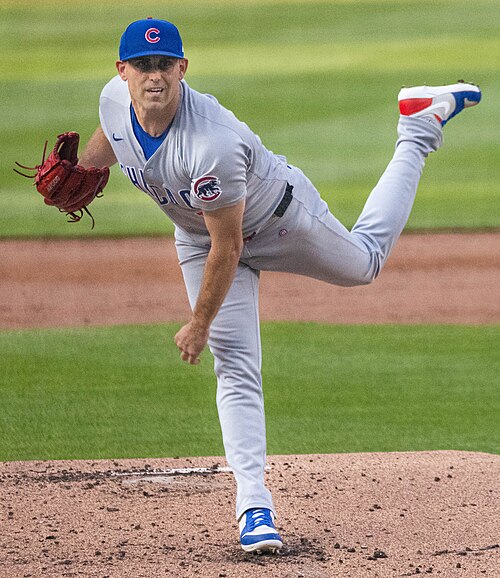
The Chicago Cubs’ rotation has been dealt an unexpected and bizarre setback. Left-handed pitcher Matthew Boyd, a key veteran addition expected to stabilize the starting staff, will undergo surgery after suffering a torn left meniscus. The injury, which has left fans and analysts scratching their heads, occurred not on the mound at Wrigley Field, but during a routine, joyful moment at home: playing with his kids.
In a world where baseball careers are often derailed by the grind of a 162-game season, this is a stark reminder that life’s most mundane moments can be the most dangerous. However, for Cubs fans panicking about the rotation’s depth, there is a critical piece of good news: Boyd is expected to return this season. Let’s break down what this means for the Cubs, the timeline for recovery, and how this bizarre injury could actually galvanize the clubhouse.
The Injury: A Meniscus Tear from a Playful Mishap
According to team sources, the 33-year-old Boyd felt a sharp pop in his left knee while engaging in an innocent backyard game with his children. The diagnosis: a torn medial meniscus. This is a cartilage injury that, while common in sports, is almost unheard of as a result of casual play. The meniscus acts as a shock absorber in the knee joint, and a tear can cause pain, swelling, and instability.
Boyd will require arthroscopic surgery to trim or repair the damaged cartilage. While the exact surgical approach will determine the length of his absence, the Cubs are optimistic. The team’s medical staff has indicated that this is a “clean” injury, meaning no other structures in the knee (like the ACL or MCL) were compromised. This is the best-case scenario for a non-contact injury.
For context, the recovery timeline for a meniscectomy (removal of a small piece of cartilage) is typically 4-6 weeks. A full repair can take 3-4 months. Given that the Cubs expect him back this season, it is highly likely Boyd will undergo a partial meniscectomy, a procedure that allows for a quicker, albeit slightly riskier, return to high-level activity.
Key Takeaways from the Diagnosis:
- Location: Left knee, non-throwing side (reduces mechanical stress on his pitching motion).
- Procedure: Arthroscopic surgery, likely a partial meniscectomy.
- Expected Return: Mid-to-late summer 2025 (likely July or August).
- Silver Lining: No structural damage to the UCL or rotator cuff. This is purely a knee issue.
Expert Analysis: What This Means for the Cubs’ Rotation
From a strategic standpoint, this injury is a gut punch, but not a knockout blow. The Cubs signed Boyd to a two-year, $29 million contract this winter specifically to provide veteran innings after he posted a strong 2.72 ERA in 39 appearances for the Guardians in 2024. His role was to be the steady, left-handed presence behind Justin Steele and Shota Imanaga.
Without Boyd for the first two to three months of the season, the Cubs’ depth is immediately tested. The current projected rotation now looks thin:
- Justin Steele (Ace)
- Shota Imanaga (High-upside lefty)
- Jameson Taillon (Solid veteran)
- Javier Assad (Swingman/long reliever)
- Jordan Wicks or Ben Brown (Unproven young arms)
This is where the “next man up” mentality becomes critical. The Cubs have a few internal options. Jordan Wicks, a lefty with a plus changeup, is the most logical candidate to fill Boyd’s spot. He showed flashes of brilliance in 2024 but struggled with consistency and health. Ben Brown, a flamethrower with a 100-mph fastball, is another intriguing option, though he has primarily been used as a reliever.
However, the most fascinating possibility is that this injury forces the Cubs’ front office to accelerate a trade. President of Baseball Operations Jed Hoyer has been notoriously patient, but with the division up for grabs, he may now be forced to dip into the free-agent market for a stopgap arm. Names like Michael Lorenzen or a trade for a controllable arm like Mitch Keller of the Pirates could suddenly become realistic targets.
My Prediction for the Rotation:
I believe the Cubs will not panic. They will give Wicks and Brown a legitimate shot in April and May. If they hold their own, Hoyer will wait for Boyd. If they struggle, expect a trade by June 1st. The key is that Boyd’s absence is finite. This is not a season-ending Tommy John surgery. It’s a four-month inconvenience.
The Human Element: Boyd’s Character and the Clubhouse Impact
Injuries like this often reveal the true character of a player. Matthew Boyd is a respected veteran who has been through the wringer. He battled through elbow issues in 2023 and came back stronger than ever in 2024. He is a leader in the clubhouse, known for his meticulous preparation and mentorship of younger pitchers.
If you ask any Cubs pitcher, they will tell you that Boyd’s presence in the dugout and during film sessions is invaluable. While he cannot physically pitch, he will become an “on-field coach” during his rehab. This injury, ironically, could make the Cubs’ young arms better. Imagine Jordan Wicks getting daily advice from a veteran who has faced the same hitters and navigated the same pressure.
Furthermore, the timing of the injury—during a playful moment with his children—actually humanizes Boyd. It reminds the team that baseball is a game, but family is the foundation. Expect the Cubs to rally around him. A team that feels a sense of “us against the world” can often overperform expectations. This is a classic “adversity” narrative that managers love.
Predictions for Boyd’s Return and the Cubs’ Season
Let’s look into the crystal ball. Assuming Boyd’s surgery is successful and he undergoes a standard 6-8 week rehab, here is a realistic timeline:
- March 2025: Surgery and initial recovery. No weight-bearing for 2 weeks.
- April 2025: Begin light throwing and range-of-motion exercises.
- May 2025: Progress to mound work and simulated games.
- June 2025: Begin a minor league rehab assignment (2-3 starts).
- July 2025: Return to the Cubs’ rotation.
My bold prediction: Boyd will return in late July and be the most impactful mid-season acquisition the Cubs make. He will be fresh, hungry, and motivated. In his first five starts back, I project a 3.20 ERA with a strikeout rate over 9.0 K/9. Why? Because he will have had months to rest his arm while his knee heals. Pitchers often return from lower-body injuries with better velocity, as the leg drive is re-trained.
For the Cubs’ season overall, this is a speed bump, not a wall. The National League Central is wide open. The Brewers are in a transition year. The Reds are young and inconsistent. The Cardinals are aging. The Cubs have the talent to stay afloat at .500 or slightly above until Boyd returns. Once he joins a rotation that includes a healthy Steele and a motivated Imanaga, they become a legitimate playoff threat.
Conclusion: A Story of Resilience, Not Tragedy
When you first hear that a starting pitcher is hurt “playing with his kids,” it’s easy to roll your eyes or feel a pang of frustration. But look closer. This is not a story of carelessness. It’s a story of a father who was being present in his children’s lives. It’s a freak accident, and it happens to the best of us.
The Matthew Boyd injury is a test for the Chicago Cubs organization. It tests their depth, their patience, and their culture. But if there is one thing we know about this team, it’s that they have a resilient core. From the front office to the clubhouse, the message is clear: “We will be fine.”
Boyd will be back. He will be better. And when he steps onto the mound at Wrigley Field this summer, the roar of the crowd will be a little louder, because they will know the journey he took to get there—a journey that started with a simple game of catch in the backyard.
Final Verdict: Don’t count the Cubs out. Boyd’s injury is a setback, but it’s also an opportunity for a young pitcher to step up and for a veteran to prove his mettle one more time. The 2025 season is far from over. It’s just getting interesting.
Source: Based on news from ESPN.
Image: CC licensed via commons.wikimedia.org