FIFA President Defends World Cup Ticket Prices: “In Line With U.S. Market”
As the countdown to the 2026 FIFA World Cup ticks toward the June 11 kickoff, a familiar storm is brewing—not over tactics or team rosters, but over the cost of admission. With the tournament set to span the United States, Mexico, and Canada, fans have voiced outrage over price tags that make attending a match feel like a luxury investment. But FIFA President Gianni Infantino is pushing back, arguing that the pricing structure is not only fair but perfectly aligned with the realities of the American sports market.
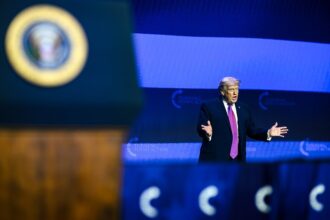
Speaking Tuesday at the Milken Institute Global Conference in Beverly Hills, Infantino made a direct appeal to market logic. He claimed that while critics howl about the cost, the secondary market tells a different story—one where fans are willing to pay far more than FIFA’s face value. This defense, however, has done little to cool the debate as the first tickets hit the resale platforms at eye-watering multiples.
Infantino’s Market Logic: Why High Prices Are “Necessary”
Infantino’s argument hinges on a simple economic principle: supply and demand. With a tournament of this magnitude—48 teams, 104 matches, and a global audience of billions—the demand far outstrips the available seats. “In the U.S., it is permitted to resell tickets as well,” Infantino said. “If you were to sell tickets at a price which is too low, these tickets will be resold at a much higher price.”
This is not just theory. Infantino pointed to the resale market as proof of his point. “Even though some people are saying that the ticket prices we have are high, they still end up on the resale market at an even higher price, more than double our price.” The logic is cold, but it resonates with anyone who has tried to buy a Super Bowl ticket or a Taylor Swift concert pass: if you price too low, scalpers and bots feast, and the real fan pays the piper anyway.
FIFA’s pricing strategy for the 2026 World Cup has been tiered, with Category 4 tickets reserved for local residents at lower rates. However, for international fans and the general public, prices for group-stage matches start around $150 and climb steeply for premium seats and knockout rounds. Infantino insists this is not greed, but market alignment. “We have to apply market rates,” he said, drawing a direct comparison to the NFL, NBA, and MLB.
Case Study: USA vs. Australia – A $2,700 Reality Check
To understand the fury, one need only look at a single match: the United States vs. Australia on June 19 at Lumen Field in Seattle. A quick search on Ticketmaster Wednesday evening revealed a sobering landscape. The lowest price for two tickets was a resale pair listed at $2,725.10. That broke down to $2,290 for the tickets themselves, plus a staggering $435.10 in service fees.
For context, those seats were not on the field. They were high in the upper deck, along the sideline—what American football fans would call the 25-yard line. Thirty minutes later, the same search showed the total price climbing to $2,770.90. That is over $1,385 per ticket for a group-stage match featuring the host nation against a non-European opponent.
Consider the breakdown:
- Face value for similar Category 1 seats: approximately $400-$600 per ticket.
- Resale markup: 200% to 300% above face value.
- Service fees: Nearly 20% of the ticket price, a hallmark of the U.S. market.
This is not an outlier. Across the tournament, resale prices for high-demand matches like Argentina vs. Brazil, England vs. Germany, and the final in New Jersey are already hitting five figures. Infantino’s point—that FIFA’s prices are actually below what the market will bear—is technically true. But for the average fan, that logic offers little comfort when a family of four faces a bill equal to a used car.
Expert Analysis: Is FIFA’s Strategy a Gamble or a Necessity?
From a business perspective, Infantino’s defense is sound. The 2026 World Cup is the most expensive in history, with infrastructure costs across three nations estimated to exceed $40 billion. FIFA relies on ticket revenue, broadcast rights, and sponsorship to fund the tournament and its development programs. Underpricing tickets would leave billions on the table—money that could go to grassroots soccer in developing nations.
However, the optics are damaging. Soccer has long prided itself on being the “people’s game,” with affordable access in Europe, South America, and Africa. The U.S. market, by contrast, is built on premium pricing. Super Bowl tickets routinely exceed $5,000 on the secondary market. NBA Finals seats can hit $10,000. Infantino is essentially saying: Welcome to America.
“The problem is not the price of the ticket,” says sports economist Dr. Maria Torres. “The problem is the structural inequality of access. FIFA is treating the World Cup like a Super Bowl, but the fanbase expects a carnival. If you price out the local working class, you damage the very culture that makes the tournament special.”
Infantino countered this by pointing to FIFA’s resident-only ticket categories at lower prices. For the U.S. leg, Category 4 tickets for local fans start at $80 for group matches. But these are limited in quantity and often sell out within minutes, pushing fans to the open market where prices explode.
Predictions for the tournament’s ticket dynamics:
- Resale prices will peak for the final and semifinals, potentially exceeding $15,000 per seat.
- Secondary market fees will become a political issue, possibly drawing scrutiny from the U.S. Congress.
- FIFA may face empty seats in less popular matches, as corporate hospitality blocks go unsold at inflated prices.
- Local fan anger could spill into protests outside stadiums, similar to the 2014 World Cup in Brazil.
A Strong Conclusion: The High Cost of Global Ambition
Infantino’s declaration that World Cup ticket prices are “in line with the U.S. market” is both a shield and a challenge. It shields FIFA from accusations of arbitrary greed by anchoring prices to existing benchmarks. But it challenges the very soul of the sport, which has historically been accessible to the masses.
The 2026 World Cup is a watershed moment. It is the first time the tournament is hosted by three nations, the first with 48 teams, and the first in the world’s most lucrative sports market. The pricing debate is not just about dollars and cents; it is about identity. Will the World Cup become another exclusive luxury event, or can it retain its global, democratic spirit?
As the June 11 opener approaches, fans will vote with their wallets. The resale market will tell the true story. If tickets continue to sell at double and triple face value, Infantino’s market logic wins. But if stadiums echo with the silence of empty seats, FIFA may have miscalculated the value of the people’s game.
For now, the best advice for fans is to buy directly from FIFA during the remaining sales windows—and to brace for the fees. Because in the U.S. market, as Infantino himself admitted, the price you see is rarely the price you pay.
Source: Based on news from Deadspin.