What Would Women’s FA Cup Success Do for Liverpool? More Than Just Silverware
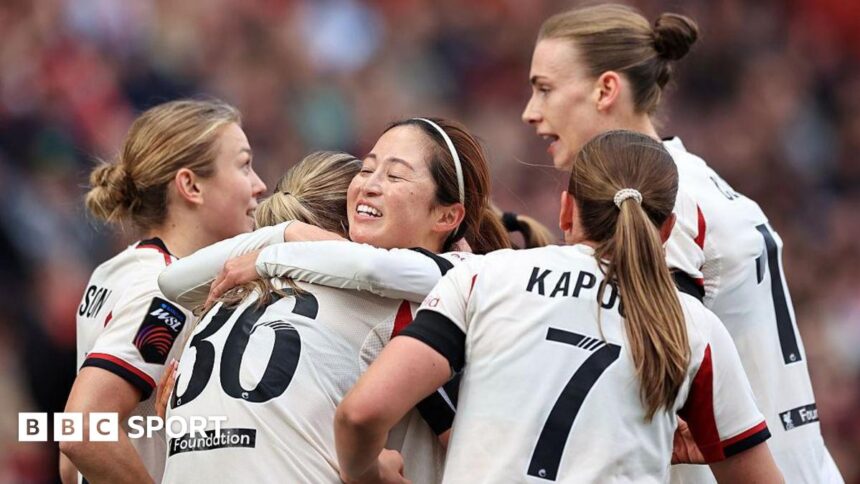
In the dying embers of a tense Women’s FA Cup quarter-final, the footballing gods delivered a moment of pure, unscripted drama. Academy graduate Zara Shaw, a local girl living the dream, stabbed home a stoppage-time winner that sent the traveling Liverpool contingent into raptures. It was a moment of raw, visceral joy—a stark contrast to the grim reality of the Reds’ season in the Women’s Super League (WSL).
That single goal didn’t just book a ticket to a semi-final against Brighton & Hove Albion on Sunday (12:15 BST). It opened a door to a parallel universe where Gareth Taylor’s team, currently sitting second bottom in the league table, could be just two wins away from lifting a major trophy. For a club that has spent the season fighting relegation whispers rather than chasing glory, the prospect of Women’s FA Cup success is nothing short of seismic. But what would it actually mean for Liverpool?
A Season of Struggle: From Recruitment Chaos to Relegation Fears
To understand the magnitude of this opportunity, we must first acknowledge the wreckage of the league campaign. Liverpool’s WSL season has been a masterclass in inconsistency—and not the good kind. With only four wins from 21 league fixtures and one game remaining, the Reds are looking at their worst top-flight finish in years. They sit just above the relegation zone, a position nobody at the AXA Melwood Training Centre envisioned at the start of the campaign.
The root of the problem? A summer of chaos. Gareth Taylor’s appointment was made late, leaving him scrambling to build a squad after the departure of several star players. Recruitment was reactive rather than proactive. Key targets were missed, and the spine of the team—so crucial in previous seasons—was fractured. The result was a team that started the season on the back foot, never truly finding its rhythm.
Yet, amid the league rubble, the FA Cup has provided a sanctuary. It has been a parallel competition where the pressure is different, the stakes are singular, and the magic of the cup has somehow shielded Liverpool from their own domestic fragility. The quarter-final win over a strong opponent, sealed by Shaw’s heroics, was not just a result—it was a statement of resilience. It proved that when the occasion demands it, this Liverpool team can dig deep.
The Financial and Commercial Boost of an FA Cup Win
Let’s be brutally honest: money talks in modern football, and a Women’s FA Cup triumph would be a financial lifeline for Liverpool. The prize money for the winner is significant, but the real value lies in the exposure. Winning the FA Cup puts you in the spotlight. It means prime-time replays on BBC One, front-page headlines, and a surge in merchandise sales.
For a club like Liverpool, which is trying to compete with the financial muscle of Chelsea, Arsenal, and Manchester City, this kind of windfall is critical. Here’s what a win would unlock commercially:
- Increased Sponsorship Appeal: Brands want to associate with winners. A cup victory makes Liverpool a more attractive proposition for new sponsors and allows the club to renegotiate existing deals from a position of strength.
- Ticket Revenue Growth: Success drives demand. An FA Cup win would likely boost season ticket sales for the women’s team at Anfield and Prenton Park, filling seats that have sometimes been empty during the league slog.
- Transfer Budget Flexibility: The cash injection from the competition, combined with potential Champions League qualification (if the winner hasn’t already qualified via the league), would give Taylor a genuine budget to fix the recruitment errors of last summer.
Without FA Cup success, Liverpool faces a summer of austerity. With it, they have a war chest to rebuild a squad that can challenge for the top four, not just survival.
Player Retention and Recruitment: The Ripple Effect
The biggest headache for Gareth Taylor this summer won’t be finding new players—it will be keeping the ones he already has. Star players want to play in big games, in packed stadiums, for trophies. A mid-table (or lower) finish in the WSL does not scream ambition. An FA Cup winners’ medal, however, does.
Zara Shaw’s winner was a beautiful moment, but it also serves as a warning. If Liverpool cannot offer her a pathway to consistent silverware, other clubs will come calling. The same applies to the experienced heads in the squad. Lifting the FA Cup would be the ultimate retention tool. It proves to the squad that this club can win things, even when the league form is a disaster.
Furthermore, it transforms the club’s recruitment pitch. Imagine being a top-tier international player considering a move to the WSL. You have two offers: one from a club that finished 10th in the league, and one from the FA Cup champions. The choice is obvious. A cup win changes the narrative from “relegation battlers” to “cup specialists.” It allows Liverpool to attract players who might have previously dismissed them as a project in decline.
This is the paradox of the FA Cup: it can paper over the cracks of a poor league season, but it also provides the tools—in the form of reputation and revenue—to actually fix those cracks.
Legacy, History, and the Taylor Factor
Let’s not forget the intangibles. Liverpool Football Club is built on history. The men’s team has a rich relationship with the FA Cup, and the women’s side adding their name to the trophy would be a powerful statement of unity. It would be the first major trophy for the women’s team in the modern WSL era, cementing their place in the club’s folklore.
For Gareth Taylor, the stakes are personal. His job security has been questioned all season. The late appointment and poor league form have placed a target on his back. But a manager who wins the FA Cup is a manager who earns a second chance. It buys him time, trust, and the authority to reshape the squad in his image. The semi-final against Brighton is not just a match; it is the most important 90 minutes of his tenure.
Winning the cup would also silence the critics who say Liverpool don’t belong among the WSL elite. It would be a loud, defiant answer to those who wrote them off. It would create a legacy moment for the players—a story they can tell for the rest of their lives. “I was part of the Liverpool team that won the FA Cup.” That is a sentence that carries weight.
Prediction: Can They Actually Do It?
So, can Liverpool get past Brighton and then whoever wins the other semi-final (likely Chelsea or Manchester City)? The honest answer is: it’s a massive ask. Brighton are a well-coached, dangerous side. They will not be intimidated by Liverpool’s name or history. The semi-final will be a tight, tactical affair where a single mistake could be fatal.
However, Liverpool have something that Brighton might lack: momentum and a free hit. The pressure is off. Nobody expects the WSL’s second-bottom team to win the cup. That freedom can be a dangerous weapon. The Reds can play without fear, while Brighton might feel the weight of expectation as the “favorites.”
If Liverpool can replicate the defensive grit and counter-attacking sharpness they showed in the quarter-final, they have a genuine chance. Zara Shaw’s energy, combined with the experience of the senior pros, could be the difference. My prediction? It will be a nervy, 1-0 or 2-1 win for Liverpool. They will grind it out. They have to. The alternative is a summer of regret.
Conclusion: The Greatest Opportunity in Years
The Women’s FA Cup represents a fork in the road for Liverpool. One path leads to a summer of what-ifs, a squad rebuild on a shoestring, and the lingering stigma of a relegation battle. The other path leads to a trophy parade, a new chapter, and a foundation upon which to build a genuine contender.
Zara Shaw’s magical moment in the quarter-finals did more than win a game. It gave Liverpool a second chance at defining their season. It gave the fans a reason to dream. And it gave Gareth Taylor a platform to prove that his project is not broken—it is just getting started.
On Sunday, the Reds have a massive opportunity. They are not just playing for a place in the final. They are playing for the future of the club. Win the FA Cup, and Liverpool Women will no longer be a story of struggle. They will be a story of resilience, redemption, and glory. That is what success would do. It would change everything.
Source: Based on news from BBC Sport.