Boos, No Intensity and No Identity – What is Arne Slot’s Liverpool?
For the first time this season, the Anfield air turned sour. A low, grumbling murmur of discontent that swelled into a chorus of boos at the final whistle. The opponent was a Chelsea side that had lost six Premier League games on the spin. The stage was set for a statement of intent. Instead, what we witnessed was a performance that raised a chilling question: What exactly is Arne Slot’s Liverpool?
The 1-1 draw against Calum McFarlane’s out-of-form Blues was not a disaster in terms of the result. But in terms of identity, it was a catastrophe. The Kop expects a certain brand of football. It demands intensity, aggression, and a relentless desire to suffocate the opposition. On this afternoon, they got none of it. They got a team that took the lead and then promptly decided to take a nap.
The Anfield Crowd is Not a Patient Audience
If Arne Slot has not realised already, then he needs to realise very quickly that the Anfield crowd demands energy and a certain intensity from its side. This is not a place for cautious, slow-burn football. This is a stadium that thrives on chaos, on the high press, on the feeling that the opposition is drowning in a sea of red shirts.
When Liverpool went in front early against a Chelsea side that had lost their last six Premier League games, Slot’s side should have used that as the moment to dominate the match and secure an important win. Instead, they allowed Calum McFarlane’s out-of-form side a way back into the game. The goal was not a moment of brilliance from Chelsea; it was a moment of passivity from Liverpool. The midfield dropped deep, the full-backs stopped pressing, and the crowd fell silent. That silence is the most dangerous sound for any Liverpool manager. It means the fans have stopped believing.
Far too often at home this season, Liverpool have lacked a spark – something that the crowd can feed off – and kill the opposition off when they take the lead. Against Chelsea, the early goal should have been the starting pistol for a sprint. Instead, it was the cue for a jog. The team dropped the tempo, played safe sideways passes, and allowed Chelsea to regain their composure. The result was a flat, frustrated atmosphere that culminated in the final whistle being met with jeers.
The Tactical Confusion: Where is the Plan B?
Slot has inherited a squad built for Jurgen Klopp’s heavy-metal football. Yet, he seems to be trying to play a different tune—something between a classical symphony and a garage band, and it is not working. The identity crisis is palpable. One moment, Liverpool are trying to build out from the back with slow, deliberate possession. The next, they are trying to launch a counter-attack with no runners in support.
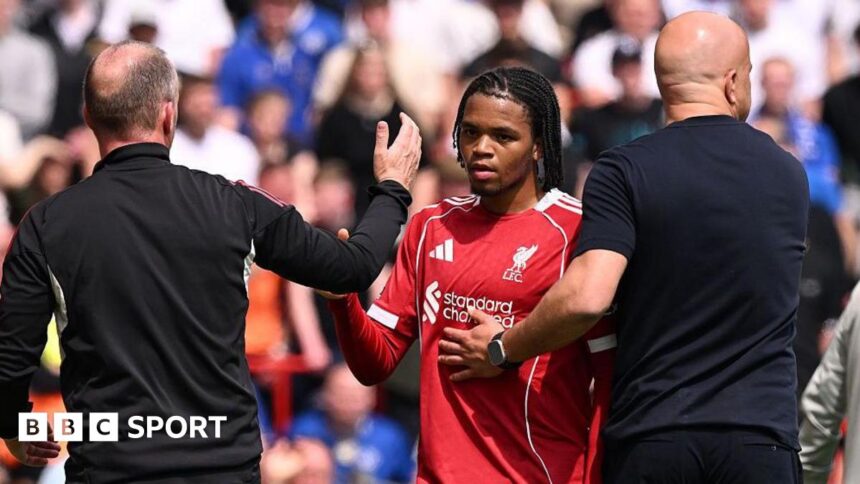
The most baffling moment of the match came in the 67th minute. With the game hanging in the balance and the crowd desperate for a creative spark, Slot made a substitution that left everyone scratching their heads. He replaced the lively winger Rio Ngumoha with Alexander Isak. Now, Isak is a world-class striker, but bringing him on for a winger when the team is struggling to create width is a tactical head-scratcher. It forced the team into a lopsided shape. The left side became a ghost town, and Chelsea’s full-back was allowed to push forward with impunity.
This move did not solve the problem. It created a new one. The substitution highlighted a worrying trend under Slot: a lack of clarity on how to change a game when the initial plan fails. The team looks like it is caught between two philosophies.
- Lack of Pressing Identity: The high press is inconsistent. Sometimes it is there, sometimes it is not. This confuses the midfield and leaves the defence exposed.
- Slow Ball Circulation: The ball moves too slowly from the centre-backs to the forwards. By the time it reaches the final third, the opposition has 11 men behind the ball.
- No Killer Instinct: When Liverpool score first, they do not smell blood. They sit back. This is the opposite of what Klopp taught them.
The Midfield Engine is Sputtering
A Liverpool side is only as good as its midfield engine. Under Klopp, the midfield was all about duels, second balls, and relentless running. Under Slot, it looks ponderous. The trio selected against Chelsea lacked the urgency to win the ball back high up the pitch. They were too easily bypassed by simple passes through the lines.
The stats do not lie. Liverpool’s pressing intensity in the second half was the lowest of any home game this season. They allowed Chelsea to complete over 85% of their passes in the middle third. That is not Liverpool. That is a mid-table team hoping to hold on to a draw. The crowd picked up on this immediately. The groans started when a simple five-yard pass went backwards instead of forwards. The boos came when the team slowed the game down to a crawl with ten minutes to go, seemingly happy with a point.
This is where Slot needs to look at the mirror. Is he asking his players to be more controlled? Or are the players simply not executing his instructions? The answer is likely a mix of both. But the result is the same: a team that has lost its identity.
Prediction: A Fork in the Road for Slot
So, what is Slot’s Liverpool? Right now, it is a team in transition with a confused identity. The next five games will define his tenure. If he does not fix the intensity issue, the Anfield crowd will turn on him. The fans are not stupid. They know when a team is giving 100% and when they are holding back. Against Chelsea, they saw a team holding back.
My prediction is that Slot will double down on his philosophy for the next two games. He will try to coach the team into playing a more controlled possession game. But the Premier League is not a league for control. It is a league for chaos. If he continues to ignore the core DNA of this club—the intensity, the energy, the aggression—he will fail.
However, I believe the boos will serve as a wake-up call. Slot is a smart coach. He will see the footage and realise that his team needs to play faster, press harder, and take more risks. The substitution of Ngumoha for Isak was a mistake he will learn from. He needs to trust the young, hungry players who want to run through walls for the badge.
Conclusion: The Clock is Ticking
The draw against Chelsea was not a crisis. But it was a warning sign. A very loud, very audible warning sign that echoed around the stadium in the form of boos. Arne Slot has a choice to make. He can continue down this path of cautious, identity-less football, or he can embrace the madness that makes Anfield a fortress.
Liverpool fans demand intensity. They demand a team that fights for every ball, that scores a goal and immediately wants another. They do not want a team that takes the lead and then retreats into a shell. If Slot wants to succeed at this club, he needs to stop trying to reinvent the wheel. He needs to oil the engine that was already there. He needs to let the players off the leash.
If he does not, the boos will only get louder. And the question—“What is Slot’s Liverpool?”—will be answered with a single, damning word: “Nothing.”
Source: Based on news from BBC Sport.