How the Colts Rookies Picked, or Didn’t Pick, Their Jersey Numbers
INDIANAPOLIS — A rookie doesn’t always get to pick his number. Not even when he’s the first player the team drafted. In the NFL, the numbers on the back of a jersey are more than just identifiers; they are a badge of legacy, a nod to college glory, and sometimes, a stark reminder of the NFL’s rigid hierarchy. For the Indianapolis Colts’ 2024 rookie class, the process of selecting—or being assigned—a jersey number has been a fascinating mix of tradition, practicality, and a little bit of luck.
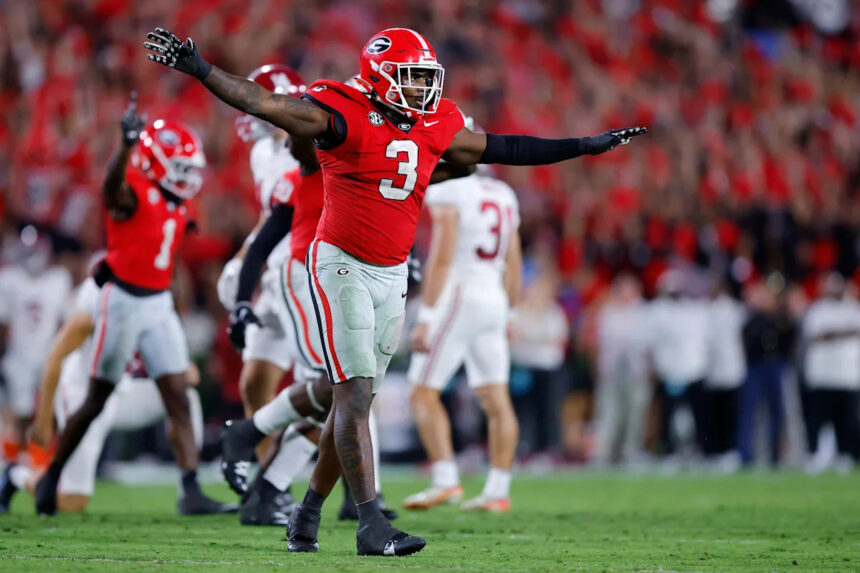
Take CJ Allen, the Georgia middle linebacker the Colts drafted in the second round. At the University of Georgia, Allen wore No. 3 with distinction, anchoring one of the nation’s best defenses. But when he arrived in Indianapolis for the team’s rookie minicamp this weekend, No. 53 was waiting for him. At first, he didn’t think much of it. “I walked in, saw the locker, and it said 53,” Allen recalled with a shrug. “I was just happy to be here. It didn’t hit me until later that I wasn’t getting my college number.”
The reason? No. 3 is already taken in Indianapolis by kicker Spencer Shrader. While it might seem odd for a linebacker to covet a number typically associated with quarterbacks or specialists, Allen’s attachment to No. 3 is deeply personal. It’s a reminder of his days at Georgia, where he wore it as a freshman and built his reputation as a sideline-to-sideline enforcer. But in the NFL, numbers are often locked in by veteran players, and rookies must adapt.
This is a story about that adaptation. It’s about how the Colts’ 2024 rookies—from Allen to undrafted free agents—are navigating the unspoken rules of number selection, the weight of tradition, and the strategic decisions that go into a seemingly simple choice.
The Hierarchy of Number Selection: Veterans Rule
In the NFL, the number on your jersey is often a status symbol. Quarterbacks wear 1-19. Wide receivers and defensive backs have a wider range. But for rookies, especially those drafted in later rounds or signed as undrafted free agents, the process is rarely democratic. Veterans have first dibs, and rookies are expected to defer.
For CJ Allen, the transition from No. 3 to No. 53 was a lesson in humility. “I knew coming in that I couldn’t keep it,” he said. “Spencer’s been here, he’s earned that number. You don’t come in and start making demands. You earn your spot.” Allen’s attitude is a reflection of the Colts’ locker room culture under head coach Shane Steichen, where rookies are encouraged to earn respect through performance, not entitlement.
But the number swap isn’t always a simple handshake. Sometimes, it involves negotiation. Veterans might ask for a trade—a rookie could offer to buy the number with a gift, a dinner, or even a cash payment. This is a time-honored NFL tradition. For example, when the Colts drafted wide receiver Josh Downs in 2023, he wanted No. 1, but it was taken. He ended up with No. 16, a number that now feels like his own after a strong rookie season.
For Allen, the process was more straightforward. “I didn’t even ask,” he admitted. “I saw 53, and I thought, ‘Alright, let’s go.’ It’s just a number. I’m here to play football, not to worry about what’s on my back.” That mindset is a hallmark of a mature rookie, but it doesn’t mean the number lacks meaning. Allen is now one of many Colts linebackers wearing numbers in the 50s, a range that historically belongs to defensive players and offensive linemen. It’s a badge of the trenches.
Why Numbers Matter: Identity and Superstition
While Allen accepted his fate, other rookies in the Colts’ 2024 class have been more deliberate. Rookie wide receiver Adonai Mitchell, drafted in the second round, had a specific number in mind. Mitchell wore No. 5 at Texas, but that number is currently held by Colts quarterback Anthony Richardson. “I knew I couldn’t get 5,” Mitchell said with a laugh. “That’s AR’s number. I’m not even going to try.”
Instead, Mitchell settled on No. 10, a number that carries its own weight. In Colts history, No. 10 has been worn by wide receivers and punters, but for Mitchell, it’s a fresh start. “It’s clean. It’s simple. And it reminds me of the playmakers who came before me,” he explained. Numbers can also be tied to superstition. Some players believe a specific number brings luck or good energy. For others, it’s about branding—a way to market themselves to fans and endorsement deals.
Consider Laiatu Latu, the Colts’ first-round pick from UCLA. Latu wore No. 8 in college, but in Indianapolis, that number belongs to punter Rigoberto Sanchez. Latu ended up with No. 97, a number that fits his edge rusher profile. “I’ve never worn 97 before,” Latu said. “But it feels right. It’s a pass-rusher’s number. I’m going to make it famous.”
This reveals a deeper truth: a rookie’s number is often a blank canvas. While veterans may have a legacy attached to their digits, a rookie can define a new meaning. For Latu, No. 97 could become synonymous with sacks and disruption. For Allen, No. 53 could be the number of a tackling machine. The Colts’ coaching staff encourages this mindset. “We tell them, ‘You make the number, not the other way around,'” said general manager Chris Ballard. “It doesn’t matter if you’re 53 or 99. If you play well, that number becomes yours.”
The Unwritten Rules: When Rookies Can Choose
Not every rookie is forced into a number they don’t want. Sometimes, a number is available, and the rookie gets to pick with intention. For Jaylon Carlies, a fifth-round safety from Missouri, the choice was simple: No. 20. “It was open, and I liked it,” Carlies said. “I wore 20 in high school and part of college. It feels like coming home.”
Carlies’ situation is more common than Allen’s. The Colts have a roster with plenty of available numbers, especially in the 20s and 30s for defensive backs. But the process isn’t always straightforward. Rookies must check with equipment managers, who maintain a master list of taken and available numbers. They also need to consider position-specific rules. For example, offensive linemen are restricted to numbers 50-79, while quarterbacks and kickers are limited to 1-19.
This can lead to creative solutions. Undrafted free agents often have the hardest time, as they arrive after the draft picks have already claimed the best available numbers. One Colts undrafted rookie, linebacker Cameron McGrone, ended up with No. 59 after a brief negotiation with a veteran who held a similar number. “I offered to buy him dinner,” McGrone joked. “He said, ‘Just play hard.’ So I’m going to do that.”
The Colts’ equipment staff plays a crucial role in this process. Head equipment manager Mike “Moose” Matuszak and his team work with rookies to find numbers that fit both the player’s preference and the team’s rules. “It’s a puzzle,” Matuszak said. “We have 90 guys in camp, and everyone wants something different. We try to make it work, but sometimes you just have to say, ‘This is what’s left.'”
Predictions: How These Numbers Will Define the 2024 Season
As the Colts’ rookies settle into their new numbers, the question becomes: What will these numbers mean by the end of the season? Based on early training camp observations and expert analysis, here are some predictions for the key rookies:
- CJ Allen (No. 53): Expect Allen to become a core special teams player and a rotational linebacker. His number will be associated with physicality and high football IQ. If he earns a starting role by mid-season, No. 53 could become a fan favorite.
- Adonai Mitchell (No. 10): Mitchell has the potential to be a deep threat for Anthony Richardson. No. 10 could become synonymous with explosive plays. Look for him to have at least three touchdowns of 40+ yards this season.
- Laiatu Latu (No. 97): Latu is the most polished pass rusher in the draft class. If he stays healthy, No. 97 could lead all Colts rookies in sacks. I predict 7.5 sacks, making him a contender for Defensive Rookie of the Year.
- Jaylon Carlies (No. 20): Carlies will likely contribute as a hybrid safety/linebacker. No. 20 could be a versatile spot on the depth chart, with Carlies seeing snaps in dime packages and on coverage units.
The numbers themselves may not guarantee success, but they provide a narrative. Fans will chant “53” when Allen makes a tackle. They’ll cheer “10” when Mitchell hauls in a deep pass. And if Latu gets a sack in a crucial moment, “97” will echo through Lucas Oil Stadium.
Conclusion: More Than a Number
In the end, the story of how the Colts rookies picked—or didn’t pick—their jersey numbers is a microcosm of the NFL experience. It’s about humility, adaptation, and the willingness to earn your place. CJ Allen didn’t get No. 3, but he got a number that now belongs to him. Laiatu Latu embraced a new identity. And every rookie in the locker room understands that the number on their back is just the beginning.
As the 2024 season approaches, these numbers will become permanent parts of Colts history. Some will be retired. Others will be forgotten. But for this rookie class, the journey started with a simple decision: what to wear. And as they step onto the field for the first time, they’ll do so with numbers that tell a story—of compromise, of ambition, and of the unbreakable bond between a player and his jersey.
The Colts’ rookies may not have chosen their numbers freely, but they’ve already chosen to make them count. And that, in the end, is what truly matters.
Source: Based on news from Yahoo Sports.