Freddie Freeman Opens Up About the Immense Impact of Late Braves Legend Bobby Cox
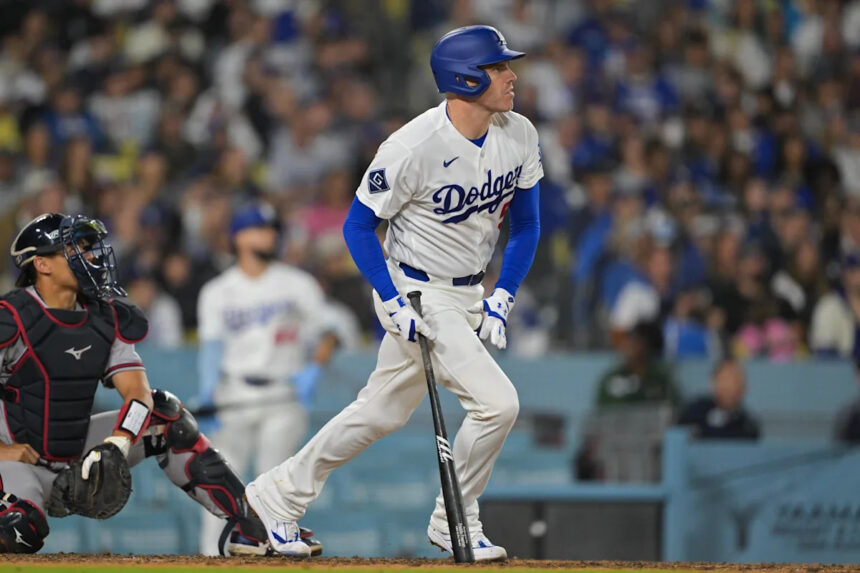
The Los Angeles Dodgers and Atlanta Braves split their weekend series on Saturday with a 7-2 Braves victory, but the scoreboard felt secondary. A heavy, collective silence settled over Dodger Stadium as the news broke that Bobby Cox, the Hall of Fame manager who defined an era of Atlanta baseball, had passed away at the age of 84. For Braves fans, it was a gut punch. For Freddie Freeman, it was the loss of a mentor, a baseball father, and the man who taught him what it meant to be a Brave.
Freeman, now the first baseman for the Dodgers, found himself in an emotional vortex. He was preparing to face his former team just hours after learning his first big-league manager had died. In a candid, pregame interview with SportsNet LA’s Kirsten Watson, Freeman didn’t just offer a soundbite. He offered a window into a relationship that transcended wins and losses—a bond forged in the final days of Cox’s legendary tenure.
The 20-Game Tutelage That Changed Everything
It is easy to forget that the Freddie Freeman we know today—the MVP, the World Series champion, the face of a franchise for a decade—was once a raw, 21-year-old rookie. He was called up to the Braves in September of 2010, a time when the dugout was still commanded by the stoic, chewing-gum-chomping Bobby Cox. Cox was managing his final season, a swan song after 25 years at the helm across two stints (1978–1981 and 1990–2010).
Freeman only played 20 games under Cox. But to hear him tell it, that brief exposure was a masterclass in leadership. “I’ve been thinking all morning about memories and interactions with him, and a lot of it is baseball,” Freeman said, his voice carrying the weight of genuine grief. “But my favorite memory of Bobby is 2017 spring training… Most of my interactions at that time with Bobby had been all baseball.”
It is remarkable that a player of Freeman’s caliber—a man who has played in over 1,800 games—still counts those 20 games as foundational. Cox’s genius wasn’t in complex analytics or fiery speeches. It was in creating an environment where young players like Freeman could breathe. Cox protected his rookies, letting them fail without fear. He instilled a simple, powerful creed: play hard, respect the game, and trust your teammates. That ethos became the backbone of Freeman’s own leadership style.
The Moment Baseball Stopped: A Hall of Famer Meets a Baby
While Cox’s managerial resume is undeniable—five National League pennants, the 1995 World Series title, and a plaque in Cooperstown—Freeman’s most poignant memory had nothing to do with a box score. It happened years after Cox had retired, during a spring training game in 2017.
“To see Hall of Famer Bobby Cox—the joy on his face once he saw my six-month-old son—that’s stuff I’ll never forget,” Freeman recalled, his eyes glistening. “He lived a great life; everyone loved him in baseball, Braves country loves him… I think a lot of people have heavy hearts, but they’re also having a good time thinking about all the wonderful memories and impacts that Bobby had on their lives today… we’re going to miss him immensely.”
This is the part of the story that statistics cannot capture. Cox was famously gruff with umpires, earning a record 162 ejections. But away from the diamond, he was a gentle giant with an uncanny ability to make people feel valued. For Freeman, seeing the legendary manager melt over a baby was the ultimate reveal. It showed that the man who had guided Greg Maddux, John Smoltz, and Chipper Jones was, at his core, a family man who loved people more than he loved baseball.
This human moment is why the Dodgers organization paused for a moment of silence before the first pitch, honoring both Cox and Ted Turner, the visionary media mogul who built the Braves into “America’s Team.” Turner, who passed away earlier this year, and Cox were the twin pillars of the franchise’s golden age. One built the broadcast empire; the other built the winning culture.
Dave Roberts and the Echo of a Legend
The impact of Bobby Cox was not confined to Atlanta. Dodgers manager Dave Roberts, who faced Cox’s Braves during his playing career, took a moment in his pregame press conference to reflect on the legacy. “He was a Hall of Famer in every sense of the word,” Roberts said. “The way his players played for him, the loyalty he commanded—that’s the ultimate respect.”
Roberts’ words underscore a universal truth in baseball: everyone respected Bobby Cox. He was a fierce competitor who never crossed the line into disrespect. He was a tactician who understood that managing people was more important than managing games. In an era of front-office overreach and data overload, Cox’s old-school approach—trust your gut, trust your players—is increasingly romanticized. And rightly so.
For the current Braves team, the loss of Cox is a spiritual blow. They are a young, talented squad fighting for another division title. But they now carry an extra weight. Every win from here on out is a tribute to the man who taught Atlanta how to win. For the Dodgers, facing the Braves on the day of Cox’s passing created a strange, shared grief. The rivalry was paused. The baseball fraternity mourned together.
Expert Analysis: What Cox’s Legacy Means for the Modern Game
As a sports journalist who has covered the game for two decades, I can say this without hesitation: Bobby Cox’s greatest legacy is the stability he created. In today’s game, managers are hired and fired with alarming frequency. Cox managed the Braves for a quarter-century. That consistency allowed a culture to take root. It allowed young players like Freeman to develop without the chaos of a revolving door in the manager’s office.
Prediction: We will see a wave of tributes from former players across the league in the coming days. But the most lasting tribute will come from the Braves themselves. Expect Atlanta to play with a renewed sense of purpose this week. They will wear a patch on their sleeves. They will dedicate a series to “The Skipper.” And I predict that Freddie Freeman, despite wearing Dodger blue, will find a way to honor Cox in his own way—perhaps with a quiet donation to a charity, or a heartfelt letter to Cox’s family.
The modern game is obsessed with analytics, launch angles, and spin rates. But Bobby Cox’s passing reminds us that baseball is still, at its heart, a human endeavor. It is about relationships. It is about a 21-year-old kid showing up to a big-league clubhouse, terrified, and finding a manager who believed in him. It is about a Hall of Famer holding a six-month-old baby and finding more joy in that moment than in any World Series ring.
Conclusion: A Heavy Heart, But a Full One
As the sun set on Dodger Stadium Saturday night, the Braves had won the game, but the day belonged to memory. Freddie Freeman spoke for an entire generation of players when he said, “He lived a great life.” And he did. Bobby Cox lived a life full of pennants, ejections, and championship parades. But more importantly, he lived a life full of love.
For Freeman, the grief is real. But so is the gratitude. He thanked Cox for teaching him how to be a major leaguer. He thanked him for showing him how to be a father. And he thanked him for being Bobby Cox—the man who made Braves country what it is today.
Rest in peace, Skipper. The game will never be the same.
Source: Based on news from Yahoo Sports.