Gus Atkinson Concussion: England’s Pace Attack Crisis Deepens as Star Bowler Struck Down by Team-Mate Josh Tongue
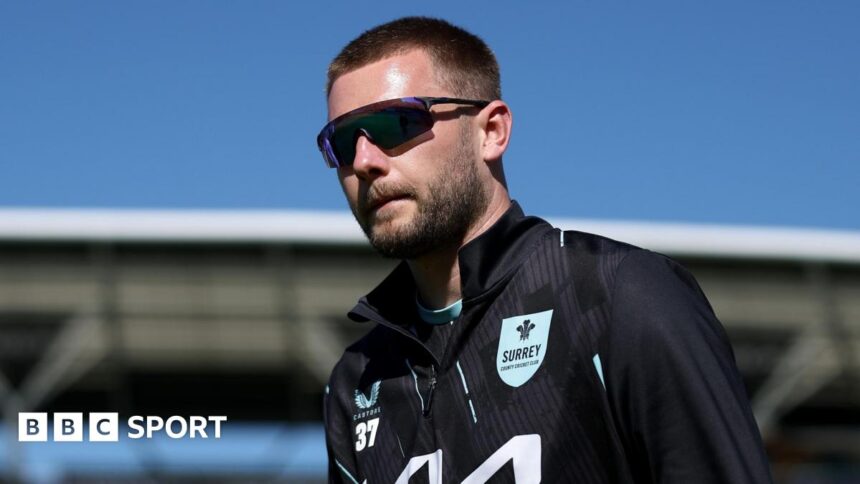
In a cruel twist of fate that has sent shockwaves through English cricket, pace bowler Gus Atkinson has been ruled out of action after suffering a concussion during Surrey’s County Championship clash with Nottinghamshire at Trent Bridge. The injury—inflicted not by an opposing batter, but by his own international team-mate Josh Tongue—could not have come at a worse time. With the England squad for the first Test against New Zealand expected to be named within days, Atkinson’s latest setback adds another layer of fragility to an already depleted pace attack.
Atkinson, 28, was batting in Surrey’s first innings when he was struck on the head twice in successive Tongue overs. The second blow was particularly nasty, forcing the seamer to eventually retire on 27 after initially trying to bat on. He has since been replaced in the match by Reece Topley, but the implications for England’s Test summer are far more significant.
This is not an isolated incident. Atkinson missed much of last summer through injury and was famously ruled out of the fifth Ashes Test with a hamstring problem. Now, as England look to build a new-look pace battery for the post-Jimmy Anderson era, the question is no longer just about talent—it is about availability.
The Incident: A Grim Déjà Vu at Trent Bridge
What should have been a routine county fixture for Surrey quickly turned into a medical drama. Atkinson, who has been working his way back to full fitness after a string of soft-tissue injuries, was struck on the helmet by a short ball from Josh Tongue—a bowler who himself is no stranger to the England setup. The first blow was concerning enough, with the Surrey physio rushing out to assess the batter. Atkinson waved away immediate treatment and continued his innings.
But then came the second. In Tongue’s very next over, another bouncer reared up and crashed into Atkinson’s helmet, this time with sickening force. The Surrey medical staff immediately called for a concussion assessment. Atkinson, clearly dazed, was checked on the field but again insisted on continuing. It was only after a few more deliveries that he finally pulled the ripcord, walking off the pitch with visible discomfort and retiring on 27.
“It was a horrible moment,” one Surrey insider told us. “You could see Gus was struggling. He’s a tough lad, but the second hit really shook him. The decision to retire was the right one, but it’s a massive blow for him and for England.”
The incident has reignited the debate about player safety and the frequency of bouncers in county cricket, especially when bowlers are facing their own international colleagues in high-intensity domestic matches.
England’s Pace Bowling Crisis: A Perfect Storm
Atkinson’s concussion is not just a personal tragedy—it is a strategic nightmare for England’s Test selectors. The team is already navigating a transition phase without the legendary James Anderson, who retired from Test cricket last summer. The pace attack was supposed to be rebuilt around a core of Mark Wood, Ollie Robinson, and Gus Atkinson. But that plan is unravelling fast.
- Mark Wood is currently managing a chronic elbow issue and has been used sparingly in red-ball cricket.
- Ollie Robinson has struggled with back spasms and has not played a full county season in two years.
- Josh Tongue, ironically the bowler who caused the concussion, is himself returning from a long-term shoulder injury.
- Jofra Archer remains a long-shot for Test cricket, with his focus on white-ball formats and injury management.
England’s head coach Brendon McCullum and captain Ben Stokes have preached a philosophy of aggressive, fearless cricket. But you cannot be fearless when your fast bowlers are dropping like flies. The concussion to Atkinson, coming on the back of his hamstring issues last summer, raises serious questions about the workload management of England’s pace assets.
“We’re seeing a pattern,” says former England bowler Steven Finn, now a pundit. “These guys are being pushed to their limits in county cricket, then expected to hit the ground running in Test matches. Gus Atkinson is a world-class talent, but his body is sending alarm signals. England need to protect him from himself.”
Expert Analysis: What This Means for the New Zealand Series
The first Test against New Zealand at Lord’s is just weeks away. England were expected to name a 14-man squad that included Atkinson as a key part of the pace attack. Now, that selection is in serious doubt. The concussion protocols in English cricket are strict: a player diagnosed with concussion must sit out for a minimum of seven days, and often longer depending on symptoms. Given the severity of the second blow, Atkinson could be sidelined for up to three weeks.
That leaves England with a conundrum. Who steps in?
Reece Topley—the man who replaced Atkinson in the Surrey match—is a left-arm swing bowler with a strong white-ball pedigree, but his Test credentials are thin. He has played just three Tests for England, taking six wickets at an average of 42. He is also injury-prone, having missed large chunks of the last two seasons with various niggles.
Another option is Matthew Potts, the Durham seamer who impressed on his Test debut in 2022 but has since fallen out of favour. Potts has a first-class average of 24.5 and offers genuine pace, but he lacks the sheer raw speed that Atkinson brings. Brydon Carse is also in the conversation, though his bowling has been inconsistent at the highest level.
“England need a point of difference,” says Michael Atherton, the former captain and respected analyst. “Atkinson gives you that extra yard of pace and the ability to bounce out batters. Without him, the attack could look a bit samey. It’s a massive loss.”
The selectors may also consider fast-tracking Josh Tongue into the Test squad, despite his role in Atkinson’s concussion. Tongue has been impressive for Nottinghamshire this season, taking 18 wickets at an average of 22. But the optics of selecting a bowler who concussed his own team-mate—even accidentally—would be awkward, to say the least.
Predictions: The Road Ahead for Atkinson and England
Gus Atkinson is a fighter. Those who know him describe a player who has overcome significant adversity to reach the international stage. He made his Test debut in 2024 against the West Indies and immediately looked the part, clocking speeds in excess of 90 mph and showing a natural ability to generate bounce. His hamstring injury last summer was a setback, but he worked tirelessly to return for the County Championship season.
Now, he faces another mental and physical hurdle. The concussion protocol is designed to protect players from long-term brain damage, and Atkinson must follow it to the letter. There can be no shortcuts. The good news is that he is young enough—28 is still prime age for a fast bowler—and talented enough to come back stronger.
“He will be back,” predicts Stuart Broad, the recently retired England legend. “Gus has the mentality of a Test cricketer. He’s not going to let this define him. But England have to be smart. They cannot rush him back for the New Zealand series if he’s not 100 per cent. One more injury could derail his entire career.”
For England, the short-term prognosis is grim. The pace attack for the first Test at Lord’s could feature Chris Woakes (who is more effective in home conditions), Ollie Robinson (if fit), and Mark Wood (if his elbow holds up). That leaves a lot of ifs. The selectors may even turn to Sam Curran as a bowling all-rounder, though his Test record is modest.
But the bigger picture is about squad depth. England have invested heavily in their pace bowling infrastructure, with central contracts, sports science support, and rotation policies. Yet the injuries keep coming. Atkinson’s concussion is a stark reminder that even the best-laid plans can be undone by a single delivery.
Strong Conclusion: A Test of Character for English Cricket
Gus Atkinson’s concussion is more than just a medical update—it is a test of character for English cricket. The sport has made huge strides in concussion management and player welfare, but incidents like this expose the inherent risks of fast bowling. Atkinson will recover, but the scars—both physical and mental—will take time to heal.
Meanwhile, England’s selectors face a pivotal decision. Do they rush Atkinson back for the New Zealand series, risking a recurrence or a long-term decline? Or do they give him the time he needs, sacrificing short-term results for long-term gain? The answer should be obvious: player health comes first.
For the fans, this is a frustrating déjà vu. For Atkinson, it is another chapter in a career that promises so much but has been plagued by bad luck. And for England, it is a stark reminder that the road to Ashes redemption—and beyond—runs through a minefield of injuries, concussions, and cruel fate.
One thing is certain: when Gus Atkinson does return—and he will—the roar from the Lord’s crowd will be deafening. Because English cricket knows it needs this man, fully fit and firing, to lead their pace attack into the future. Until then, the wait continues.
Source: Based on news from BBC Sport.