F1 Q&A: Where the 2026 Rules & Calendar Congestion Problems Really Started
Formula 1 is a sport of perpetual motion. As the chequered flag waves on one race, the engineering and political machinery is already grinding away on the next. But right now, that machinery is producing more friction than horsepower. We are in the middle of a regulatory storm that feels different. The 2026 power unit rules—meant to be the great equalizer and a magnet for new manufacturers—are now being publicly re-tweaked before a single car has turned a wheel under them. Meanwhile, the calendar groans under the weight of 24 races, leaving teams, drivers, and fans exhausted.
In a recent BBC Q&A, F1 correspondent Andrew Benson fielded a blistering question from a fan named Michael, who called the 2026 regulation changes “the worst I can remember.” That is a heavy charge. But looking at the data, the politics, and the recent emergency meetings, it is a charge that carries significant weight. Let’s break down exactly where the problems started—and where they are heading.
The Audi Paradox: How a “Win” for F1 Became a Design Headache
To understand the 2026 crisis, you have to go back to the sales pitch. When the FIA and Formula 1 management drafted the new engine regulations, they had one primary target in their sights: Audi. The German manufacturer had been circling F1 for years, but they needed a specific hook. That hook was the increased electrical power output of the 2026 power units.
Audi were enticed to enter a works F1 team by the engine rules introduced this year. The key selling point? The 2026 engine is designed to split power roughly 50/50 between the internal combustion engine (ICE) and the electric motor. For Audi, this was a marketing goldmine. They could say, “Our road cars are electrifying, and so is our F1 engine.” It was a perfect alignment of racing heritage and electric vehicle (EV) strategy.
But here is the rub. That 50/50 split, while brilliant for a press release, creates a terrifying technical reality on track. With such a heavy reliance on electrical energy, the battery deployment strategy becomes everything. When the battery runs out of juice—which it will, multiple times per lap—the car becomes a significantly slower, heavier machine. The current simulations suggest drivers will have to lift and coast dramatically on straights to recharge, a far cry from the “push every lap” mentality of the current V6 hybrids.
The problem started because the rules were written with marketing departments in mind, not necessarily the racing purists. The FIA wanted a “green” engine that sounded like a race car but drove like a hybrid road car. The result is a technical specification that is already being described as “unraceable” by several team principals.
The Miami Meltdown: When the Tweaks Started
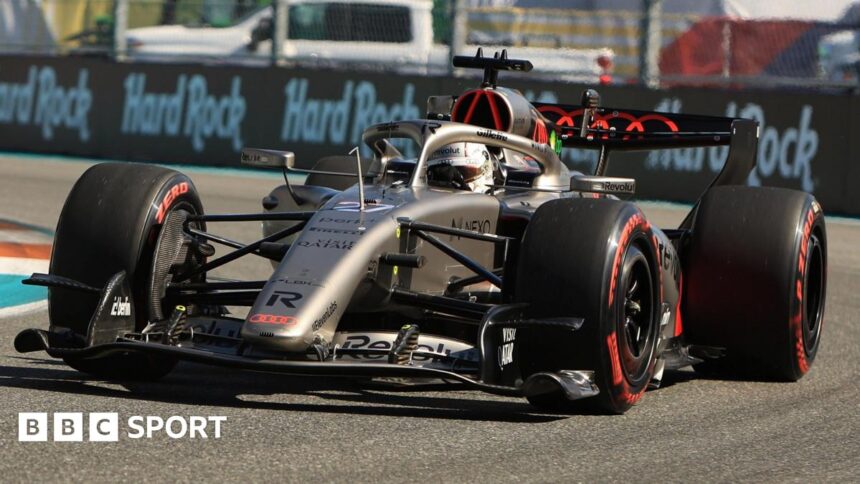
The cracks in the facade began to show in the simulator rooms of top teams last winter. But the public acknowledgment of a problem came at the Miami Grand Prix. That race weekend was the first since a series of tweaks designed to address concerns about the 2026 engine regulations.
Let’s be clear: these were not minor adjustments. The FIA and F1 management agreed to emergency measures to alter the drag reduction philosophy and the electrical energy deployment profiles. The original 2026 plan called for a “manual” overtaking mode that would give the chasing car a massive electrical boost. But the simulations showed that this would create a “push-to-pass” on steroids, where the overtaking car would fly past, only to have its battery drain and get re-passed two corners later. It was a recipe for artificial, video-game style racing.
Further tweaks agreed upon since Miami include:
- Reducing the electrical power peak to prevent the “yo-yo” effect of battery depletion.
- Adjusting the active aerodynamics to allow for more natural slipstreaming rather than relying solely on electric boost.
- Changing the weight distribution targets to prevent the cars from becoming “battery sleds” that are impossible to rotate in slow corners.
These changes are a tacit admission that the original 2026 concept was flawed. The sport’s bosses are now in a frantic race to fix the product before the first engine fires up on a test bench in 2025. This is unprecedented. We are essentially rewriting the rulebook for an engine formula that hasn’t even been built yet.
Calendar Congestion: The Silent Killer of Quality
While the 2026 engine drama dominates headlines, the calendar congestion is a slow-burning disaster that is equally damaging. The 2024 season features 24 Grands Prix, a record number. The problem isn’t just the quantity; it’s the geography and the logistics.
F1 has become a global circus that rarely sleeps. We are seeing triple-headers that stretch from Baku to Miami to Imola, crossing multiple time zones and climates. The impact on the workforce is severe. Mechanics, engineers, and hospitality staff are reporting burnout at alarming rates. The sport is now facing a talent drain, not because of pay, but because of the sheer physical toll of the schedule.
But the bigger issue is the dilution of the product. When you have 24 races, each individual event loses its prestige. The Monaco Grand Prix used to be the jewel in the crown. Now it is just another weekend in a marathon. Furthermore, the packed calendar leaves zero room for testing. The current cars are so complex that teams rely on simulation, but the lack of real-world track time means that when a new upgrade arrives, it is a gamble.
The calendar congestion also directly impacts the 2026 rules problem. With no testing days available, how will teams debug the new active aerodynamics and complex hybrid systems? The first race of 2026 in Australia could be a disaster of reliability issues, grid penalties, and cars failing to finish. The sport has painted itself into a corner where there is simply no time to fix things.
The 2027 Fix: A Band-Aid or a Reset?
Here is where the story gets even more convoluted. Since the Miami tweaks, F1 bosses have agreed to further changes to engine design for the 2027 season. This is a major admission of failure. The 2026 rules were supposed to be locked in for at least five years to give Audi, Honda, and Ford (with Red Bull) stability. Now, we are already talking about “Phase 2” before “Phase 1” has even started.
The 2027 changes are expected to focus on simplifying the MGU-K (the motor generator unit that harvests energy from braking) and increasing the allowable fuel flow to the internal combustion engine. In plain English: they want to make the engine louder and more powerful, and reduce the reliance on the complex electrical gubbins that make it so heavy and expensive.
This creates a massive problem for Audi. They signed up for a specific technical challenge that aligned with their road car strategy. If the FIA starts watering down the electrical component in 2027, Audi’s marketing justification for entering F1 weakens. You have to ask: Did F1 sell Audi a bill of goods?
My prediction is that we will see a further “softening” of the 2026 rules before the first race. The FIA cannot afford to have the cars look slow or sound weak on television. The sponsors will revolt. Expect a last-minute push to increase the rev limit of the ICE (currently capped at 10,000 rpm) to give the cars a more aggressive sound, even if it compromises fuel efficiency.
Conclusion: The Sport Needs to Stop Over-Engineering Itself
Michael, the fan who wrote to the BBC, is right. This is the worst regulation change in recent memory, but not for the reasons most people think. The problem is not the technology itself. The problem is that F1 has become a sport run by committees that prioritize marketing buzzwords over racing reality.
The 2026 rules were sold as the future. But the future looks a lot like a compromise: a heavy, complicated, battery-dependent car that requires constant rule-tweaking to make it raceable. Meanwhile, the calendar congestion is suffocating the human element of the sport.
The solution is brutal but simple. F1 needs to cut the calendar back to 18 races. It needs to delay the 2026 engine rules by one year to allow for proper testing and debugging. And it needs to stop listening to marketing departments and start listening to drivers and engineers who say that a 50/50 power split is a technological dead end for wheel-to-wheel racing.
If the sport doesn’t course-correct now, the 2026 season will not be a celebration of a new era. It will be a season of damage control, where the most exciting part of the weekend is the press conference about the next rule change. And that is a tragedy for a sport that should be about the thrill of the race.
Source: Based on news from BBC Sport.