Katie Archibald Retires: Olympic Champion Exchanges Velodrome for Hospital Ward
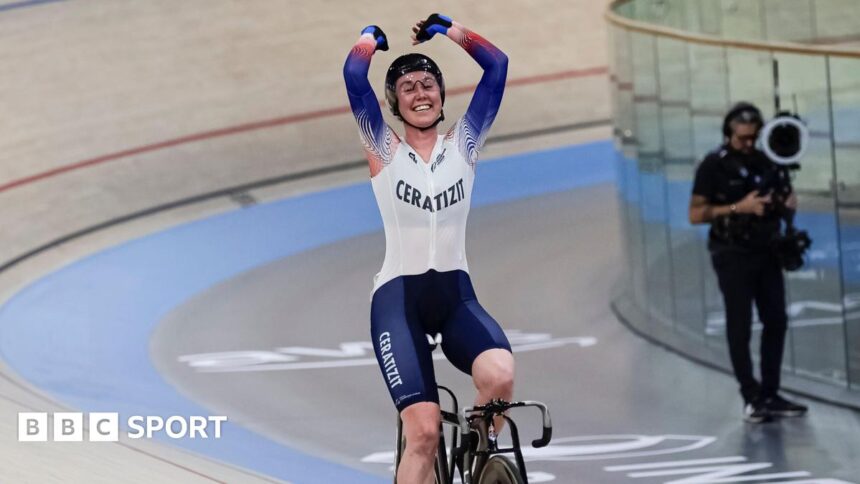
In a move that has stunned the cycling world but warms the heart, Great Britain’s most decorated track cyclist, Katie Archibald, has officially announced her retirement from professional cycling. The 32-year-old, a three-time Olympic medallist and multiple world champion, has chosen to step away from the sport—just months before she was set to compete at the 2026 Commonwealth Games in her native Glasgow—because she has “fallen in love” with her new career as a nurse.
Archibald’s decision is not just a retirement; it is a profound shift in identity. For a decade, she has been the bedrock of the British women’s endurance programme, a rider whose tactical intelligence and relentless pursuit of excellence defined an era. But as she told British Cycling, “The draw of the ‘real world’ has been pulling me for a while.”
This is not a story of burnout, injury, or fading glory. It is a story of a champion who found a second calling—and chose it over gold medals.
From Olympic Glory to NHS Scrubs: The Unlikely Transition
Katie Archibald leaves the Great Britain Cycling Team at the absolute peak of her powers. She is a current world and European champion, and an integral part of the women’s team pursuit squad that still holds the world record. Her palmares includes Olympic gold in Rio 2016, silver in Tokyo 2020, and bronze in Paris 2024—a consistent arc of excellence that few athletes ever achieve.
Yet, behind the scenes, Archibald was already charting a different course. While training for the Paris Olympics, she began studying nursing. What started as a pragmatic plan for life after sport quickly became something more consuming. In recent interviews, she has described the hospital environment as “electric,” a place where she feels genuinely useful in a way that even winning a world title could not replicate.
- Olympic Achievements: Gold (2016), Silver (2020), Bronze (2024) in team pursuit and madison events.
- World Titles: Multiple golds in team pursuit and scratch race disciplines.
- World Record Holder: Part of the historic women’s team pursuit squad.
- Commonwealth Selection: Named in December 2025 for Team Scotland’s 2026 squad alongside Lauren Bell and Mark Stewart.
Her decision to retire now, despite being pre-selected for a home Commonwealth Games, underscores the depth of her commitment to nursing. For most athletes, a home Games in Glasgow would be a dream finale. For Archibald, the daily reality of helping patients on a ward has become the greater prize.
Expert Analysis: What Cycling Loses—and What Nursing Gains
As a sports journalist who has covered Archibald’s career since her breakthrough at the 2014 Commonwealth Games, I can say with certainty that British cycling is losing one of its most intelligent and versatile competitors. Archibald was never just a power rider; she was a tactical genius on the track. Her ability to read a race, to know exactly when to attack or when to sit in, made her the perfect anchor for the team pursuit squad and a feared opponent in the madison and omnium.
Her departure creates a significant void in the women’s endurance programme. With the 2028 Los Angeles Olympics on the horizon, British Cycling must now accelerate the development of younger riders like Neah Evans and Elinor Barker to fill the leadership gap. However, Archibald’s legacy is not just in medals; it is in the professionalism and work ethic she instilled in the squad.
What makes this retirement unique is the timing and the motivation. Most athletes retire because their body says no. Archibald is retiring because her heart said yes—to something else. The nursing profession gains a practitioner who understands pressure, teamwork, and the importance of staying calm in a crisis. These are skills honed in the cauldron of Olympic finals, and they translate directly to the hospital floor.
“The draw of the ‘real world’ has been pulling me for a while. I’ve fallen in love with nursing in a way I didn’t expect. It feels like the most important work I’ve ever done.” – Katie Archibald to British Cycling.
This quote is the key to understanding her decision. For Archibald, cycling was a job she excelled at. Nursing is a vocation she adores. The shift from “athlete” to “healthcare professional” is not a step down; it is a step sideways into a different kind of fulfillment.
Predictions: The Ripple Effect on British Cycling and the Commonwealth Games
Archibald’s retirement sends shockwaves through the planning for the 2026 Commonwealth Games in Glasgow. She was the marquee name on the cycling team, the hometown hero expected to deliver gold in front of a Scottish crowd. Without her, Team Scotland’s medal hopes in the women’s endurance events take a significant hit.
Here are my key predictions for the immediate future:
- Team Scotland will reshuffle: Expect Lauren Bell to step into the leadership role for the team pursuit and points race. Bell is a talented rider, but she lacks Archibald’s experience in high-pressure finals.
- British Cycling’s selection policy will evolve: Archibald’s exit may prompt a review of how the national team supports athletes who pursue dual careers. If a world champion can be pulled away by a “real world” job, the sport must offer more compelling reasons to stay.
- Archibald will become an advocate for healthcare: Do not be surprised if she becomes a public face for nursing recruitment in the UK. Her profile is enormous, and her story is inspirational. She has the platform to make a tangible difference to the NHS workforce crisis.
- The women’s team pursuit world record may stand for years: The current squad, anchored by Archibald, set a benchmark that will be difficult to replicate without her specific skill set. New Zealand and Australia will now see a window of opportunity.
From a journalistic perspective, this is the most interesting retirement story in years. It is not about decline; it is about evolution. Archibald is leaving on her own terms, at the top of her game, because she found something that matters more. That is a rare and powerful narrative.
Strong Conclusion: A Champion’s Final Lap
Katie Archibald’s retirement is not an ending; it is a transfer of excellence. She will no longer chase rainbow jerseys or Olympic rings, but she will chase patient recoveries and quiet moments of care. The velodrome’s loss is the hospital ward’s gain.
In a sporting world often obsessed with longevity and legacy, Archibald has redefined what a “successful career” looks like. She leaves with a treasure chest of medals, a world record, and the respect of every rider she ever raced against. But she also leaves with something more valuable: the courage to walk away from glory to serve others.
For the fans, there is sadness. We will not see her signature long-range attack at the Commonwealth Games. We will not hear the roar of the Glasgow crowd as she crosses the line first. But there is also joy—joy that a champion has found happiness outside the bubble of elite sport.
As she hangs up her wheels and pulls on her scrubs, Katie Archibald reminds us that the greatest victories are not always measured in gold. Sometimes, they are measured in lives touched and care given. That is a legacy no world record can capture.
Final Word: Thank you, Katie, for the medals, the memories, and the masterclass in knowing when to change lanes. The world of cycling is poorer without you on the track, but the world of nursing is infinitely richer with you on the ward.
Source: Based on news from BBC Sport.