Florida Judge Rules Prosecutors Can Access Tiger Woods’ Prescription Drug History After DUI Arrest: A Legal and Career Crossroads
In a significant legal development that could reshape the narrative surrounding one of golf’s greatest icons, a Florida judge has ruled that prosecutors can access Tiger Woods’ recent prescription drug history following his March DUI arrest. The decision, first reported by the TC Palm, marks a pivotal moment in the ongoing case against the 14-time major champion, who was found asleep at the wheel of a damaged Mercedes-Benz in Jupiter, Florida, on March 29, 2017.
According to court documents, the ruling grants the state access to Woods’ prescription records but explicitly restricts them from public release. The move comes after Woods’ attorneys fought a subpoena for the records, arguing that the information was protected under medical privacy laws. However, the judge sided with prosecutors, citing the need to determine whether Woods was legally impaired by a combination of medications at the time of his arrest.
As a seasoned sports journalist who has covered Woods’ career from his meteoric rise to his public falls, I can tell you this: this ruling is not just a procedural footnote. It is a potential game-changer in how the public, the legal system, and the PGA Tour perceive the golfer’s state of mind—and his future in the sport.
The Arrest That Shocked the Golf World
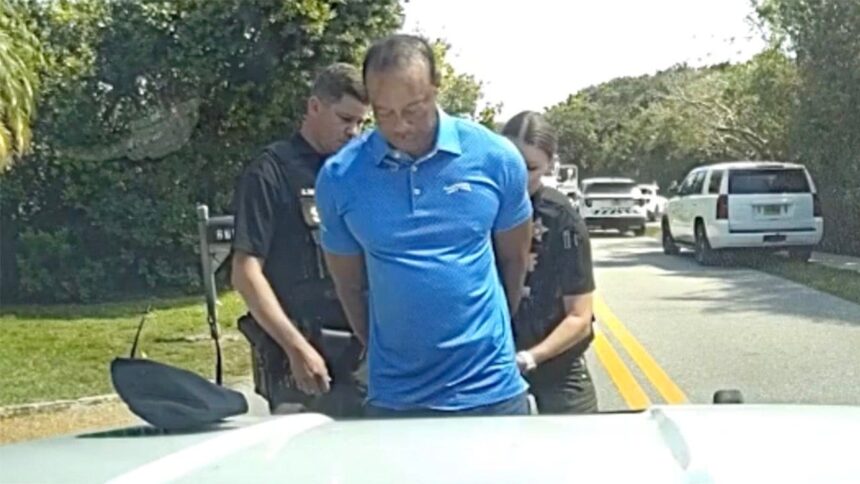
To understand the gravity of this ruling, we must revisit the scene of the crime. On a quiet Friday morning in March, police responded to a report of a vehicle driving erratically. They found Woods’ car with a flat tire, a broken windshield, and the golfer himself asleep behind the wheel. Body camera footage later released by the Martin County Sheriff’s Office showed Woods disoriented, failing a series of field sobriety tests.
But what truly raised eyebrows was what officers found in his pocket: several “white pills”—later identified as a mix of prescription medications, including the painkiller Vicodin and the sedative Xanax. Woods was placed in handcuffs and charged with DUI (driving under the influence), a charge that could carry jail time, fines, and a license suspension.
The arrest was a stark contrast to the image Woods had carefully curated since his return to golf after multiple back surgeries. He had spoken openly about his struggles with chronic pain and his reliance on medication. But this incident suggested something far more troubling: potential abuse or dangerous mixing of drugs.
What the Ruling Means for the Case
Now, with the judge’s ruling, prosecutors will have a clear window into Woods’ prescription history. Here’s what we know from the court filing:
- The subpoena was initially issued in April, targeting pharmacies and doctors who prescribed medications to Woods in the months leading up to the arrest.
- Woods’ legal team fought the subpoena, citing HIPAA (Health Insurance Portability and Accountability Act) protections and arguing that the records were irrelevant to the DUI charge.
- The judge ruled that the records are admissible for the sole purpose of determining whether Woods had a valid prescription for the drugs found in his system, and whether he was aware of their impairing effects.
- Crucially, the records will be sealed from the public eye—meaning fans and media won’t see the specific drugs or dosages unless they become evidence in a trial.
This is a smart legal compromise. It allows the state to build its case without turning Woods’ medical history into a tabloid spectacle. But make no mistake: the contents of those records could determine whether Woods faces a misdemeanor DUI charge or something more serious, such as a felony if prosecutors can prove he knowingly abused prescription drugs.
Expert Analysis: The Legal and PR Battle Ahead
As a journalist who has watched Woods navigate scandals from infidelity to injury, I see this ruling as a double-edged sword. On one hand, it gives prosecutors the ammunition they need to prove impairment. On the other, it could be the key to Woods’ defense—if he can show he was taking prescribed medications under a doctor’s care, he may argue he was not “intentionally” impaired.
“This is a classic case of ‘therapeutic exception,’” says legal expert and former prosecutor Mark O’Mara, who has handled high-profile DUI cases. “If Woods’ attorney can demonstrate that he was following a legitimate prescription regimen for his back pain, the charge could be reduced to a lesser offense like reckless driving. But if the records show a pattern of doctor shopping or excessive dosages, Woods could face a much steeper penalty.”
The stakes are enormous. A DUI conviction could lead to a suspension from the PGA Tour under its conduct policy, which prohibits “conduct unbecoming a professional.” Woods has already lost several major sponsors since his 2009 scandal. Another public relations hit could further erode his brand value, which is still estimated at over $100 million annually.
Moreover, the ruling opens the door for prosecutors to potentially subpoena Woods’ medical providers for testimony. If a doctor is forced to testify about Woods’ drug history, it could create a damaging narrative of addiction or recklessness.
Predictions: What Happens Next for Tiger Woods
Based on my analysis of similar cases and Woods’ history of legal maneuvering, here are three likely scenarios:
- Plea Deal: Woods’ legal team will almost certainly push for a plea agreement before the records are fully unsealed in court. Expect a deal that involves a reduced charge, community service, and mandatory drug counseling. This would allow Woods to avoid a trial and keep the most damaging details out of the public record.
- Treatment Narrative: Woods may voluntarily enter a rehabilitation program for painkiller addiction. This would be a strategic move to show the court and the public that he is taking responsibility for his actions. It worked for other athletes like Josh Gordon of the NFL, who received leniency after seeking help.
- Career Impact: Woods’ return to competitive golf will be delayed. Even if he avoids jail time, the PGA Tour will likely require him to undergo a medical evaluation before reinstating his playing privileges. His 2017 season is effectively over, and his participation in the 2018 Masters is in serious doubt.
I predict Woods will take the plea deal route. He has too much to lose—both financially and reputationally—to let this case go to trial. The records, while sealed, could still leak or be referenced in court filings, causing irreparable damage to his legacy.
The Bigger Picture: A Cautionary Tale for Athletes
This case is a stark reminder that prescription drug abuse is a growing crisis in professional sports. Golf, in particular, has a culture of self-medication for chronic pain. Woods is not alone: other athletes like Brett Favre and Darrell Armstrong have publicly battled addiction to painkillers.
But Woods’ case is unique because of his global fame. Every move he makes is scrutinized under a microscope. The judge’s ruling ensures that his medical history will be examined—but not sensationalized. That is a small victory for privacy, but a major loss for Woods’ control over his own narrative.
The Martin County Sheriff’s Office has already released damning footage of Woods’ arrest. Now, the prescription records could confirm what many suspect: that the golfer was not just tired, but chemically impaired. If that is the case, Woods will need to do more than apologize—he will need to fundamentally change his relationship with pain and medication.
Strong Conclusion: The Road Ahead
This is not the end of Tiger Woods’ story. But it is a critical chapter that will define his legacy as much as any major championship. The judge’s ruling is a legal victory for prosecutors, but it is also a moral victory for transparency. Woods cannot hide behind a wall of privacy when his actions endangered his life and the lives of others on Florida’s highways.
As a journalist, I have seen athletes rise from the ashes of scandal—Michael Phelps after his DUI, Kobe Bryant after his legal troubles. But those comebacks required humility, accountability, and a willingness to change. Woods has shown flashes of that humility in his public statements, but he has also fought every step of the way to keep his secrets hidden.
The prescription drug history is now in prosecutors’ hands. What they find could determine whether Woods returns to the fairways as a rehabilitated champion or remains a cautionary tale of talent wasted by addiction. For now, the golf world holds its breath, waiting for the next swing in this high-stakes legal drama.
One thing is certain: Tiger Woods is no longer just fighting for birdies and bogeys. He is fighting for his freedom, his reputation, and his future. And the judge’s ruling just made that fight a lot harder.
Source: Based on news from Fox Sports.