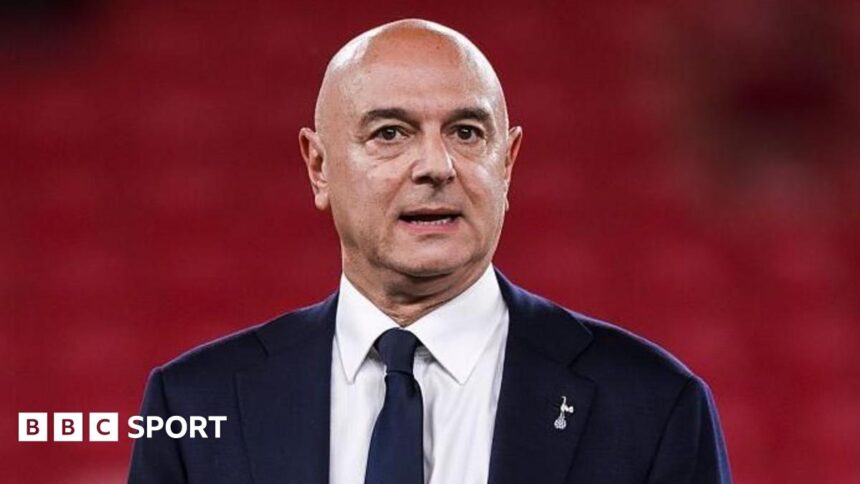
From the Boardroom to the Brink: Ex-Spurs Chief Levy Never Imagined Relegation Fight
In the high-stakes world of Premier League football, few figures have been as synonymous with a club’s identity as Daniel Levy was with Tottenham Hotspur. For 25 years, he was the architect, the negotiator, and the ultimate decision-maker. He built a state-of-the-art stadium, a world-class training ground, and transformed Spurs into a club that consistently challenged for the Champions League. But as the 2026 season reaches its nail-biting climax, a chilling reality has set in: Tottenham Hotspur are in a genuine relegation fight. And according to Levy himself, this was a scenario he “never in a million years” believed possible after he stepped down as executive chairman in September.
Speaking exclusively ahead of the final two matchdays, Levy admitted that the club’s current predicament is a nightmare he never scripted. “Relegation was not something we ever considered during my 25 years in the role,” he stated. Yet, a catastrophic run of form in early 2026 saw Spurs plummet into the bottom three, turning the season of supposed transition into a desperate battle for survival. Now, with just two games remaining, Tottenham sit two points above third-bottom West Ham United, clinging to their top-flight status by the thinnest of margins.
The Unthinkable Fall: How Spurs Slipped into the Drop Zone
To understand the magnitude of this crisis, one must rewind to the autumn of 2025. Levy’s departure was framed as a new era, a chance for fresh leadership to take the reins of a club that had finished in the top six for seven consecutive seasons. But the transition was anything but smooth. The squad, a curious mix of expensive signings and academy graduates, lacked cohesion. Injuries ravaged the spine of the team, and a string of managerial appointments failed to stem the tide.
The nadir arrived in February 2026. A 4-0 drubbing at the hands of a mid-table side was followed by a humiliating loss to a newly promoted team. Suddenly, the unthinkable became a statistical reality. Tottenham were in the relegation zone. For a club that had spent over £800 million on transfers in the last decade, the optics were disastrous. The defensive record was abysmal, shipping over two goals per game during that wretched run. The attack, once spearheaded by Harry Kane’s ghost, looked blunt and predictable. The tactical identity was non-existent.
“I don’t think anyone inside the club saw this coming,” Levy confessed. “We planned for a season of consolidation, maybe a push for Europe. We did not plan for this.” His admission underscores the sheer unpredictability of the Premier League. A club with Tottenham’s commercial power, global brand, and infrastructure should not be fighting for survival. Yet, here they are. The data is damning: only three teams have a worse expected goals (xG) differential over the last 15 matches. The midfield has been overrun, the full-backs exposed, and the goalkeeper, despite heroic efforts, has been isolated.
The Great Escape: Eight Points from the Last Twelve
But just when the obituaries were being written, Tottenham showed a pulse. In the last four matches, a remarkable turnaround has given the club a fighting chance. Eight points from a possible twelve has lifted them out of the bottom three and into 16th place. The catalyst? A return to basics. The interim manager abandoned expansive, high-risk football for a more pragmatic, defensive structure. The result was a gritty 1-0 win against a top-four side, followed by a crucial 2-2 draw against a relegation rival, and back-to-back victories against teams with nothing to play for.
This recent form has been built on resilience rather than flair. The midfield has finally provided a shield for the back four. The set-piece defending, a weakness all season, has tightened. And crucially, the players have rediscovered their belief. “The mood in the camp has changed completely,” one source close to the squad revealed. “Two weeks ago, it was doom and gloom. Now, there’s a sense that we can actually do this.”
Levy, watching from the stands, has been visibly emotional. “To see the players fight like that, to see the fans roar them on, it gives you hope,” he said. “But we are not safe yet. Two points above West Ham is nothing. It’s a razor-thin margin.” The math is simple: Tottenham must match or better West Ham’s results in the final two games. A win in either of their remaining fixtures would likely be enough, given their superior goal difference. But one slip, one moment of madness, and the trapdoor opens.
Expert Analysis: Can Tottenham Survive the Final Two Games?
As a sports journalist who has covered the Premier League for two decades, I can tell you that this is the most fascinating relegation battle in years. Tottenham’s remaining schedule is a mixed bag. They face a mid-table team with nothing to play for, which could be a blessing or a curse. Then, on the final day, a trip to a team desperately chasing a European spot. The psychological pressure is immense.
Here is the key factor: Momentum. Tottenham have it. West Ham, in contrast, have taken just two points from their last five games and look shattered. The Hammers are leaking goals and have a tougher run-in, facing two top-six sides. Statistically, Tottenham’s chance of survival is now above 75%, according to most predictive models. But statistics don’t play the game. The intangibles—the weight of the shirt, the pressure of the occasion, the fear of failure—will decide this.
I see a scenario where Tottenham secure safety with a game to spare. The squad, while flawed, possesses individual quality that should not be in this position. Players like James Maddison (if fit) and Son Heung-min have the pedigree to produce magic in a crisis. The midfield battle will be crucial. If Tottenham can control the tempo and avoid early mistakes, they have the firepower to win. However, if they concede first, the old demons will return. The crowd at the Tottenham Hotspur Stadium must be the 12th man. It must be a cauldron of noise, not a library of anxiety.
My prediction: Tottenham will get the four points they need from their final two games. Levy’s club will survive, but the scars will remain. This season has exposed deep structural issues that no amount of stadium revenue can fix. The recruitment strategy has been flawed. The managerial instability has been criminal. This relegation fight is a wake-up call, not a one-off anomaly.
The Long Shadow: What This Means for Tottenham’s Future
Even if Tottenham escape—and I believe they will—the damage is done. The brand is tarnished. The aura of invincibility is gone. Top players will be reluctant to join a club that was one bad weekend away from the Championship. Levy, who stepped down to preserve his legacy, now finds his 25-year reign defined by this near-catastrophe. “I take full responsibility for the decisions that led us here,” he admitted. “But I also believe in the people now in charge to rebuild.”
Rebuilding will require a clear-out. The squad is bloated with underperforming, high-earning players. The manager’s position will be under immediate scrutiny, regardless of survival. The club needs a director of football with a long-term vision, not a short-term fix. Financially, the cost of this fight is enormous. Lost revenue from lower league positions, potential player value depreciation, and the sheer cost of a relegation battle (bonuses, legal fees, etc.) will run into tens of millions.
But there is a silver lining. Surviving this ordeal could forge a new spirit. The bond between the fans and the players, tested to its limit, can become unbreakable. The club can use this as a catalyst for genuine change. Levy’s admission that he never imagined this fight is a powerful statement. It shows that even the most calculated, business-savvy executives cannot control the beautiful game’s chaos.
Conclusion: The Final Whistle Beckons
As the Premier League season reaches its dramatic conclusion, all eyes are on North London. Daniel Levy, the man who built a commercial empire, is now praying for a footballing miracle—or rather, for his team to simply do what they should have done all season: win enough games to stay up. The script has been rewritten. The narrative has shifted from Champions League ambitions to survival fears. “Not in a million years,” Levy said. And yet, here we are.
The next 180 minutes of football will define Tottenham Hotspur for a generation. Will they rise from the ashes, or will they become the biggest story of a fallen giant? The answer lies in the players’ boots, the manager’s tactics, and the roar of a stadium that has seen glory and now faces the abyss. One thing is certain: Daniel Levy will be watching, his heart in his mouth, never having imagined this fight—but now, desperately hoping to win it.
Key Takeaways:
- Daniel Levy admits he “never in a million years” thought Spurs would face relegation.
- Tottenham have taken eight points from the last twelve to climb out of the bottom three.
- They are two points above West Ham with two games remaining.
- Expert analysis suggests survival is likely, but not guaranteed.
- The club faces a major rebuild regardless of the final outcome.
Source: Based on news from BBC Sport.