An iron fist joining a broken club: Inside Mourinho’s Real return
There are press conferences, and then there are spectacles. Rarely do they align with coherent communication strategies. But what Real Madrid president Florentino Perez staged on Tuesday was something else entirely. Emerging after more than a decade without a formal press conference, he raged against journalists, invoked shadowy conspiracies, and warned that they would have to “shoot him out” of the Bernabeu. It was the performance of a man in a bunker, surrounded by enemies both real and invented.
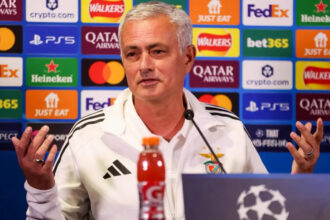
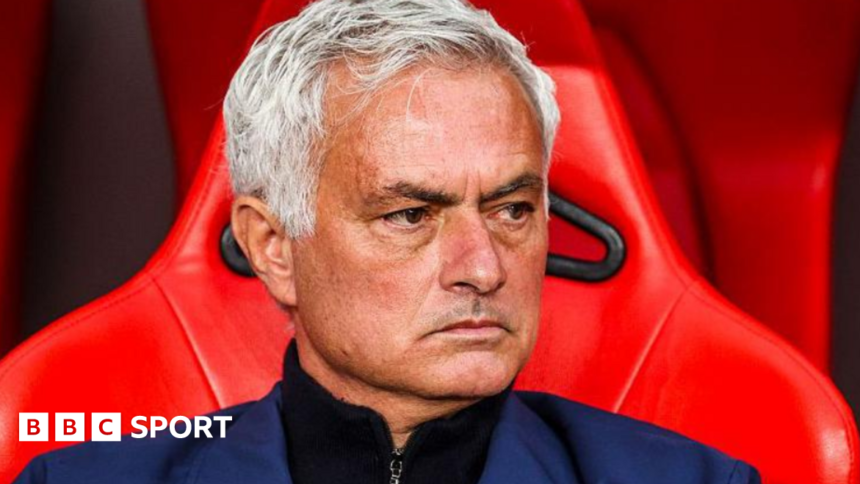
That chaotic hour was more than a tantrum. It was the starting gun of a new era. Because hovering over every furious word was the truth everyone in the room already knew: Jose Mourinho is coming back to Real Madrid, 13 years after his explosive, trophy-laden, and ultimately toxic first stint.
And here is the darkly fitting thing: Mourinho’s entire managerial philosophy—the siege mentality, the us-against-the-world framing, the weaponisation of grievance, the use of media as the enemy—is perfectly calibrated for the climate Perez has spent years cultivating. A president who is highly critical of referees, who believes the media wants to destroy him, and that Barcelona are favoured by La Liga has finally found his ideal coach.
The bunker mentality: Why Perez needed Mourinho
Florentino Perez does not do vulnerability. He is the architect of the Galactico era, the man who rebuilt the Bernabeu into a cathedral of modern football. But Tuesday’s outburst was not a sign of strength. It was a cry of desperation from a president who sees enemies closing in. The refereeing scandals, the Negreira case fallout, the relentless pressure from Catalan media, and a squad that has lost its edge—Perez feels cornered.
Enter Mourinho. The Portuguese coach does not just thrive in chaos; he manufactures it. His return is not a footballing decision. It is a psychological weapon. Perez knows that Mourinho’s first act will be to draw a line in the sand. The players will be divided into two camps: those who fight for the badge, and those who are traitors. The media will be painted as a fifth column. Every refereeing decision will be scrutinised, every perceived slight amplified.
This is not a rebuild. This is a coup d’état of the soul. And Mourinho is the perfect general for a president who has decided that the only way to win is to burn everything down and start again with fire.
What Mourinho brings: A tactical anachronism or a necessary evil?
Let’s be clear: Mourinho’s football has not aged well. His defensive pragmatism at Roma, his struggles at Tottenham, his inability to modernise—these are well-documented. But Real Madrid is not hiring him for his tactical innovations. They are hiring him for his intensity.
Here is what Mourinho will bring to the Bernabeu this time:
- Instant discipline: Players like Vinicius Jr. and Jude Bellingham will be expected to track back. No exceptions.
- Media warfare: Expect weekly press conferences where Mourinho names specific journalists. Expect psychological manipulation of referees before every Clasico.
- A clear hierarchy: The dressing room will be split into loyalists and outcasts. Mourinho will protect his core—likely veterans like Luka Modric and Antonio Rudiger—and discard those he deems weak.
- European pragmatism: In the Champions League, Mourinho will park the bus with surgical precision. Counter-attacks will be the primary weapon.
But there is a risk. The same siege mentality that won the treble at Inter Milan and the La Liga title in 2012 also destroyed the dressing room at Chelsea, Manchester United, and Tottenham. The question is whether a squad full of young, fragile talents like Endrick and Arda Guler can survive his intensity.
The broken club: What Mourinho inherits
Real Madrid is not the same club Mourinho left in 2013. Then, he inherited a team of superstars—Cristiano Ronaldo, Sergio Ramos, Xabi Alonso—who were hungry but undisciplined. Now, he inherits a squad that is imbalanced, injury-prone, and lacking a true defensive identity.
Consider the problems:
- Defensive fragility: David Alaba and Eder Militao are injury risks. The full-back positions are a mess. Nacho is ageing.
- Midfield transition: Toni Kroos is gone. Luka Modric is 39. The new generation—Bellingham, Fede Valverde, Eduardo Camavinga—is talented but tactically raw.
- Attacking over-reliance: Vinicius Jr. is world-class, but Rodrygo is inconsistent. Kylian Mbappe is the crown jewel, but his defensive work rate is notoriously poor.
- Goalkeeping uncertainty: Thibaut Courtois is returning from a serious ACL injury. Andriy Lunin is good, but not elite.
Mourinho will not fix all of this with tactics. He will fix it with fear and motivation. He will demand that every player runs 12 kilometres per game. He will bench anyone who does not press. And he will use Perez’s paranoia as fuel.
The predictions: Success or spectacular collapse?
So, what happens next? Here are three scenarios for Mourinho’s second coming at Real Madrid:
Scenario 1: The short-term triumph. Mourinho wins a trophy—likely the Copa del Rey or a Supercopa—in his first season. The siege mentality works. The players buy in. Perez looks like a genius. But by year two, the cracks appear. The media turns. The dressing room fractures. Mourinho leaves in 2026 with a reputation partly restored.
Scenario 2: The total implosion. The pressure is too much. Vinicius clashes with Mourinho’s authoritarian style. Bellingham refuses to sacrifice his attacking instincts. The team finishes third in La Liga. Mourinho is sacked before Christmas 2025. Perez is forced to apologise to the press.
Scenario 3: The legacy rebuild. Mourinho, now older and wiser, adapts. He hires a modern assistant to handle tactics. He focuses on man-management rather than media warfare. He builds a team that is defensively solid but still creative. He wins La Liga in 2026. He retires on top.
Which is most likely? History suggests Scenario 1. Mourinho’s pattern is consistent: immediate success, then toxicity, then exit. But Real Madrid is a club that rewards short-term results above all else. If Mourinho wins a Champions League—even if he destroys the squad in the process—Perez will call it a victory.
Conclusion: The perfect storm of paranoia
The return of Jose Mourinho to Real Madrid is not a football story. It is a psychodrama. It is the story of a president who has lost faith in institutions, a coach who has lost faith in modern football, and a club that has lost faith in itself.
Together, they will create a spectacle. There will be red cards, touchline bans, press conference meltdowns, and epic Clasico battles. There will be moments of brilliance—a counter-attack goal against Barcelona, a defensive masterclass in the Champions League final. And there will be moments of absurdity—a player thrown under the bus, a journalist banned from the press room, a conspiracy theory about the moon landing.
But in the end, this is a marriage of convenience between two men who believe the world is against them. And in a sport where perception often becomes reality, that belief might just be enough to win. Or it might be enough to destroy everything.
One thing is certain: Real Madrid will never be boring again. Buckle up.
Source: Based on news from BBC Sport.