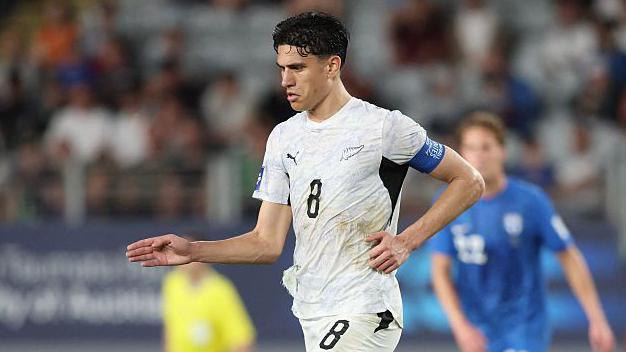
Stamenic Named in New Zealand’s World Cup Squad: A New Era for the All Whites
After a 16-year absence from football’s grandest stage, New Zealand’s All Whites are finally heading back to the FIFA World Cup. The squad announcement has landed with a thunderclap of excitement, and at the heart of this new-look team is Swansea City midfielder Marko Stamenic. The 24-year-old has been officially named in the 26-man party that will travel to the co-hosted tournament in the United States, Canada, and Mexico, which kicks off on 11 June and runs until 19 July.
For a nation that has long punched above its weight in Oceania, this World Cup qualification represents a monumental step forward. The squad is a fascinating blend of seasoned veterans, English-based professionals, and emerging talents. Stamenic’s inclusion is particularly significant, as he embodies the modern, technical, and tenacious style that head coach Darren Bazeley is trying to instil. But this is not just a story of one player; it is a story of a collective ready to test themselves against the world’s elite.
The English Contingent: Stamenic, Wood, and the Championship Core
One of the most striking features of this New Zealand squad is the sheer volume of players plying their trade in the English football pyramid. Eight members of the 26-man roster currently play in England, spanning from the Premier League all the way down to the National League. This is a clear indicator of the growing pathway for Kiwi talent into one of the world’s most competitive football environments.
Marko Stamenic is the midfield engine. Currently at Swansea City in the Championship, he has developed a reputation for his box-to-box energy, crisp passing, and ability to break up play. Having come through the ranks at FC Copenhagen and spent time with Red Star Belgrade, Stamenic brings a level of European experience that is invaluable. His role in the All Whites’ setup will be crucial: he is the link between defence and attack, the player who can dictate tempo and provide a shield for the back four. Expect him to be one of the first names on the team sheet.
Of course, the headline act remains Nottingham Forest striker Chris Wood. The 33-year-old is the talisman, the record goalscorer, and the player who opposing defenders will fear most. Wood’s physical presence, aerial ability, and clinical finishing are world-class. He has scored at the highest level in the Premier League for years, and his leadership in the dressing room will be vital for a squad that includes several players making their World Cup debut.
The English-based list is rounded out by a mix of experience and grit:
- Tommy Smith (Braintree Town) – A veteran defender who offers no-nonsense defending and set-piece threat.
- Liberato Cacace (Wrexham) – A dynamic left-back who has thrived in League One, known for his overlapping runs and crossing.
- Michael Boxall (Minnesota United) – While playing in MLS, he is a stalwart of the backline and provides immense experience.
- Joe Bell (Viking FK) – A deep-lying playmaker who controls the game from midfield.
- Matthew Garbett (NAC Breda) – A young, energetic midfielder with an eye for goal.
- Ben Waine (Portsmouth) – A rising star forward who offers pace and a poacher’s instinct.
This English core gives New Zealand a tactical edge. They are used to the high intensity, physicality, and tactical discipline required in the English leagues, which will be a massive advantage against teams like Belgium and Iran.
Group Stage Gauntlet: Belgium, Egypt, and Iran
The All Whites have been drawn into what many analysts are calling the “Group of Opportunity.” On paper, it is a brutal assignment. They will face Belgium, the world’s top-ranked team for much of the last decade, Egypt, the African giants led by the indomitable Mohamed Salah, and Iran, a notoriously disciplined and defensive Asian powerhouse. However, New Zealand should not be written off.
Belgium may be a generation past their golden era, but they still possess world-class talent like Kevin De Bruyne and Romelu Lukaku. The key for New Zealand will be to frustrate them early. Stamenic and Bell will need to play the game of their lives to cut off supply lines. If they can keep it tight for 60 minutes, Wood’s physicality on set pieces could be a route to a shock result.
Egypt is a different beast. They are a team of immense pace and technical flair. Salah is the obvious danger, but their full-backs and midfielders are also highly skilled. New Zealand’s full-backs, Cacace and likely Tim Payne (Wellington Phoenix), will need to be at their defensive best. The All Whites’ aerial advantage from corners and free-kicks could be their primary weapon here.
Iran is arguably the most winnable fixture. They are well-organized, resilient, and have a strong World Cup pedigree, but they lack the star power of the other two. New Zealand’s physicality and set-piece prowess could be the deciding factor. A win against Iran would be a massive statement and could potentially set up a historic qualification to the knockout stages.
Warm-up friendlies against Haiti and England in early June will be critical. The match against England, in particular, will be a brutal test. It will expose any defensive frailties and give Bazeley a clear picture of whether his team can handle elite pressure. These games are not just for fitness; they are for building belief.
Expert Analysis: Why Stamenic Holds the Key to New Zealand’s Success
As a sports journalist who has covered international football for over a decade, I can tell you this: New Zealand’s success at this World Cup hinges on midfield control. You cannot win games at this level without a strong spine. Chris Wood will score goals if given service, but the service must come from somewhere. That is where Marko Stamenic becomes the most important player in the squad.
Stamenic is not a flashy player. He does not score 20 goals a season. But what he does is cover every blade of grass, win second balls, and transition the team from defence to attack with intelligence. In the Championship, he has been lauded for his work rate and tactical awareness. Against Belgium and Egypt, he will be tasked with man-marking or screening their key playmakers. If he can nullify the influence of a De Bruyne or an Egyptian midfielder, New Zealand have a fighting chance.
Another critical factor is the balance of the squad. Bazeley has selected a mix of youth and experience. The inclusion of veterans like Tommy Smith and goalkeeper Stefan Marinovic provides a calm head in chaotic moments. Meanwhile, the younger legs of Cacace and Waine offer dynamism. The biggest question mark remains the centre-back pairing. New Zealand have struggled against pace in the past, and Egypt’s forwards will test them ruthlessly.
Predictions are always risky, but I see New Zealand finishing third in their group. A draw against Iran and a narrow loss to Egypt are realistic outcomes. A win against Belgium would be the upset of the tournament. However, if Stamenic, Wood, and the English contingent can click, do not be surprised if they snatch a memorable victory. This is not the All Whites of 2010; this is a more professional, more tactically aware team.
The Road Ahead: A Nation’s Hope Rests on These 26 Men
New Zealand football has been waiting for this moment since 2010. The squad named by Darren Bazeley is a reflection of the sport’s growth in the country. The fact that eight players are based in England, from the Premier League to the National League, shows that the pathway is working. Players like Stamenic are proof that Kiwi talent can thrive in the most demanding leagues in the world.
The World Cup is not just about results; it is about inspiration. For every young footballer in Auckland, Wellington, or Christchurch, seeing Marko Stamenic line up against Kevin De Bruyne is a dream made real. The All Whites are not going to the tournament to make up the numbers. They are going to compete, to fight, and to prove that New Zealand belongs on the global stage.
Strong Conclusion: The countdown is on. From 11 June to 19 July, the world will be watching. Marko Stamenic and his teammates have the chance to become legends. The group stage is a mountain, but this squad has the tools—the English steel, the Kiwi heart, and the tactical nous—to climb it. Whether they reach the summit or fall short, one thing is certain: New Zealand football is back, and it is here to stay. The journey begins now.
Source: Based on news from Yahoo Sports.