Scheffler Shares US PGA Lead as Aronimink Bites Back
The narrative entering this week’s US PGA Championship was almost too easy. World number one Scottie Scheffler, the defending champion after his masterclass at Quail Hollow last year, arrived at Aronimink Golf Club in Pennsylvania with a game that looked surgically precise. The whispers around the locker room and the media center were consistent: this course might be ripe for taming. It was a classic setup, a Donald Ross design that had been softened by recent rain, with receptive greens and fairways that seemed to invite aggression.
But golf has a way of punishing hubris. Instead of rolling over and having its belly tickled, Aronimink bit back on day one of the season’s second major. It bit back hard.
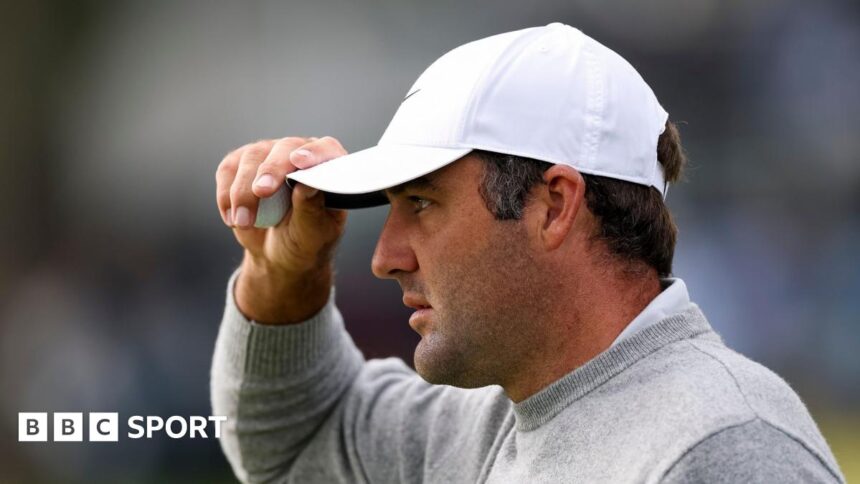
By the time the Pennsylvania sun dipped behind the towering oaks, only 32 players—barely a fifth of the 156-man field—had finished under par. The leaderboard was a mess of red numbers and grimaces, a testament to a course that refused to be a pushover. And right there, at the top of the chaos, stood Scottie Scheffler, sharing the lead with a gritty, unspectacular round that proved why he is the man to beat.
The Aronimink Reckoning: A Course That Refused to Yield
There was a fascination with how Aronimink would play. The pre-tournament chatter focused on its vulnerability. The fairways were generous, the rough was manageable, and the greens—while undulating—were soft. Many pundits predicted a birdie-fest, a scoring bonanza that would see the leaders dip into the mid-60s.
They were wrong.
Aronimink, a classic parkland layout that has hosted major championships and PGA Tour events for decades, showed its teeth. The course’s defense is subtle. It doesn’t rely on 7,800 yards or knee-high fescue. Instead, it uses angles, crowned greens, and the cruelest of pin positions. The firmness that was expected never fully materialized, but the complexities of the green complexes proved to be the great equalizer.
- Three-putt territory: The tiered greens at Aronimink made lag putting a nightmare. Players who hit 16 greens in regulation still walked off with bogeys.
- Approach shot precision: Miss on the wrong side of the flag, and you were facing a downhill, 30-foot putt that could easily roll 10 feet past.
- The par-3s: The collection of one-shot holes—particularly the 189-yard 8th and the 247-yard 17th—played as the toughest stretch on the course, yielding very few birdies.
The result was a leaderboard that looked more like a U.S. Open than a PGA Championship. Scoring averages hovered near 72. The course didn’t just test the players; it exposed them. For every birdie made, there was a double bogey lurking just around the corner.
Scheffler’s Masterclass in Grinding: Defending with Poise
Scottie Scheffler entered the week with the weight of expectation. As the defending champion and world number one, every shot is analyzed. But what separates Scheffler from the pack is his ability to detach from the noise. On a day when Aronimink was biting, he didn’t try to fight back with brute force. He played chess.
His opening round of 3-under-par 67 was a clinic in course management. It wasn’t flashy. He didn’t drive the ball 350 yards on every hole or hole a 40-foot bomb. Instead, he hit fairways, found greens, and made the putts he was supposed to make. He bogeyed the 10th hole—a par-4 that played as one of the hardest on the course—but immediately bounced back with a birdie on the 11th.
“It was a tough day out there,” Scheffler said after his round. “The course is firm, the pins are tricky. You have to be patient. I’m happy with how I managed my game.”
His scorecard was a reflection of the day: four birdies, one bogey. No heroics, no meltdowns. Just pure, unadulterated efficiency. He shares the lead with a group of players who all understand that this championship will not be won by a runaway train. It will be won by the player who makes the fewest mistakes.
Expert Analysis: Why the Leaderboard is Stacked with Grinders
Look at the names near the top of the leaderboard, and you see a pattern. They are not necessarily the longest hitters or the flashiest putters. They are grinders—players who understand positional golf.
- Corey Conners: The Canadian is one of the best ball-strikers in the world. He hit 14 of 18 greens in regulation and used his iron play to set up manageable birdie chances.
- Hideki Matsuyama: The 2021 Masters champion is a master of the short game. He saved par four times from outside 10 feet, keeping his round alive when the course threatened to swallow him.
- Tommy Fleetwood: The Englishman has a reputation for playing well on tough courses. His round of 68 was built on a foundation of fairways hit and a single bogey.
The key takeaway from day one is that Aronimink is not a course that rewards aggression. It rewards patience and precision. The players who tried to overpower the course—taking dead aim at tucked pins, trying to drive the green on the par-4s—ended up in the rough, in bunkers, or worse, making double bogeys.
The wind is expected to pick up over the weekend. If that happens, the scoring average could rise even higher. This tournament is shaping up to be a war of attrition, and the player with the steadiest nerves—not the longest driver—will lift the Wanamaker Trophy.
Predictions: The Weekend Blueprint for Survival
So, what does the rest of the tournament look like? Based on the first round, here are three predictions that will shape the outcome:
- The winning score will be single digits under par. Despite the pre-tournament hype about low scores, Aronimink is too demanding. Expect the winner to finish around 8- to 10-under par.
- A European contender will emerge. The European Tour players are accustomed to links-style conditions and firm, fast greens. Look for names like Rory McIlroy (who shot a quiet 70) and Viktor Hovland to make a move on Moving Day.
- Scottie Scheffler will not be caught by a flashy player. He will be caught by someone who matches his discipline. If a player like Xander Schauffele or Patrick Cantlay can keep the ball in play, they will be right there on Sunday.
The narrative has shifted. This is no longer about whether Aronimink can be tamed. It has already proven it cannot. The question now is: who has the grit to survive the bite?
Strong Conclusion: The Champion’s Crucible
The US PGA Championship was supposed to be a coronation for the bombers. Instead, it has become a crucible for the thinkers. Aronimink has delivered a masterclass in course design, proving that a classic layout can still challenge the modern athlete.
Scottie Scheffler shares the lead, but that lead is fragile. One bad swing, one three-putt, one moment of lost concentration, and the course will swallow you whole. The field is bunched, the pressure is immense, and the conditions are only going to get tougher.
For the defending champion, this is exactly where he wants to be. Scheffler thrives when the margin for error is thin. He does not need to be perfect; he just needs to be better than everyone else on a course that punishes the slightest mistake.
As we head into the weekend, one thing is clear: Aronimink is not a pushover. It is a beast. And the player who tames it will have earned every ounce of glory. The battle for the Wanamaker Trophy has only just begun, and it is going to be a bloody, beautiful fight.
Source: Based on news from BBC Sport.