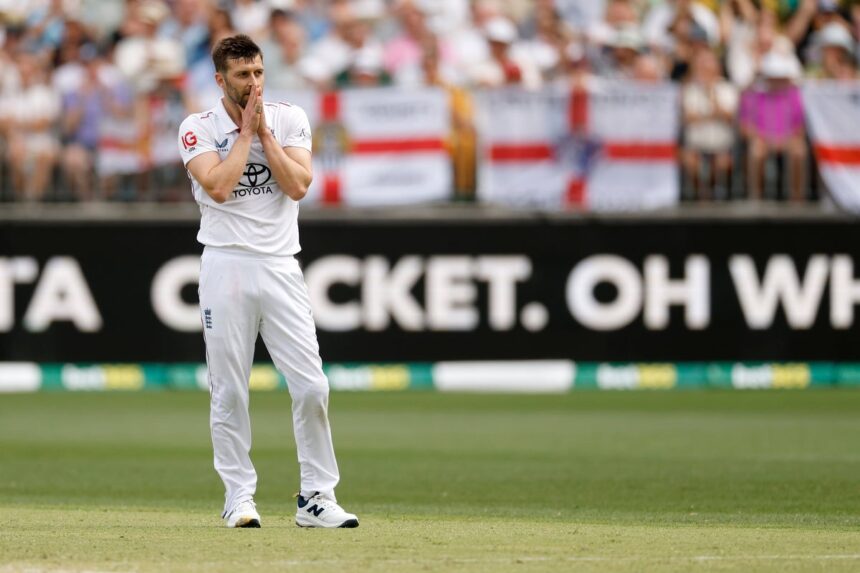
Mark Wood Ruled Out of Ashes: England’s Pace Crisis Deepens
In a devastating blow to England’s already faltering Ashes campaign, express paceman Mark Wood has been ruled out of the remainder of the series with a recurrence of a left knee injury. The news, confirmed by the England and Wales Cricket Board, strips captain Ben Stokes of his most potent and experienced weapon as his side stares down a 2-0 deficit in Australia. The call-up of Surrey’s Matthew Fisher as a replacement underscores a desperate scramble for bowling fitness and form, casting a long shadow over England’s hopes of a historic fightback on Australian soil.
Wood’s departure is more than just another injury; it is a symbolic gut-punch. He bowled just 11 overs in the opening Test in Perth before the knee issue, which required surgery and a nine-month rehabilitation that sidelined him for the entire English summer, flared up once more. His absence was keenly felt in the heavy defeat in Brisbane, and his confirmed exit for the series now leaves a void of sheer, intimidating pace that England simply cannot fill. As the squad heads to Adelaide for the crucial third Test, the question is no longer just about strategy, but about the physical capacity of England’s attack to withstand the Australian onslaught.
The Irreplaceable X-Factor: What England Loses with Wood
Mark Wood is not merely a fast bowler; he is England’s designated disruptor. In an attack built on the relentless accuracy of James Anderson and Stuart Broad, and the all-round dynamism of Ben Stokes, Wood’s role is to provide the explosive, series-altering spell that can rattle the foundations of even the most settled batting line-up. His absence removes a critical layer from England’s tactical plan.
Key losses for England’s attack include:
- Extreme Pace: Wood is consistently England’s fastest bowler, capable of breaching 95mph. This extra speed forces batters onto the back foot, creates catching opportunities behind the wicket, and can break partnerships when the ball is old and the pitch is flat.
- Point of Difference: Against an Australian top order feasting on England’s lack of variety, Wood’s skiddy, high-pace deliveries offered a stark contrast to the seam and swing of his colleagues. Without him, the attack risks becoming one-dimensional.
- Big-Moment Experience: At 35, Wood is a veteran of three Ashes tours. He understands the unique physical and mental demands of bowling in Australia, knowledge that is now lost from the dressing room.
His injury history—this is the same knee that sidelined him for most of 2022—makes this latest setback particularly cruel. It raises profound questions about workload management for modern fast bowlers and leaves England’s medical team under intense scrutiny. The investment in his recovery over the English summer has, for this series at least, yielded a return of just 11 overs.
Matthew Fisher: A Calculated Gamble in a Time of Crisis
In response, England have turned to 25-year-old Matthew Fisher, a talented but unproven seamer at the international level. Fisher’s selection is a clear indicator of the depleted resources available to coach Brendon McCullum and captain Stokes. He possesses a smooth, repeatable action and can generate decent bounce, but his profile is markedly different from the man he effectively replaces.
Fisher’s lone Test cap came in a rain-affected draw against the West Indies in March 2022, a match remembered more for being the first England Test without Anderson or Broad in nearly two decades. Since then, a move from Yorkshire to Surrey has revitalized his red-ball career, where he produced an impressive first season in the County Championship, demonstrating improved control and skill.
However, his call-up comes with significant caveats:
- He is not in the same pace bracket as Wood, operating in a more traditional English seamer’s range.
- His recent form is a concern. Playing for the England Lions against Australia A in Brisbane this week, he went wicketless in a heavy defeat, leaking runs as the home side piled on a mammoth total.
- The step up from a Lions fixture at the Ian Healy Oval to a must-win Ashes Test at the Adelaide Oval is astronomically large.
Fisher’s selection feels less like a like-for-like replacement and more like an insurance policy for an attack where Ollie Robinson’s fitness remains a persistent worry and Stokes’s own bowling workload is a ticking timebomb. He is likely to be a reserve, but his presence highlights the thin red line England are walking.
Ashes Prognosis: Can England Recover from This Body Blow?
The mathematics of the series are daunting: England must win at least two of the remaining three Tests and avoid defeat in the other to regain the Ashes. Without Wood, that task has shifted from monumentally difficult to nearly impossible. Australia’s batting line-up, already confident, will breathe a collective sigh of relief knowing the one bowler who could physically intimidate them is gone.
This injury forces a fundamental tactical rethink. England’s “Bazball” approach, reliant on scoring quickly to create time for victories, only works if the bowling attack can take 20 wickets. The burden now falls even more heavily on the 40-year-old shoulders of James Anderson and the 37-year-old frame of Stuart Broad. They have been magnificent, but asking them to carry the entire seam burden across three more Tests in quick succession is a huge ask.
The pressure now shifts to other key players:
- Ollie Robinson: Must prove he can stay fit for a full five days and translate his nagging English length to Australian conditions with greater threat.
- Ben Stokes: The captain’s knee will be monitored every time he marks out his run-up. His bowling is essential for balance, but can his body withstand it?
- The Batting Line-up: Simply put, they must score massively. 300 is not enough. They need to pile on runs to give their depleted attack something to defend and to keep them out of the field for as long as possible.
The Adelaide Test, a day-night affair with the pink ball, offers a potential lifeline. England’s seamers have historically excelled in these conditions. But any advantage is now mitigated by the absence of the bowler whose extreme pace under lights could have been truly terrifying.
A Defining Moment for Stokes and McCullum
This is the ultimate test of the Stokes-McCullum leadership philosophy. Their tenure has been built on positivity, fearlessness, and a rejection of external pressure. Now, faced with their most severe adversity, they must rally a squad missing its emotional and tactical spearhead. The “next man up” mantra will be repeated, but Fisher is not the next Mark Wood. The solution must be collective, ingenious, and defiant.
They may be forced to consider a more nuanced approach—perhaps even the inclusion of a second spinner in Adelaide, leveraging the skills of Rehan Ahmed or Jack Leach to attack differently and rest the weary seamers. The one thing they cannot do is retreat. A conservative approach with a weakened attack would be a slow death in Australia.
The final analysis is stark. Mark Wood’s injury is a catastrophic event in the context of this Ashes series. It has robbed the contest of a thrilling spectacle and England of their best chance to unsettle Australia. While Matthew Fisher’s journey is a proud personal achievement, it is a story born of English desperation. The 2023/24 Ashes, already slipping away, may have just seen the decisive moment occur off the field. England’s spirit, embodied by Stokes, will be questioned like never before. The fightback must begin not just against the Australian XI, but against the cruel realities of fate and fitness that have once again conspired against them down under.
Source: Based on news from Yahoo Sports.