The Shadow of a Transfer: Wayne Rooney’s Reveals Death Threats After Manchester United Move
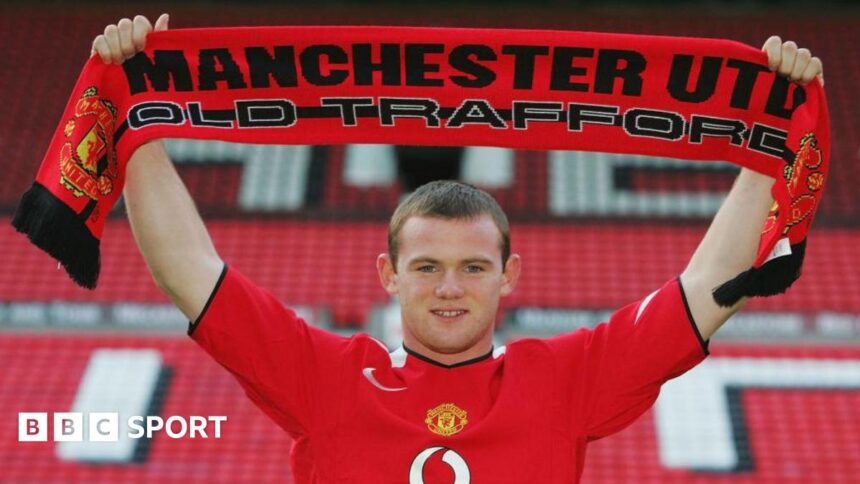
The image of a teenage Wayne Rooney, clad in a crisp Manchester United shirt, holding up the iconic number 8, is etched into Premier League history. It was the dawn of a legendary career that would bring countless trophies and records. Yet, behind the megawatt smile and the £27 million price tag in 2004 lay a darker, more dangerous reality that the football world has largely forgotten. Two decades on, Rooney has pulled back the curtain, revealing that his record-breaking move from boyhood club Everton to Manchester United was met with more than just anger—it was met with death threats.
A Boyhood Blue’s Controversial Crossroads
Wayne Rooney wasn’t just a player for Everton; he was a symbol. A Croxteth kid, born into a family of Evertonians, who exploded onto the scene with that iconic goal against Arsenal at 16. He was the club’s greatest hope, the local hero destined to lead the Toffees back to glory. In 2004, with Rooney’s star shining brightly, Everton offered their prized asset a club-record contract, a desperate attempt to secure their future around his prodigious talent.
But ambition, and the sheer gravitational pull of a club like Manchester United under Sir Alex Ferguson, proved irresistible. At just 18, Rooney made the seismic decision to leave. The £27m transfer was a British record for a teenager, a statement of intent from United, and a devastating blow to Everton’s identity. The backlash was immediate and visceral. Everton supporters felt a profound sense of betrayal, viewing the move not as a career progression but as an act of treachery. As Rooney now recounts on BBC Sport’s *The Wayne Rooney Show*, this fury crossed a terrifying line: “I got death threats.”
The Chilling Cost of Football Tribalism
Rooney’s revelation is a stark reminder of the intense, often toxic, tribalism that can surround football. While fan passion is the lifeblood of the sport, its shadow side can manifest in frightening ways. For a teenager, even one as physically formidable as Rooney, such threats represent a traumatic introduction to the darkest aspects of fame and rivalry.
The psychological impact of such threats on a young player cannot be overstated. Moving clubs is a monumental life event involving immense pressure to perform. To carry the additional weight of fearing for one’s personal safety adds a layer of distress that few on the outside ever see. It reframes the narrative of his early United days; his fierce, sometimes combustible, playing style may have been fueled not just by natural aggression, but by a need to prove his worth and silence his tormentors from the very start.
This episode sits within a broader, troubling history in English football:
- Threats have historically been used as a weapon of fan intimidation, often towards players who dare to cross bitter local divides.
- The Rooney case is unique due to his age, his deep local roots, and the astronomical scale of the transfer at the time.
- It highlights the dangerous blurring of lines between club loyalty and personal attack, a issue social media has exacerbated in the modern era.
Expert Analysis: Navigating the Unthinkable Pressure
From a sporting psychology perspective, Rooney’s ability to not only cope with this hostility but to thrive under it is a testament to his mental resilience. Sir Alex Ferguson was a master at creating a “siege mentality” within his squads, and in Rooney, he had a player who genuinely had a world of pressure to block out. Ferguson’s management would have been crucial in insulating the young star, focusing his energy on football and integrating him into a protective dressing room culture with leaders like Roy Keane and Gary Neville.
Furthermore, this revelation adds new context to Rooney’s complex relationship with Everton fans in the years that followed. His goal celebrations—or lack thereof—against his old club were always dissected. The animosity lingered for years, only softening significantly later in his career. The death threats provide the grim backdrop to this strained reconciliation, suggesting the emotional scars of the transfer ran far deeper for the player than simply changing employers.
In today’s game, such a high-profile move would trigger a tsunami of online abuse, but the physical, written threats of 2004 carried a different, more palpable menace. Club and league protocols for player protection, while still challenged by digital abuse, are now more structured, highlighting how far the game’s safeguarding has had to come.
The Modern Game: Have We Learned Anything?
Two decades later, the football landscape has changed, yet the core passions remain. So, what lessons can be drawn from Rooney’s harrowing experience?
Firstly, it underscores the critical importance of mental health and security support for young players making major transfers. Clubs now employ extensive support networks, but Rooney’s story is a case study in why they are essential. The human being must be protected as diligently as the financial asset.
Secondly, it asks a difficult question of fan culture. While the vast majority of supporters express passion healthily, a toxic minority can create real-world danger. Media narratives that frame transfers as “betrayals” can inadvertently fuel this fire. The discourse around players like Jack Grealish, Jude Bellingham, or even Harry Kane moving from boyhood clubs has evolved, but underlying tensions remain.
Looking forward, we can predict:
- Player welfare protocols will continue to evolve, with greater focus on pre-emptive mental conditioning for handling extreme fan backlash.
- Clubs will play a more active role in managing transfer narratives to mitigate fan fury, though this has limited effect on the most extreme elements.
- Rooney’s decision to speak now may empower other former players to share similar experiences, reshaping our understanding of football’s high-stakes transfers.
Conclusion: Beyond the Price Tag
Wayne Rooney’s legacy is secure: Manchester United and England’s record goalscorer, a winner of every major club honour. But his revelation about the death threats that accompanied his rise adds a sobering, human dimension to his origin story. It reminds us that behind every multi-million pound transfer headline is a young person facing a life-altering choice, often amid a storm of uncontrollable and sometimes threatening emotion.
His success is not in spite of this darkness, but perhaps partially forged by it. The same relentless drive that made him a legend on the pitch helped him survive the off-pitch fury his move provoked. As the football world continues to grapple with the boundaries of fan passion, Rooney’s story stands as a permanent, chilling reminder of the price of genius, and the shadows that can follow a boy from Croxteth who dared to dream bigger than his roots.
Source: Based on news from BBC Sport.