Maresca’s Mystery: The Baffling Groin Injury That Threatens Chelsea’s Palmer-Dependent Season
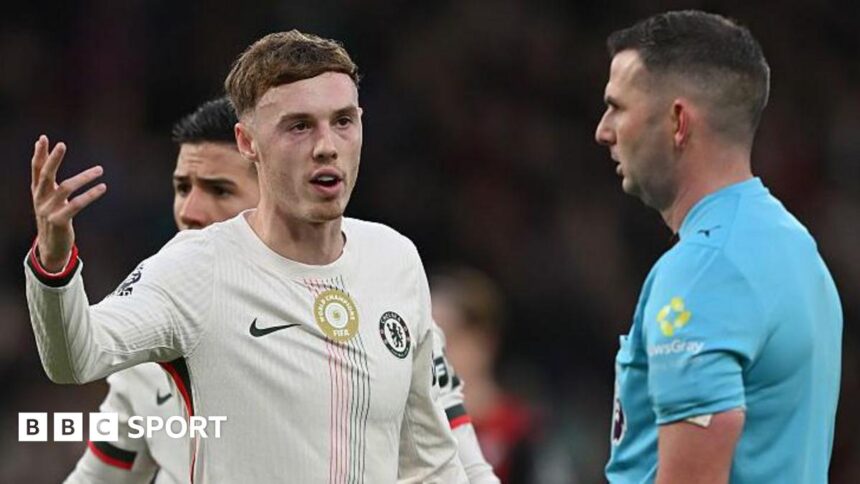
The relationship between Chelsea Football Club and Cole Palmer has been one of profound symbiosis. Since his arrival from Manchester City, Palmer hasn’t just been a player; he’s been the tactical blueprint, the chief creator, and the emotional heartbeat of a team in transition. Yet, a shadow now looms over Stamford Bridge, not in the form of a tactical conundrum or a transfer dilemma, but a persistent, puzzling physical ailment. Manager Enzo Maresca’s recent admission that Palmer’s ongoing groin issue makes no “sense” has unveiled a layer of vulnerability that could define Chelsea’s entire campaign.
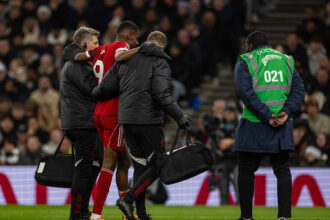
The stark statistic tells its own story: in the six matches Palmer has featured in this season, Chelsea have failed to win, losing three and drawing three. His absence, whether partial or total, creates a creative vacuum the squad has so far been unable to fill. As the Blues prepare to face Everton this weekend, with Palmer expected to start despite being rested for a midweek Champions League defeat, the central question isn’t just about fitness—it’s about managing a perplexing condition that threatens to linger.
The Enigma of the “Day by Day” Groin
Enzo Maresca’s press conference comments were unusually candid, stripping away the usual managerial clichés about minor knocks. “It’s the groin,” he stated plainly, before revealing the erratic nature of the problem. “Hopefully not something to manage all season, but it’s day by day. Some days he’s better, some days worse.” This “day by day” diagnosis is a nightmare scenario for a manager whose philosophical system relies on the precision and guile of his chief playmaker.
What makes this particularly baffling is its context. Palmer has largely recovered from a separate, freak toe injury sustained at home in November. Now, a different, fluctuating issue has taken hold. Maresca’s use of the word “sense” implies a medical and physical frustration. Groin injuries are notoriously complex, often involving a delicate network of muscles (adductors, abdominals, hip flexors), and their persistence can stem from biomechanical imbalances, underlying weaknesses, or even referred pain. The fact that Palmer experiences good and bad days suggests a chronic strain or tendinopathy, where load management becomes as crucial as treatment.
Key concerns for Chelsea’s medical staff include:
- Load Management: How much training and match time triggers a negative response?
- Biomechanical Chain: Could the prior toe injury have altered his running gait, placing new stress on the groin?
- Chronicity Risk: Without a clear resolution, the potential for a season-long managing act is real.
Chelsea’s Stark Dependency: A Statistical Reality
To understand the gravity of Palmer’s situation, one must examine Chelsea’s performance data with and without him. Last season, he was directly involved in 47% of Chelsea’s Premier League goals (22 goals, 11 assists). This season’s early pattern—no wins in his six appearances—is misleading without nuance. It highlights not that Chelsea are better without him, but that his presence is so pivotal that the entire attacking structure becomes funneled through him. When he’s absent or inhibited, the system stutters and fails.
The midweek 2-1 defeat to Atalanta in the Champions League was a case study. Resting Palmer was a logical decision given the “day by day” groin issue, but Chelsea’s attack looked devoid of ideas, final-third creativity, and composure. It reinforced a terrifying truth for the Chelsea faithful: there is no like-for-like replacement in the squad. The team’s tactical identity, under Maresca, is built on controlled possession and exploiting half-spaces—Palmer’s natural domain. His potential long-term physical limitation isn’t just a player injury; it’s a systemic crisis.
This dependency creates a vicious cycle:
- Chelsea need Palmer to win games and build momentum.
- Winning games requires him to play significant minutes.
- Significant minutes risk aggravating the nonsensical groin issue.
- Aggravation leads to diminished performance or absence, reducing Chelsea’s chances of winning.
Maresca’s Tactical Tightrope: To Play or To Protect?
This situation presents Enzo Maresca with his most delicate managerial challenge to date. Every team selection involving Palmer becomes a high-stakes gamble. Starting him against Everton seems necessary for a crucial three points, but could it push the groin into a worse state, ruling him out for subsequent fixtures? Conversely, benching him might protect his long-term health but could cost immediate points, increasing pressure on the team and manager.
Maresca must now become a squad alchemist. He needs to devise alternative tactical plans that don’t rely solely on Palmer’s genius, potentially fast-tracking the integration of younger talents or altering the shape to share the creative burden. This could mean a more pronounced role for Christopher Nkunku in a central creative role, or a shift to utilizing the wing-backs as primary chance creators. The Italian’s strategic flexibility will be tested like never before.
The manager’s immediate priorities are clear:
- Aggressive Rehabilitation: Exploring every advanced treatment—from specialized physiotherapy to potential platelet-rich plasma (PRP) injections—to break the injury cycle.
- Meticulous Micro-Management: Using in-game GPS and biometric data to pull Palmer at the first sign of fatigue or discomfort, even if the team is chasing a game.
- System Evolution: Developing a credible “Plan B” in training that the squad can execute with confidence.
Predictions and the Path Forward for Chelsea
Looking ahead, the trajectory of Chelsea’s season is now intrinsically tied to Cole Palmer’s groin. The optimistic scenario is that a period of targeted rest, combined with a refined training regimen, allows the issue to fully heal. This might require a painful short-term sacrifice, such as missing Palmer for 2-3 weeks completely, to aim for a permanent fix rather than perpetual management.
The pessimistic, and perhaps more likely, prediction is that Maresca’s initial fear becomes reality: this is a season-long management project. Palmer becomes a prized asset used selectively in the biggest matches, his training meticulously curated. This would cap his potential impact and likely consign Chelsea to a uneven, inconsistent season battling for top four rather than challenging for the title.
Crucially, the January transfer window looms large. If the problem shows no sign of abating, the club’s hierarchy may be forced to consider the unthinkable: entering the market for a creative midfielder not as a complement, but as a potential contingency. This injury has exposed a single point of failure in the project’s design.
Conclusion: A Test of Depth and Resilience
Enzo Maresca’s bafflement is understandable. In Cole Palmer, he has a player whose talent is the key to unlocking his vision for Chelsea, yet that key is physically fragile in a way that defies easy explanation. The “nonsensical” groin injury is more than a medical bulletin; it is the central plotline of Chelsea’s season. It challenges the club’s squad planning, the manager’s tactical versatility, and the player’s own mental fortitude.
How Chelsea navigate this uncertainty will reveal the true depth and resilience of the project under construction. Will they be hobbled by dependency, or will this strange adversity force the emergence of a more robust, multi-faceted team? The answer starts on Saturday against Everton, with every twist, turn, and grimace from their number 20 being analyzed not just for its immediate impact, but for the ominous shadow it casts over the months to come. The quest for sense in this injury is now synonymous with Chelsea’s quest for stability and success.
Source: Based on news from BBC Sport.