Alabama Football Turns the Page: Offensive Line Coach Chris Kapilovich Out in Tuscaloosa
The relentless engine of Alabama Crimson Tide football, a machine built on precision and power, has identified a critical point of failure. As first reported by the trusted local beat reporters covering the program, the university is moving on from offensive line coach Chris Kapilovich. This decision, while stark, does not echo through the halls of the Mal M. Moore Athletic Facility as a surprise, but rather as a necessary, if belated, correction to a glaring schematic and developmental issue that ultimately derailed championship aspirations.
For a program synonymous with dominating trench warfare, the last two seasons under Kapilovich represented a profound identity crisis. The departure marks not just a change in personnel, but a symbolic reset for a unit that has long been the program’s bedrock. With a staggering ten offensive linemen from last year’s roster also moving on, the 2025 season will usher in an era of total, unequivocal turnover along the offensive front. The question now shifts from “what went wrong?” to a more urgent and compelling inquiry: who can possibly restore the Tide’s line to its fearsome standard?
The Unforgiving Metrics: Diagnosing the Kapilovich Era
In the cold, hard light of statistical analysis, the rationale for this move becomes indisputable. While pass protection often held up—a testament to the individual talent of players like JC Latham—the run game under Kapilovich’s stewardship collapsed to historically poor levels for an Alabama program. This was not a minor dip in production; it was a systemic failure.
Advanced metrics painted a damning picture, consistently ranking Alabama’s run blocking among the very worst in the Power Five. The Tide’s rushing attack, once a demoralizing, clock-chewing weapon, became predictable and inefficient. The lack of push at the point of attack transformed manageable third-and-short situations into precarious passing downs, stripping the offense of its physical identity.
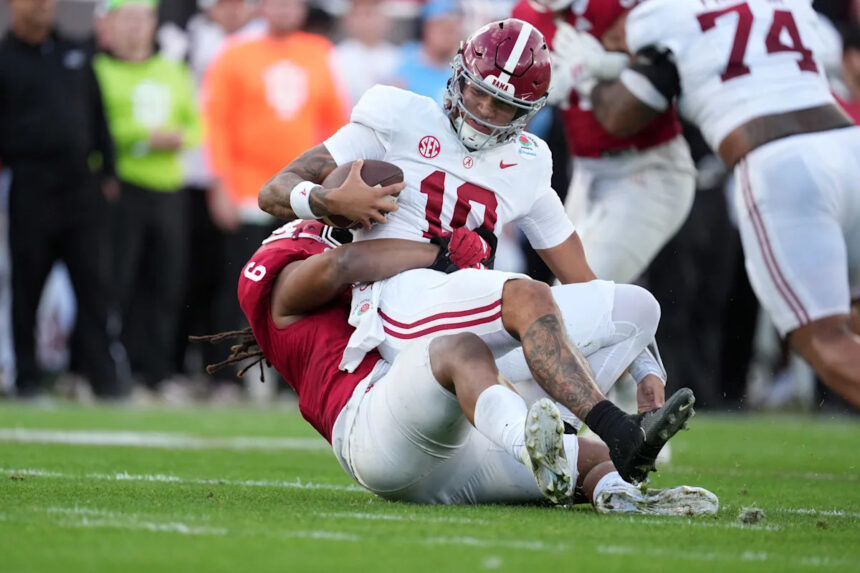
Perhaps more telling than any stat was the recurring issue with blitz pickup and stunts. Confusion against defensive pressure, missed assignments, and a lack of cohesive communication are not typically talent problems at Alabama—they are foundational coaching problems. When a defensive look causes repeated breakdowns, the schematic preparation and on-field teaching are rightfully scrutinized. The culmination was a playoff loss where the offensive line was overwhelmed, a final, public exhibit in the case for change that the fanbase had been building for months.
A Clean Slate: The Daunting Task of Total Rebuild
Kapilovich’s departure is only half of the seismic shift hitting the offensive line room. The exodus of ten scholarship players—through graduation, transfer, or exhaustion of eligibility—creates a scenario almost unprecedented in the Nick Saban and post-Saban era. This isn’t a reload; it’s a from-the-ground-up reconstruction.
The new coach will inherit a room with immense potential but minimal experience. The focus will immediately pivot from complex scheme installation to core fundamentals: footwork, hand placement, and the aforementioned communication against pressure. The 2025 season will be a true litmus test for the program’s ability to develop talent rapidly under new leadership. The positives? No lingering habits from the previous regime, no entrenched hierarchy. It is a blank canvas, which represents both a tremendous opportunity and a significant risk.
- Complete Cultural Reset: The new coach can instill his philosophy without pushback.
- Young Talent Infusion: Highly-rated recruits will have an immediate path to playing time.
- Scheme Flexibility: The line can be built to fit the offensive coordinator’s exact vision.
The Candidate Carousel: Speculating on Kap’s Successor
With the vacancy official, the speculation engine roars to life. Alabama’s offensive line coaching job remains one of the premier positions in all of college football, and the search will be thorough. The ideal candidate must be a elite teacher, a relentless recruiter, and possess a proven track record of building a physical, cohesive unit. Several intriguing paths exist.
The sentimental and perhaps most logical favorite is Scott Huff. He followed Kalen DeBoer from Washington to Alabama in 2024, coaching the offensive line for a matter of weeks before departing with former OC Ryan Grubb for the Seattle Seahawks. Huff, recently let go by Seattle, is a free agent and architect of the Joe Moore Award-winning line at Washington in 2023. His familiarity with DeBoer’s system and proven success make him a compelling, seamless fit. The question is whether both parties are eager to reunite.
Beyond Huff, the search could extend in several directions:
The NFL Pipeline: Alabama has never been shy about plucking coaches from the professional ranks. A coach with recent NFL line experience could appeal, offering both technical expertise and a potent recruiting pitch about preparing players for the next level.
The Rising College Star: The most likely path may be targeting a successful line coach at a smaller Power Four program or a top Group of Five school. This individual would be hungry for the spotlight and resources Alabama provides, bringing a proven, adaptable scheme and recruiting chops.
The Wild Card: Never count out a name not yet on the public radar. DeBoer’s coaching tree and connections run deep, and he may prioritize a specific teaching methodology or cultural fit over a splashy, well-known name.
Conclusion: A Necessary End, An Uncertain Beginning
The move on from Chris Kapilovich was a decision born of undeniable on-field evidence. For a program where the standard is not just winning, but dominating, the performance of the offensive line had become an unacceptable anchor. This change acknowledges that reality.
The path forward, however, is shrouded in the intrigue of the unknown. The total overhaul of the position group presents a unique challenge: there is no safety net of veteran experience, no margin for error in development. The hiring of the next coach is arguably the most critical personnel decision of the DeBoer era to date. This individual will not merely be coaching a position; he will be responsible for re-forging the identity of Alabama football.
Optimism in Tuscaloosa is tempered by the scale of the task, but it is present. The resources, the talent pool, and the urgency are all in place. The echoes of “Roll Tide” will soon be paired with the thud of pads, and all eyes will be on the new men in the trenches. As the saying goes, the offensive line is the heartbeat of a team. Alabama’s administration has decided it was time for a transplant. The success of that operation will define the 2025 season and beyond.
Source: Based on news from Yahoo Sports.