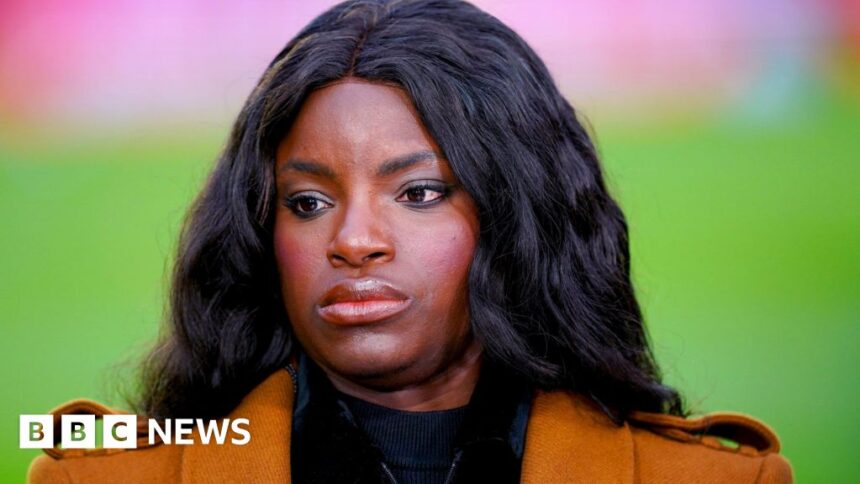
Eni Aluko Awarded Landmark Damages in Joey Barton Libel Case: A Watershed for Online Abuse in Sport
The High Court in London has delivered a decisive verdict in a case that transcends a simple legal dispute, striking at the heart of online vitriol in the sports media landscape. Former England footballer and respected pundit Eni Aluko has been awarded more than £300,000 in damages and legal costs after successfully suing former professional footballer Joey Barton for libel. The case, stemming from a series of social media posts in January 2024, concluded with Barton absent—reportedly in police custody—and the proceedings formally stayed, cementing Aluko’s victory. This ruling is not merely a financial settlement; it is a powerful legal and cultural rebuke to the unchecked misogyny and defamation that has become endemic on digital platforms.
The Case: From Social Media Storm to Courtroom Victory
The legal action centered on two posts published by Barton on the social media platform X (formerly Twitter). In a hearing described by Aluko’s barrister, Gervase de Wilde, Barton’s posts falsely accused Aluko of having “cynically sought to exploit her status as an alleged victim of racism and bullying” and labeled her a hypocrite. These allegations were part of a wider, sustained online campaign Barton waged against female football pundits, which sparked widespread condemnation.
The court’s decision to stay the case—halting proceedings after Barton failed to mount a defense—and order the payment of “substantial” damages underscores the severity of the libel. The awarded sum, covering both damages and Aluko’s full legal costs, reflects the serious harm caused to her professional reputation and personal well-being. The fact that Barton, a former manager of Fleetwood Town and Bristol Rovers, was absent due to an unrelated arrest adds a dramatic, albeit somber, footnote to a case about accountability.
Expert Analysis: Why This Ruling is a Legal and Cultural Game-Changer
This judgment represents a significant inflection point for several key reasons. Legally, it demonstrates that UK libel laws can be effectively deployed against social media abuse, even when the perpetrator is a high-profile figure with a large online following. The court’s willingness to award a six-figure sum sends a clear financial deterrent to others who might think defamatory online rants are consequence-free.
Culturally, the victory is monumental for women in sports media. For years, female pundits and journalists have faced a torrent of gendered online abuse, often dismissed as “part of the job.” Aluko, a trailblazer who has previously spoken out against racism and bullying within football’s governing bodies, stood firm. Her decision to pursue legal action, rather than simply issue a statement, reframed the narrative from one of weathering abuse to actively challenging it in the highest civil court.
- Precedent for Victims: It establishes a powerful precedent for other public figures facing targeted, false allegations.
- Platform Accountability: It indirectly increases pressure on social media platforms to enforce their own policies against harassment and defamation.
- Shifting the Burden: It shifts the burden of consequence from the victim, who typically is told to “ignore the trolls,” onto the perpetrator, who now faces tangible financial and reputational ruin.
The case also highlights the intersection of misogyny and defamation. Barton’s attacks were not mere insults; they were specific, false claims designed to undermine Aluko’s credibility and her legitimate past advocacy. The court’s ruling affirms that such tactics are legally actionable.
Predictions: The Ripple Effects Across Football and Broadcasting
The ramifications of Aluko’s victory will be felt far beyond the courtroom. We can anticipate several key developments in its wake.
Firstly, broadcasters and football clubs will likely review and strengthen their support protocols for talent facing online abuse. Legal support and robust public backing may become standard, moving beyond generic statements of solidarity. The financial risk of losing a key pundit to sustained harassment is now coupled with the visible success of legal recourse.
Secondly, the punditry landscape itself may see a shift. This ruling empowers female and minority pundits, affirming their right to work without being subjected to defamatory campaigns. It could encourage a new generation of diverse voices to enter the field, knowing there is a legal backstop against the worst excesses of abuse.
Thirdly, for individuals like Joey Barton, the outcome serves as a stark warning. The “bad boy” pundit persona, which some have leveraged for online engagement, now carries a profound financial and legal risk. The line between controversial opinion and defamatory statement has been starkly illuminated by a £300,000 price tag.
Finally, we may see an increase in similar libel actions from sports professionals, though the high cost of litigation means it will not be an option for everyone. The success of this case, however, makes it a viable strategic consideration for those with the means and a clear-cut case.
A Defining Victory for Dignity and Professionalism
Eni Aluko’s legal triumph over Joey Barton is a landmark moment in the ongoing battle for civility and integrity in sports discourse. It is a victory forged not on the pitch, but in the courtroom, and its impact will be enduring. By successfully challenging the libelous posts, Aluko has achieved a multi-layered win: personal vindication, a fortified defense for her professional reputation, and a powerful, protective precedent for her colleagues in the industry.
This case conclusively proves that social media is not a lawless arena. Words published online carry real-world weight and can result in severe real-world consequences. The award of more than £300,000 is a quantifiable measure of the damage such falsehoods can inflict. More importantly, it reaffirms a fundamental principle: the right to do one’s job—whether on the field or in the commentary box—free from malicious and defamatory attack.
In the final analysis, the story is no longer about Joey Barton’s posts. It is about Eni Aluko’s resilience and the clarity of the law. Her victory signals a turning point, moving the sports world incrementally closer to an environment where expertise is respected, debate is robust but fair, and online abuse is met not with silence, but with decisive and costly accountability.
Source: Based on news from BBC Sport.