Arsenal’s Set-Piece Fortress Betrayed as Leverkusen Escape with Draw
The very foundation of Arsenal’s modern resurgence, their meticulously crafted set-piece dominance, became the source of their undoing on a tense European night. In a dramatic twist of fate, the Gunners, renowned for their dead-ball brilliance, saw their 100% Champions League record this season vanish after being punished by the weapon they have mastered. A late Kai Havertz penalty salvaged a 2-2 draw against a resilient Bayer Leverkusen, but the story was written from a corner flag at the other end.
The Cruel Irony: Jover’s Acknowledgment and Andrich’s Execution
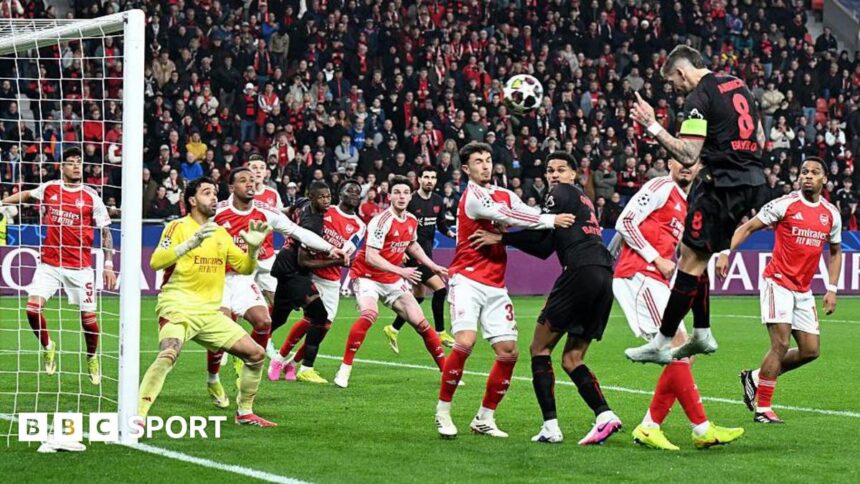
The moment of poignant irony came not in the celebration, but in the confession. After Leverkusen’s Robert Andrich powered home a second-half header from an Alex Grimaldo corner, Arsenal’s set-piece coach Nicolas Jover approached the opposition bench. His words to Leverkusen manager Kasper Hjulmand, as reported post-match, were a stark admission: “That was a good goal from your set-piece.” This was the ultimate compliment from a master architect, recognizing a flaw in his own design. For a team that has scored more set-piece goals than any other in Europe’s top leagues this season, conceding in such a manner was a profound shock to the system.
The goal itself was a masterpiece of misdirection and poor marking. Leverkusen, having just threatened from a clever second-half kick-off routine, recycled a corner. Grimaldo’s delivery was pinpoint, but Arsenal’s usually impeccable zonal structure disintegrated. Captain Robert Andrich drifted away from a static defensive line, finding acres of space at the back post to nod past a helpless David Raya. It was a goal born of the very video analysis and repetitive drilling that has made Arsenal so feared.
Anatomy of a Breakdown: How Leverkusen Unlocked the Arsenal Code
Arsenal’s set-piece vulnerability did not emerge from nowhere. Leverkusen’s equalizer was the culmination of targeted probing and a critical lapse in concentration. The warning signs were flashing just moments before Andrich’s header.
- Immediate Precedent: Seconds earlier, from the second-half kick-off, Leverkusen executed a brilliant, rehearsed move that saw Martin Terrier’s header brilliantly tipped over by David Raya. The speed and ingenuity of the routine clearly unsettled Arsenal’s defensive shape.
- Targeting the Zone: Leverkusen identified a potential weakness in Arsenal’s back-post coverage. Their movement was designed to pull Arsenal’s key aerial defenders, like Gabriel Magalhães, away from the danger area, creating a vacuum for a late runner.
- Mental Switch-Off: After surviving the initial scare, Arsenal failed to reset. The focus on preventing a repeat of the short routine may have diverted attention from the fundamental task of marking in the box for the subsequent standard corner.
This sequence highlighted that even the most robust systems can be cracked. For Mikel Arteta, it was a rare but costly failure in a phase of the game he and Jover have turned into a consistent weapon.
Havertz’s Redemption and the Psychological Impact
Kai Havertz’s emphatic, late penalty, won by the lively Leandro Trossard, ensured Arsenal avoided a damaging defeat. The German’s cool finish under immense pressure provides a crucial lifeline heading back to the Emirates. However, the nature of the concession will leave a deeper psychological scar than a typical goal against.
Being beaten at your own game challenges a team’s identity. Arsenal’s confidence in their defensive set-play organization is a cornerstone of their mentality; it allows them to play with assurance, knowing they can control games in both boxes. To see it breached so clearly, and by a direct rival for European supremacy, introduces a seed of doubt. Arteta’s immediate task will be to reinforce the principles that have brought such success, using this incident as a powerful learning tool rather than allowing it to become a systemic concern.
The late penalty changes the narrative from one of potential crisis to a tale of resilience, but the underlying issues exposed remain. Arsenal’s 100% record in this season’s Champions League is gone, replaced by the stark reality that in knockout football, every strength can be turned into a vulnerability.
Looking Ahead: Predictions for the Emirates Second Leg
The tie is now perfectly poised, but the dynamics have shifted. Leverkusen will travel to London with the confidence of knowing they not only matched Arsenal but found a tangible weakness to exploit. Arsenal, however, possess the away goals advantage (in all but name) and the ferocious support of the Emirates.
Key predictions for the return leg include:
- Set-Piece Siege Mentality: Arsenal will double down on their routines at home. Expect even more elaborate blocking and movement, with a furious response from Gabriel and William Saliba in the opposition box. They will be desperate to reassert their aerial dominance.
- Heightened Leverkusen Threat: Xabi Alonso’s side will now believe they can score from any corner or free-kick. They will test Arsenal’s back-post defense relentlessly, forcing a reaction and potentially opening space elsewhere.
- An Early Arsenal Onslaught: The Emirates crowd will demand a high-tempo start. Arteta’s side will look to seize control early, aiming to put the tie beyond doubt before Leverkusen can settle into their set-piece threat.
- The Deciding Factor: This tie may ultimately be decided by which team executes their dead-ball strategies more effectively on the night. It has become the central battleground.
Conclusion: A Lesson Learned or a Fatal Flaw Exposed?
Arsenal’s journey in this season’s Champions League hit its first major turbulence not from open-play brilliance, but from a mirror held up to their own expertise. Being undone by their own set-piece weapon is a narrative rich with symbolism—a reminder that in elite sport, there are no permanent advantages, only evolving battles of wits.
The late penalty from Havertz papers over the defensive crack, but it does not fill it. The 2-2 draw, while a respectable result away from home, feels like a missed opportunity given the nature of Leverkusen’s goals. For Nicolas Jover and Mikel Arteta, the training ground focus before the second leg is clear: rebuild the fortress, re-drill the details, and ensure that their greatest weapon does not again become their point of failure. The fate of their European campaign may depend on it.
Source: Based on news from BBC Sport.