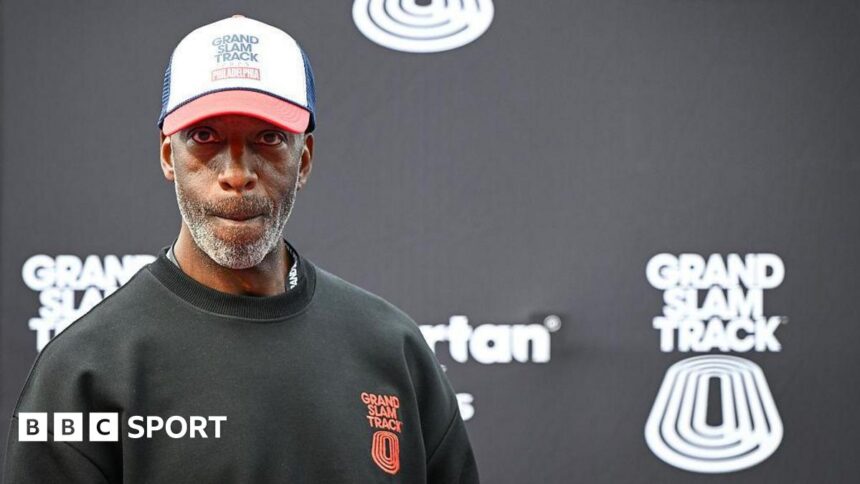
BBC Drops Michael Johnson from 2026 Athletics Coverage Amid Grand Slam Track Fallout
The familiar, authoritative voice of Michael Johnson, a fixture of the BBC’s athletics coverage for over two decades, will be absent from the airwaves this season. In a significant shift, the broadcaster has confirmed it has no plans to utilize the four-time Olympic gold medallist for its 2026 track and field programming. This decision arrives in the turbulent wake of the catastrophic collapse of Johnson’s own ambitious venture, Grand Slam Track (GST), which left a trail of unpaid athletes, shattered promises, and a profound crisis of confidence in one of the sport’s most iconic figures.
The Unraveling of a Legacy: From Pundit to Pariah
Michael Johnson’s transition from track legend to revered broadcaster seemed seamless. Since joining the BBC in 2001, his analytical prowess, honed from a peerless career, became the gold standard for commentary. He was the insider who could dissect a race with clinical precision, his credibility unimpeachable. However, his role began to blur when he stepped into the arena as a promoter with Grand Slam Track. Launched with fanfare, GST promised to revolutionize the sport with a league format, guaranteed athlete salaries, and lavish prize money designed to rival traditional Diamond League meets.
The venture’s abrupt implosion in December 2025 was spectacular. The final event was cancelled, and organizers voluntarily filed for bankruptcy in the US. The fallout was immediate and damaging:
- Unpaid athletes and creditors were left facing significant financial losses.
- Johnson’s public stance shifted from promoter to advocate, but his demands rang hollow for many.
- He has since declared that no GST events will be held in 2026 unless all athletes are paid for the previous year—a condition impossible for the bankrupt entity to meet.
This duality—the critic of athletic conditions who then presided over a venture that failed to meet its financial obligations to athletes—has created an untenable conflict for a public service broadcaster. The BBC’s decision, while not explicitly stated as a direct dismissal, reflects a necessary distancing from a figure now embroiled in controversy. Johnson has not worked for the corporation since the Paris 2024 Olympics, a silence that now appears permanent for the foreseeable future.
Expert Analysis: A Crisis of Credibility and the BBC’s Dilemma
From a broadcasting perspective, the BBC’s move is both pragmatic and principled. Johnson’s unique value was his unparalleled credibility. As a pundit, his word was final because he had been there, done it, and had no vested interest beyond the truth of the performance. Grand Slam Track shattered that perception.
“The currency of a BBC pundit is impartiality and trust,” notes a veteran sports broadcasting executive. “When Johnson became a promoter, he entered a space where his commercial interests directly conflicted with his role as an impartial analyst. The collapse of GST and the subsequent unpaid wages transform him from a disinterested expert into a central figure in a story about athlete welfare—a story the BBC itself must cover critically. You cannot objectively analyze a landscape you are actively, and now controversially, a part of.”
The BBC, bound by strict impartiality guidelines, faces a clear conflict. How could Johnson comment on the health of the professional circuit, athlete finances, or even the schedules of rivals to his own failed league without the shadow of GST looming? His recent ultimatum regarding 2026 events further entrenches him as an activist in a messy dispute, a role incompatible with the neutral lens of a broadcaster.
Furthermore, the athlete payment scandal is the dominant story in track and field heading into 2026. For the BBC to have its lead pundit be the person whose league is at the heart of that scandal is an editorial impossibility. The separation is not just logical; it is essential to maintain the integrity of their coverage.
Predictions: The Ripple Effect on Broadcasting and the Sport
The ramifications of this split will extend far beyond the BBC’s commentary box. We are likely to see a significant reshaping of the athletics media landscape and continued fallout for Johnson’s brand.
- Broadcast Shuffle: The BBC will likely elevate other former athletes like Paula Radcliffe, Colin Jackson, or Steve Cram to more prominent analytical roles. They may also look to fresh voices from the recent generation of retirees who can connect with today’s athletes without the baggage of recent controversy.
- Johnson’s Path Forward: Johnson’s immediate future in mainstream broadcasting looks limited. Other major networks like Eurosport or NBC will weigh the same credibility issues. His most probable path is doubling down on his own digital platforms, where he can control the narrative, but his influence within the traditional, wide-reaching broadcast apparatus will diminish.
- Impact on Athlete-Trustee Relationships: This saga will make athletes and their representatives deeply wary of similar ventures promoted by star names. The model of “athlete-owned leagues” has suffered a major blow. Future promises of lucrative paydays will be met with intense scrutiny and demands for financial guarantees, potentially slowing innovation in the sport’s business model.
- Storyline for 2026: Every BBC athletics broadcast this year will implicitly reference Johnson’s absence. The issue of athlete pay, and the specific debts of GST, will be a recurring theme. The broadcast team will be forced to report on Johnson and his league’s fallout as a news story, a bizarre meta-narrative for viewers accustomed to hearing his analysis.
A Stark Conclusion: When the Analyst Becomes the Analysis
The departure of Michael Johnson from the BBC’s coverage is more than a simple contract non-renewal. It is a symbolic end to an era where the commentator existed purely outside the fray. Johnson’s attempt to build a new system from within, while noble in its initial aims, ultimately consumed his position as its chief observer. The bankruptcy of Grand Slam Track did not just bankrupt a company; it bankrupted the detached credibility Johnson spent 23 years building with the BBC audience.
For the BBC, the calculation is clear. The trust of its viewers and the impartiality of its coverage are paramount. To retain Johnson would be to tether its broadcast to an ongoing, negative news cycle that he himself drives. For Johnson, a man who defined excellence and reliability on the track and in the commentary booth, his legacy is now uncomfortably split. He remains one of the greatest athletes of all time, but his chapter as the voice of authority for the sport’s biggest broadcaster appears closed, a casualty of a venture that promised to elevate athletes but ultimately undermined the one person who seemed most untouchable: Michael Johnson himself. The 2026 season will now unfold without its most distinctive voice, a constant, silent reminder that in the complex arena where sport, business, and broadcasting collide, even legends can stumble.
Source: Based on news from BBC Sport.