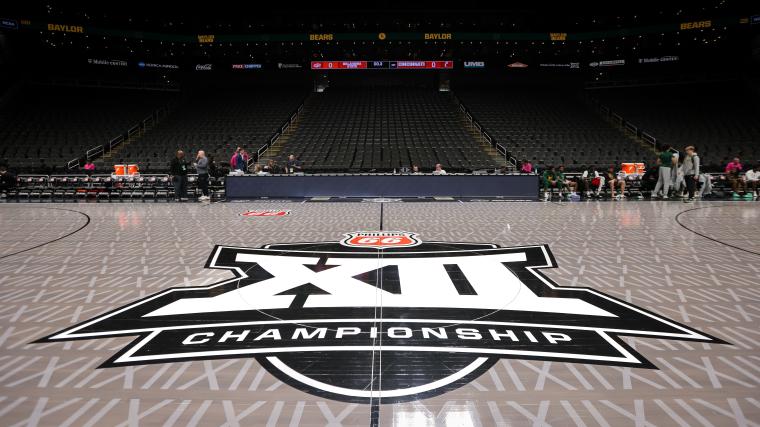
Big 12 Scraps LED Glass Floor: Innovation Meets Reality in Mid-Tournament Pivot
In a stunning and unprecedented mid-event reversal, the Big 12 Conference pulled the plug on its technological centerpiece Thursday night, announcing it would scrap the experimental LED glass playing surface for the remainder of its men’s and women’s basketball tournaments. The decision, driven by immediate player safety concerns, transforms a story of high-tech spectacle into a poignant case study on the unchanging primacy of athlete performance and trust in the crucible of championship competition.
A Swift Reversal: From Showcase to Scrapheap Overnight
The LED glass floor, a luminous marvel that displayed dynamic graphics, replays, and animations, was intended to be the defining visual of the Big 12 postseason. It represented Commissioner Brett Yormark’s forward-thinking, entertainment-focused vision for the league. Yet, its tenure was shockingly brief. After a full day of quarterfinal games on Thursday, the conference orchestrated an overnight logistical scramble to remove the high-tech panels and install a traditional, reliable hardwood court in time for Friday’s semifinals.
The catalyst was undeniable: multiple, visible slips by players during game action. While no major injuries were reported, the sight of athletes losing footing during pivotal moments was enough to trigger alarm. Coaches from the four remaining teams—a group with championship aspirations and NBA-level talent—united in their concern. Their feedback became the decisive factor for Yormark.
“After consultation with the coaches of our four semifinal teams, I have decided that in order to provide our student-athletes with the greatest level of comfort on a huge stage this weekend, we will transition to a hardwood court for the remainder of the tournament,” Yormark stated to CBS Sports. This statement, prioritizing player comfort and safety over innovation, marked the official end of the experiment.
Expert Analysis: The Unforgiving Physics of the Game
From a sports science perspective, the failure of the LED floor highlights the exquisite sensitivity of elite basketball to surface conditions. The sport is built on a foundation of explosive, multi-directional movement—sharp cuts, sudden stops, and high-flying jumps. Traction is non-negotiable.
“The interface between the shoe and the floor is sacred in basketball,” explains Dr. Michael Young, a renowned sports biomechanist and founder of Athletic Lab. “Any introduction of a new material, especially a composite glass surface, changes the coefficient of friction in unpredictable ways. Moisture from sweat, the specific polymer of the shoe soles, even the dust from the arena—all these variables interact differently on glass than on sealed maple. At the elite level, athletes operate on a razor’s edge of control. If that trust in the surface is compromised, even slightly, it doesn’t just affect performance; it fundamentally alters how they play, making them hesitant and increasing injury risk.”
The decision underscores a critical tension in modern sports: the push for technological and broadcast innovation versus the preservation of the game’s core physical integrity. The Big 12’s rapid pivot suggests that, when forced to choose, the latter will always win.
- Player Safety First: The conference avoided a potential catastrophe. A major injury on a controversial surface during March Madness would have been a lasting scandal.
- Coaching Power: The unified voice of the coaches held immense sway, proving that competitive concerns can still drive major administrative decisions.
- Practical Over Spectacle: The move reaffirmed that the game itself is the product, not the bells and whistles surrounding it.
Predictions: The Future of High-Tech Playing Surfaces
This episode does not spell the end for innovation in court design, but it certainly recalibrates the path forward. The Big 12’s experience will be studied closely by every league and equipment manufacturer.
Short-Term Impact: Expect extreme caution. Other conferences considering similar flashy installations will likely pause or cancel plans. The risk-reward calculus has shifted dramatically. The focus may return to enhancing the traditional hardwood experience with under-floor lighting or projection mapping around the court, rather than replacing the playing surface itself.
Long-Term Development: True, player-ready LED court technology is now years, not months, away. The next generation will require exhaustive, multi-year testing in practice and non-conference settings before it ever touches a championship event. Partnerships with shoe companies (like Nike and Jordan Brand) will be essential to engineer a unified shoe-surface system. The key will be developing a surface with a textured, customizable top layer that can provide consistent traction while allowing the LED visuals to shine through clearly.
Ultimately, the market will demand it be indistinguishable in feel from the best hardwood floors before players and coaches will sign off. The Big 12 just provided a massively expensive beta test for the entire industry.
A Strong Conclusion: The Game Protects Itself
The Big 12’s decision to scrap the LED floor is not a story of failure, but one of institutional responsiveness. In an era often criticized for prioritizing optics and revenue over athlete welfare, the conference made a difficult, expensive, and correct choice within hours. It listened to the people who matter most: the players and coaches on the front lines.
This incident serves as a powerful reminder that for all the talk of Name, Image, and Likeness (NIL), conference realignment, and media rights deals, the heart of college basketball remains the competition itself. The game has a way of protecting its essential nature. The pristine, predictable feel of hardwood, the squeak of sneakers, the solid footing for a game-winning drive—these are timeless elements that no amount of pixelated brilliance can replace.
As the Big 12 Tournament resumes on its familiar wooden foundation, the focus will rightly return to the drama of the games, the brilliance of the athletes, and the pursuit of a championship. The LED floor will be remembered as a bold but brief interlude, a lesson that in sports, the most important innovations are often the ones you never notice—until they’re gone.
Source: Based on news from Yahoo Sports.