Bodo/Glimt’s Arctic Fairytale Meets a Fiery Lisbon Reality
The magic, it seemed, was eternal. For a glorious, frigid season, FK Bodo/Glimt—the club from a tiny Arctic city more famous for the Northern Lights than the Champions League anthem—weaved a spell that captivated European football. They were the ultimate underdog, the team from beyond the Arctic Circle that played with a fiery, collective heart that melted giants. But on a temperate Tuesday night in Lisbon, the spell was irrevocably broken. Bodo/Glimt’s historic, fairytale run came to a crashing, brutal halt, not with a whimper, but in a whirlwind of five unanswered goals from a vengeful Sporting CP.
An Unthinkable Collapse in the Alvalade Cauldron
Statistics alone cannot capture the seismic shock of this result. Bodo/Glimt conceded more goals in 90 devastating minutes at the Estadio Jose Alvalade than they had across their entire previous five Champions League matches combined. Their defensive solidity, the bedrock of their improbable journey, vaporized under the intense pressure of a Portuguese side with a point to prove. Having secured a seemingly unassailable 3-0 first-leg victory in the harsh, home comforts of the Aspmyra Stadium, the Norwegians traveled south with history at their fingertips. Instead, they walked into a historic nightmare.
Sporting, fueled by a rabid home support and a sense of wounded pride, executed a comeback for the ages. The 5-0 victory, securing a 5-3 aggregate progression, will be etched in Champions League lore as one of its most stunning turnarounds. For Glimt, the dream dissolved goal by agonizing goal. The tactical discipline evaporated, the relentless pressing was bypassed, and the unshakeable belief that had defined their campaign slowly turned to disbelief. It was a harsh, unforgiving lesson in the razor-thin margins at the pinnacle of European football.
A Legacy Forged in Ice and Fire
To view this exit in isolation, however, is to miss the monumental achievement. This was a club making its debut in the Champions League, hailing from a municipality of just over 50,000 people. Their story is one of the competition’s most remarkable. They did not just participate; they imposed their will, their identity, and their unique circumstances on Europe’s elite.
- Arctic Advantage: They turned their geographical isolation into a fortress, using the freezing conditions, artificial turf, and intense atmosphere to unsettle visitors.
- Giant-Killing Pedigree: Their scalps were not flukes. They beat Manchester City and Atletico Madrid in the league phase, outplaying them tactically and with breathtaking collective energy.
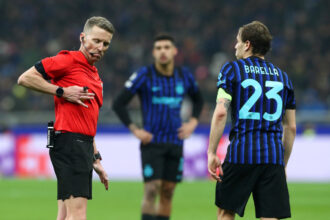
- Masterclass Against the Finalists: Most impressively, they won both legs against Inter Milan, last season’s runners-up, in the knockout play-offs. This was a systematic dismantling of European royalty.
Their model, built on data-driven recruitment, a clear playing philosophy, and developing players overlooked by bigger leagues, was validated on the grandest stage. They played fearless, attacking football and proved that structure and belief could bridge vast financial gulfs. They were, in every sense, a breath of fresh, Arctic air.
Expert Analysis: What Went Wrong and What Comes Next?
The collapse in Lisbon was a confluence of factors. Sporting manager Ruben Amorim made critical tactical adjustments, likely exploiting spaces that Glimt’s high-pressing system can leave. The psychological burden of protecting a big lead away from home is immense, especially for a squad with no prior experience in such a high-stakes Champions League knockout scenario. The pressure shifted from the fearless hunters to anxious protectors, and the performance suffered catastrophically.
Furthermore, the physical toll of their deep European run, coupled with a condensed domestic schedule in Norway, may have finally caught up with a squad lacking the depth of Europe’s traditional powers. The emotional and energetic output required to beat City, Atletico, and Inter is colossal, and the tank, against a fresh and desperate Sporting, appeared empty.
Looking ahead, the future for Bodo/Glimt remains bright, but fraught with challenge. Their success has already made them a target for player recruitment. The inevitable departure of key talents this summer is their next reality to manage. The question is whether their scouting and development model can continue to replenish the squad at the same rate.
In Norway, they will remain a force. In Europe, they have earned immense respect, but also a new status. They are no longer an unknown; they are a dangerous, respected opponent. Replicating this Champions League magic will be even harder next time, as the element of surprise is gone. Their task is to evolve from a magical one-off story into a sustainable European competitor.
Bowing Out with Heads Held High
As the dust settles on that painful night in Lisbon, the true scale of Bodo/Glimt’s accomplishment must be the final word. They did not just play in the Champions League; they enriched it. They provided the narrative, the romance, and the proof that football’s soul still exists beyond the petrodollars and commercial empires.
They made an entire continent look north, to a small town under the Arctic sky, and wonder at the power of collective will. They played with a joy and unity that was contagious. While the manner of their exit was brutally harsh, it does not erase the history they made. They reached the last 16 on their debut, toppled giants, and reminded everyone why we love this game.
Bodo/Glimt’s fairytale run has ended, but their legacy is just beginning. They depart the Champions League stage not as failures, but as pioneers. They proved that with intelligence, courage, and a unified vision, even the most improbable dreams can, for a season, feel wonderfully real. The Arctic lights may have faded from this year’s competition, but their brilliant glow will inspire underdogs for generations to come.
Source: Based on news from BBC Sport.