Michael Carrick’s Manchester United Philosophy: Why Celebrating Wins is Non-Negotiable
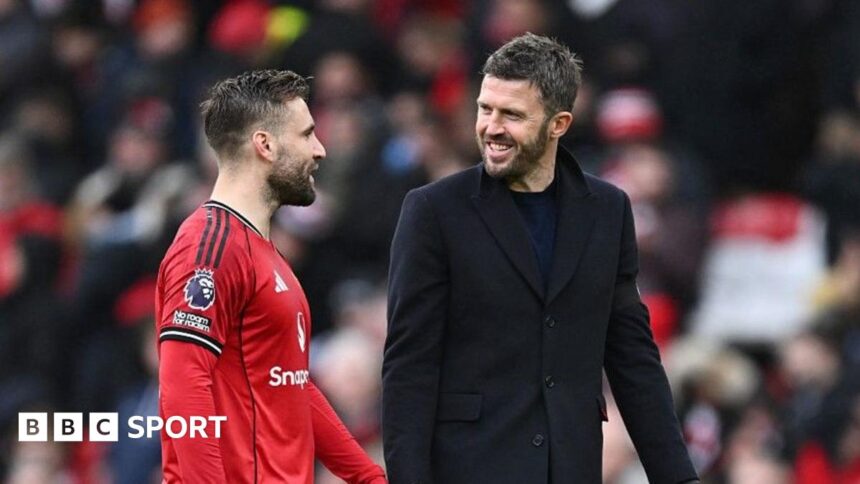
In the high-stakes, hyper-analytical world of modern football, where every emotion is scrutinized and every reaction framed as a narrative, Manchester United’s interim head coach Michael Carrick has issued a refreshingly human manifesto. After guiding his team to a 2-0 victory over Tottenham, a moment captured in a jovial sideline exchange with defender Luke Shaw, Carrick dismissed the notion of subdued success. For him, failing to savor victory is “boring and pointless.” This simple statement, delivered amidst a four-match winning streak, cuts through the noise of pragmatism and reveals a core truth often forgotten at the elite level: football, at its heart, is played and coached for the joy of winning.
The Carrick Effect: Substance Over Soundbite
Since stepping into the breach following Ruben Amorim’s departure, Michael Carrick’s tenure has been defined by a quiet authority and tactical clarity. His public pronouncements have been measured, consistently punctuated with the caveat that the squad is “not getting carried away.” This is the disciplined mind of a former midfielder who won every major honor at the club. However, his recent insistence on celebrating wins is not a contradiction; it’s the completion of a holistic coaching philosophy. Carrick understands that process and outcome must be linked by emotion. The grind of training, the tactical discipline, the physical sacrifice—all of it is justified and fueled by the shared euphoria of three points. To divorce the work from the reward is to create a sterile, unsustainable environment. Manchester United’s resurgence to fourth in the Premier League under his watch isn’t just about shape or selection; it’s about reconnecting a talented squad with the fundamental buzz of winning together.
Why Modern Football Needs This Mindset
Carrick’s stance is a subtle rebellion against a growing trend in football discourse. The game is increasingly viewed through spreadsheets, expected goal metrics, and possession heatmaps. While these tools are invaluable, they can create a culture where a win is “expected” and thus not celebrated, or a loss is “unlucky” and thus not mourned. This data-driven detachment risks leaching the soul from the sport. Carrick, a thinker deeply versed in the modern game, argues for balance. “You’ve got to enjoy the buzz of winning, that’s what we’re in it for,” he stated. This principle serves crucial purposes:
- Psychological Fuel: Celebrations are a tangible reward for the brain, releasing dopamine and reinforcing positive behaviors. They build mental resilience for tougher moments.
- Squad Cohesion: Shared joy is a powerful bonding agent. Those moments of collective celebration, from the pitch to the dressing room, forge an unbreakable team spirit that drills alone cannot.
- Connection with Fans: Supporters invest emotion weekly. Seeing genuine celebration from players and staff validates that emotional investment and strengthens the club’s identity.
- Sustainable Motivation: Acknowledging success prevents burnout. The journey becomes a series of enjoyable milestones, not a joyless march.
The West Ham Test and Top-Four Implications
The immediate test of this buoyant mentality comes at the London Stadium against West Ham United. This is more than just another Premier League fixture; it’s a direct clash for Champions League positioning. Victory would not only solidify United’s hold on fourth but could see them leapfrog their rivals, applying immense pressure on the teams above. Carrick’s approach will be fascinating. Will he maintain his balanced perspective—enjoying the win at Spurs while immediately focusing on the next challenge? His methodology suggests yes. Celebrating one win does not mean complacency for the next; it means carrying that positive energy forward. The match-up presents key battles all over the pitch, but perhaps the most significant is psychological. A United squad playing with confidence and the freedom that comes from enjoying their football is a formidable prospect. A positive result at West Ham would be the ultimate validation of Carrick’s belief that enjoyment and excellence are partners, not enemies.
Looking Ahead: A Lasting Legacy for United?
While Michael Carrick’s interim status is clear, the principles he is emphasizing could leave a lasting imprint on the club’s culture, regardless of who takes the permanent helm. He is reminding Manchester United that while the pursuit of trophies is the ultimate goal, the journey there must be punctuated with acknowledgment and enjoyment. This is not about wild, distracting celebrations; it’s about the purposeful recognition of a job well done. As the club navigates a pivotal season, this human-centric approach could be the key to unlocking consistent performance. In a sport often paralyzed by the fear of failure, Carrick is making a case for the power of embracing success, however temporary. It’s a lesson that resonates far beyond the touchline: to sustain high performance in any field, you must allow yourself to feel and enjoy the wins. For Manchester United, a club built on glory and drama, re-embracing that truth might be the most important tactical adjustment of all.
Conclusion: Michael Carrick’s assertion that not celebrating is “boring and pointless” is far more than a throwaway line after a good result. It is a deliberate, philosophical cornerstone of his management. In an era of calculated cool, he is advocating for controlled passion. He is building a Manchester United that respects the process but honors the result, that works with discipline but plays with joy. As the crucial Champions League qualification race heats up, this restored connection to the primal joy of winning may prove to be United’s most potent weapon. The message from Carrick is clear: never apologize for success. Savor it, use it, and let it propel you to the next challenge. In doing so, he is not just coaching a team to win matches; he is reminding a global institution why it fell in love with the game in the first place.
Source: Based on news from BBC Sport.