Brazilian Football Erupts: 23 Red Cards in Mineiro Derby Chaos
The beautiful game, in its most passionate Brazilian heartland, descended into unprecedented anarchy. The final of the Campeonato Mineiro between arch-rivals Cruzeiro and Atlético Mineiro will not be remembered for skill, tactics, or a dramatic winning goal. Instead, it will be etched into football history as the night the Mineiro derby shattered all disciplinary records, producing a staggering 23 red cards after a full-scale pitch invasion by players and staff. This wasn’t just a brawl; it was a systemic collapse of order, a surreal spectacle that laid bare the volatile intensity of one of South America’s fiercest rivalries.
A Ticking Derby Bomb: The Buildup to Bedlam
Derbies between Cruzeiro and Atlético Mineiro, known as Clássico Mineiro, are never tranquil affairs. The rivalry divides the state of Minas Gerais, carrying generations of familial and regional pride. This final, however, had added fuel. The two-legged tie was poised at 2-2 on aggregate heading into the final minutes of the second leg at the Mineirão Stadium. With the title on the line and penalty kicks looming, the tension was a palpable, electric force in the air. Every challenge was amplified, every decision contested. The match officials were attempting to navigate a powder keg, and in the 96th minute, with the final whistle imminent, the fuse was lit. A seemingly innocuous coming-together between players sparked a flashpoint, and within seconds, the controlled environment of a football match vanished.
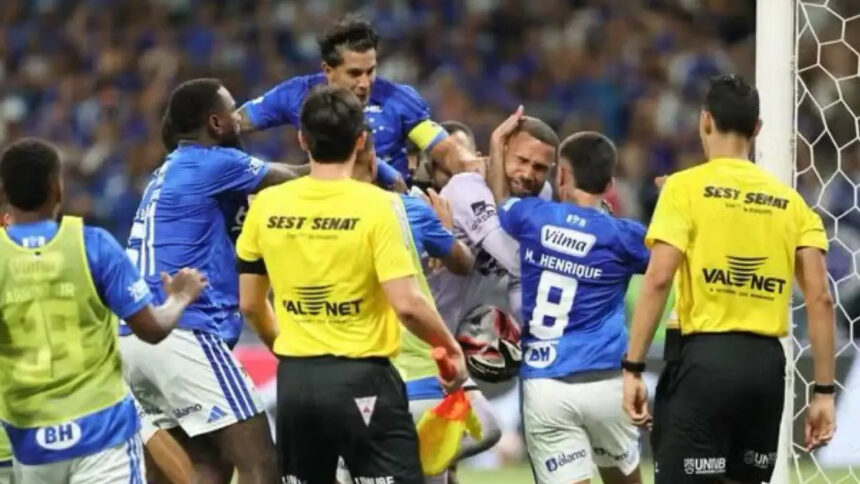
The initial scuffle, common in heated matches, failed to be contained. Instead, it acted as a magnet. What followed was a mass brawl of astonishing scale. Players from both sides sprinted across the pitch to engage, abandoning any pretense of sport. The benches emptied entirely, with substitutes, fitness coaches, and backroom staff flooding onto the field, not as peacemakers, but as combatants. The scene transformed into a chaotic melee of dozens of individuals, with punches thrown, violent shoves, and screaming confrontations engulfing the hallowed turf. For several minutes, the refereeing team was powerless, mere spectators to a breakdown of professional football’s fundamental rules.
Unpacking the Unprecedented: The Aftermath and Official Fallout
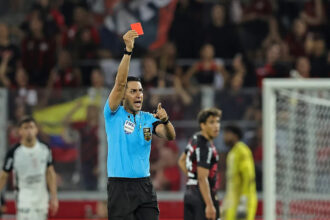
As the dust slowly settled and security personnel began to restore a semblance of order, the monumental task of administering justice began. The match officials, led by referee Felipe Fernandes de Lima, embarked on the painstaking process of identifying offenders. The result was a disciplinary report that read like fiction:
- A historic 23 red cards were issued, a number believed to be a world record for a top-flight professional match.
- The dismissals included players who started, substitutes who joined the fray, and members of both teams’ technical staff.
- With so many sent off, the match was officially concluded, as neither team could field the minimum required players.
- The Campeonato Mineiro title was awarded to Atlético Mineiro, who were leading the second leg 1-0 at the time of the abandonment (3-2 on aggregate).
This administrative aftermath is just the beginning. The sports courts of the Minas Gerais Football Federation (FMF) and the Brazilian Football Confederation (CBF) now face a case of unparalleled complexity. Potential sanctions extend far beyond suspensions for the upcoming state league. Fines will be massive, and lengthy bans for instigators could impact the national Brasileirão Série A season. The reputational damage to both clubs, and to Brazilian football’s image internationally, is incalculable.
Expert Analysis: More Than a Simple Fight
To dismiss this event as a mere “fight” is to misunderstand its significance. This was a systemic failure on multiple levels. First, it highlights the immense, often unchecked, pressure in Brazilian regional finals, where local bragging rights can sometimes outweigh the rational pursuit of national titles. The win-at-all-costs mentality boiled over into lawlessness.
Second, it exposes a critical failure of leadership within the clubs. Where were the captains? Where were the senior players and managers in de-escalating the situation? The instantaneous emptying of the benches suggests a culture where joining the fight was the expected, not condemned, reaction. This points to a deep-seated issue within the institutional culture of both organizations.
Finally, the incident raises serious questions about security protocols and the authority of match officials. While referees cannot be blamed for the actions of dozens of adults, the speed and totality of the escalation suggest a environment where consequences were not feared. This event will force a reckoning within the CBF regarding the powers and protection of officials in high-stakes matches.
The Road Ahead: Predictions and Repercussions for Brazilian Football
The fallout from this surreal scene will reverberate for years. Predictably, both clubs will face severe sporting and financial penalties. Key players will be suspended for a significant portion of the national championship, handicapping their campaigns. Sponsors will be reevaluating their partnerships, concerned by the association with such violent imagery.
More broadly, this is a watershed moment for football governance in Brazil. We can predict with high certainty:
- Tougher, automatic sanctions for mass confrontations, including potential point deductions in league play.
- A mandated “cooling-off” distance for substitutes and staff, possibly with physical barriers, to prevent bench-clearing incidents.
- An intensified focus on psychological and behavioral training for players, emphasizing the role of captains and veterans in maintaining control.
- Increased use of post-match video review to identify and punish offenders who escaped the referee’s eye in the chaos.
The danger for Cruzeiro and Atlético Mineiro is that this event defines their seasons and their global image. Moving forward, every match between them will be scrutinized under the shadow of this brawl. The rivalry, already intense, has been poisoned by an act of collective self-sabotage.
Conclusion: A Stain and a Stark Warning
The Mineirão Stadium, a temple of Brazilian football that hosted World Cup matches in 2014, now bears witness to one of the sport’s ugliest chapters. The distribution of 23 red cards in the Mineiro derby is not a badge of passionate honor; it is a stain on the reputations of two great clubs and a stark warning to the football world. Passion is the lifeblood of the sport, but when it mutates into uncontrolled rage, it destroys the very contest it seeks to win. The image of a pitch overrun by brawling professionals is an indelible one. It serves as a sobering reminder that without respect for the game, its rules, and its opponents, the beautiful game can turn profoundly ugly in an instant. The true test for Cruzeiro, Atlético Mineiro, and Brazilian football now lies not in the heat of a derby, but in the cold, hard process of learning from this historic nadir.
Source: Based on news from Yahoo Sports.