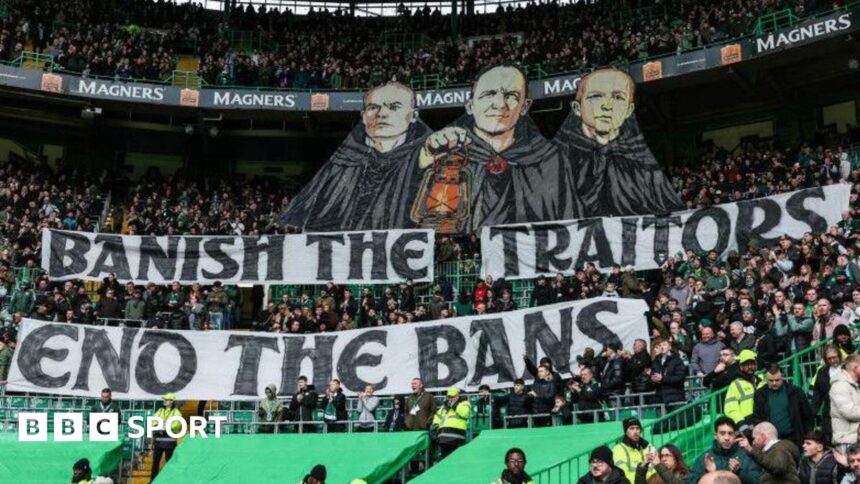
Celtic at a Crossroads: Chairman’s Unity Plea Meets Fan Fury Over Boycott Plans
The famous green and white scarves of Celtic Park have long been a symbol of unwavering loyalty, a tidal wave of support that has propelled the club to its greatest heights. Yet, as the Bhoys prepare for a crucial Scottish Cup tie against Dundee this Saturday, a profound and unsettling silence threatens to descend upon the hallowed ground. Interim Chairman Brian Wilson’s public call for “unity behind the team” is not a routine rallying cry; it is a direct response to a planned fan boycott, a stark indicator of a deepening chasm between the Celtic boardroom and the stands that could define the club’s season.
A Protest Born of Frustration: More Than Just a Transfer Window
To the casual observer, the current unrest may appear as a simple, if extreme, reaction to a quiet January transfer window. While the perceived underwhelming transfer activity is the immediate catalyst, it is merely the latest spark in a tinderbox of long-simmering grievances. The core of the dispute runs deeper, touching on the very identity and ambition of a global football institution.
For months, influential Celtic supporters’ groups have voiced escalating concerns that extend beyond player recruitment. Their central demands coalesce around a perceived strategic drift:
- Sporting Ambition: A fear that the club’s model prioritizes financial prudence over the investment needed to consistently compete at the European level.
- Communication Breakdown: A profound criticism of the lack of engagement from the Celtic hierarchy, with fans feeling their voices are ignored on major strategic decisions.
- Direction of the Club: Questions about long-term planning and a vision that matches the historical weight and potential of Celtic FC.
The planned boycott of the Dundee cup match is not a spontaneous act of petulance; it is a calculated, symbolic gesture designed to translate online discontent into a visible, tangible reality—empty seats at the club’s most sacred venue.
The Board’s Dilemma: Financial Realities vs. Fan Expectations
Brian Wilson’s appeal for unity places the Celtic board in a delicate position. From a business and football operations perspective, his call is logical. A united front is undeniably beneficial for on-pitch performance, especially in the high-stakes knockout environment of the Scottish Cup. Furthermore, a public rift of this magnitude can become a distracting narrative, potentially affecting player morale and the club’s market value.
However, the board’s challenge is multifaceted. They must navigate the complex financial landscape of modern football, where sustainable models are crucial yet often at odds with fan demands for constant, high-value investment. The criticism of the Celtic board often overlooks the club’s consistent profitability and recent domestic dominance. Yet, as experts note, Celtic’s model is judged by its support not against other Scottish clubs, but against the club’s own European pedigree and the potential they believe is being squandered.
The critical failure, as identified by fan groups, is one of communication and empathy. A lack of engagement has allowed a transactional relationship—success in exchange for support—to fracture. Wilson’s statement, while a necessary public relations step, will likely be viewed by protesting fans as a plea for compliance rather than a commitment to meaningful dialogue.
The Power of the Protest: What a Boycott Really Means
A fan boycott at a club of Celtic’s size and tradition is a nuclear option. Its impact is measured in more than lost gate receipts. The symbolism is devastating: the famous “Celtic roar” replaced by an echo, a global television audience witnessing a club divided against itself. This visual would be a powerful weapon for the protesting groups, proving their collective strength and the depth of their discontent in a way banners and chants cannot.
For the players and manager, Brendan Rodgers, the atmosphere—or lack thereof—presents a unique psychological hurdle. While professionals are expected to perform regardless, the energy of a packed Parkhead is a tangible, lift-giving force. Its absence could turn a routine home fixture into an unnervingly tense affair, handing intangible momentum to the opposition.
Most importantly, a successful boycott shifts the power dynamic. It moves the conversation from social media forums and fan media into the boardroom, forcing the hierarchy to acknowledge that the issue is not a vocal minority but a significant portion of the core support. The demand for change at the club becomes impossible to ignore when expressed through the stark reality of silence.
Predictions and Pathways Forward
The immediate future hinges on Saturday’s attendance figures. A partially successful boycott with noticeably sparse sections will keep the pressure simmering. A stadium that is two-thirds full will be claimed as a moral victory by the board but will not address the underlying issues. A dramatically low turnout, however, would be a seismic event in modern Celtic history.
Looking ahead, several scenarios could unfold:
- A Stalemate: The board holds firm, the protest continues in varied forms (silent protests, banner displays), creating a season-long backdrop of tension that could jeopardize the pursuit of the domestic double.
- Strategic Concessions: The hierarchy initiates a structured, transparent engagement process with key fan groups, outlining a clearer footballing strategy and communication plan. This is the most likely path to de-escalation.
- Summer Reckoning: All eyes shift to the summer transfer window. Significant, ambitious investment aligned with fan expectations could act as a peace offering, but failure to act would ignite the protest with even greater ferocity.
The ultimate prediction is that this conflict will not be resolved quickly. The fan protest at Celtic has moved beyond a single issue into a fundamental debate about the club’s soul. Brian Wilson’s call for unity, therefore, feels like an attempt to treat a symptom rather than the disease.
Conclusion: Unity Must Be Earned, Not Demanded
The standoff at Celtic Park is a poignant reminder that in football, the club does not belong to the board, the players, or the manager alone. It is a shared entity, with supporters as its permanent custodians. Brian Wilson’s plea for unity behind the team is understandable, but true unity cannot be summoned by decree. It must be cultivated through shared ambition, transparent leadership, and mutual respect.
The planned boycott is a cry for recognition, a drastic action born from a feeling of powerlessness. For the Celtic board, the path forward is not to simply ask for the noise to stop, but to finally listen to the melody within it. The fans are not merely customers to be placated; they are the heartbeat of the institution. Mending this rift will require more than words—it will demand a demonstrable, ambitious shift in strategy and a genuine, ongoing dialogue. The silence on Saturday, if it comes, will be the loudest message the Celtic hierarchy has heard in years. The question is, will they finally understand what it’s saying?
Source: Based on news from BBC Sport.