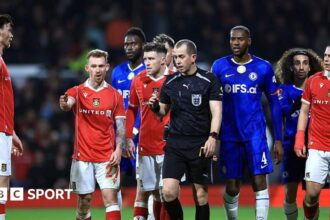
Hollywood Heartbreak: Chelsea’s Late Show Stuns Valiant Wrexham in FA Cup Epic
The magic of the FA Cup is a tale often told, but rarely does it shimmer with such cinematic intensity. On a frigid Saturday at a sold-out, deafening STōK Cae Ras, the script had everything: Hollywood owners, a fearless underdog, a dramatic red card, and a finale that twisted until the very last second. In the end, the blockbuster budget of Chelsea prevailed, but not before the plucky Welsh heroes of Wrexham AFC pushed them to the absolute limit, succumbing 4-2 in a breathless extra-time thriller that will be remembered for years.
A Night Where Dreams Almost Came True
With Ryan Reynolds and Rob McElhenney watching on, embodying every fan’s hope and anxiety, Wrexham played not just with passion, but with a tactical bravery that belied their status. The opening act was pure fantasy. Harrying Chelsea into uncharacteristic errors, they took a deserved lead. The stadium erupted as Sam Smith found the net, sending a seismic shock through the football world. Chelsea, sluggish and seemingly rattled by the fervent atmosphere, relied on fortune to equalize via a deflected own goal. But Wrexham’s spirit was unbreakable. With 12 minutes of normal time remaining, Callum Doyle’s ingenious, improvised finish sent the Cae Ras into bedlam once more. The greatest FA Cup shock in a generation was tantalizingly close.
Chelsea’s character, however maligned this season, was finally tested. The introduction of energetic substitutes changed the dynamic. As legs tired and space opened, young defender Josh Acheampong became an unlikely hero, arriving late to head home a crucial second equalizer and shatter Wrexham’s dreams of a regulation-time victory. The momentum had subtly, decisively shifted.
The Turning Point: Discipline Meets Depth
The narrative took a cruel turn for Wrexham at the start of extra time. The already Herculean task became a mission impossible when captain George Dobson received a second yellow card, reducing the hosts to ten men. This was the pivotal moment. Against a tiring, numerically disadvantaged opponent, Chelsea’s financial and squad depth became the defining factor.
Here, the quality of Chelsea’s bench proved insurmountable. Alejandro Garnacho, with his direct running, soon put the Premier League side ahead for the first time in the match. Yet, Wrexham refused to fade. In a moment that encapsulated the drama, substitute Lewis Brunt thought he had leveled, wheeling away in celebration before VAR intervened, ruling the goal offside by the narrowest of margins. The emotional whiplash was devastating. From the brink of 3-3, Wrexham were immediately punished as João Pedro sealed Chelsea’s quarterfinal spot, finally extinguishing the Welsh fire.
- Key Moment: George Dobson’s red card early in extra time fundamentally altered the contest’s geometry.
- Deciding Factor: Chelsea’s ability to bring on elite, game-changing substitutes like Garnacho against a depleted side.
- Agony: Lewis Brunt’s disallowed goal was a brutal, technology-enforced end to the comeback dream.
Expert Analysis: What This Means for Both Clubs
For Chelsea, this was a escape of monumental proportions. While questions will linger about their passive periods, the resilience to come from behind twice in such a cauldron speaks to a growing mentality. Manager Mauricio Pochettino will point to this as a potential season-defining result, a proof of grit to complement their talent. It papers over cracks, but secures a vital quarterfinal berth and keeps a tangible route to silverware alive.
For Wrexham, the loss is a heartbreak, but the performance is a landmark. They demonstrated that their National League ambition is underpinned by a quality and belief that can trouble the elite. This was not a lucky, backs-to-the-wall display; it was a structured, aggressive, and skillful performance that has elevated the club’s global profile even further. The message is clear: Wrexham is a club on an upward trajectory, capable of mixing it with the very best on their day. The exposure and revenue from this deep cup run will only fuel their project.
Predictions: Pathways After the Pandemonium
Looking ahead, the trajectories of these two clubs will diverge, but both have been indelibly marked by this clash.
Chelsea’s focus now sharpens on the FA Cup as a prime target for trophy-hungry owners and fans. Surviving this scare must serve as a wake-up call; they cannot afford similar lethargy against Premier League opposition in the latter stages. The victory could galvanize their league form, providing a blueprint for battling through adversity.
Wrexham’s future, however, looks brighter than ever. The defeat, while painful, is a catalyst. It proves their model works and will be a potent recruiting tool. The immediate priority is securing automatic promotion from League Two, a task this performance suggests they are more than ready for. The Wrexham project under Reynolds and McElhenney has passed its most public test with flying colors, validating their investment and vision. Expect them to be a force in League One next season, and a feared cup opponent for years to come.
Conclusion: A Defeat That Felt Like Victory
As the final whistle blew on a truly epic FA Cup tie, the scoreline told only half the story. Chelsea advanced, relieved and respectful. Wrexham exited, heartbroken but heroic. In the grand narrative of football, this was a night where the so-called “magic of the cup” was not about a giant-killing, but about the giant being forced to its knees before finally rising. Wrexham did not get their storybook ending, but they authored a chapter that cements their status as more than a feel-good story—they are a formidable football club. Chelsea live to fight another day, their title hopes intact but their pride certainly checked. The real winner was the FA Cup itself, which once again proved it is the greatest stage for drama, passion, and unforgettable footballing theater.
Source: Based on news from ESPN.




![Wrexham 2-4 Chelsea [AET]: Blues stop FA Cup upset in North Wales](https://yetiscore.com/wp-content/uploads/2026/03/sports-1772916330-330x220.jpg)