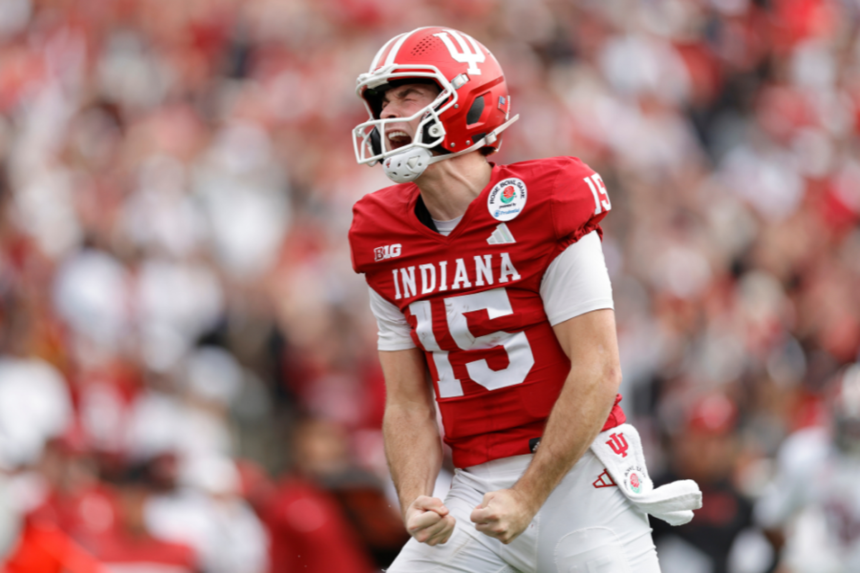
College Football’s Priciest Showdown: Fans Stunned as Championship Tickets Soar Past $20K
The College Football Playoff National Championship is the sport’s ultimate spectacle, a night where legends are forged and dynasties are defined. But for the 2024 title game between the No. 1 Indiana Hoosiers and the No. 10 Miami Hurricanes, a new narrative is dominating the pre-game buzz: astronomical cost. With the game set for Miami’s own Hard Rock Stadium, what should be a home-field advantage for Hurricane fans has turned into a financial nightmare, as secondary market prices have reached levels that have left the college football world in a state of collective sticker shock. We’re not just talking expensive; we’re talking a mortgage payment for a pair of nosebleeds and a car payment just to park.
The Staggering Numbers: A Line Item Breakdown of Fandom
Forget “The Big Game.” This is “The Big Tab.” Official tickets are a mirage, vanished into the hands of season ticket holders, sponsors, and brokers. The real marketplace is on platforms like StubHub, SeatGeek, and Vivid Seats, where the laws of supply, demand, and pure spectacle have created a perfect financial storm.
The cheapest entry point for two fans to sit together in the upper bowl is hovering around $2,900. That’s before taxes and fees, which can easily add another 20-30%. For a single attendee hoping to go solo, the picture isn’t much better, with most upper-bowl tickets still commanding nearly $3,000 apiece. This isn’t premium access; this is simply the right to be in the building, high above the field where the action unfolds.
But the real eye-popping figures are found closer to the turf. The lower bowl presents a tiered system of exclusivity:
- Standard Lower Bowl: Tickets frequently listed from $4,500 to $8,000 per seat.
- Premium Club Sections: Tickets ranging from $10,000 to $15,000, offering upgraded concessions and amenities.
- The Apex: The 72 Club: Here, the price truly detaches from reality. Listings for all-inclusive luxury seats, with gourmet food and top-shelf open bars, have soared past $20,000 per ticket. For two people, you’re looking at a price tag that could buy a new car.
Then, in a move that feels almost like a parody, there’s parking. South Florida radio host Andy Slater highlighted that parking passes at Hard Rock Stadium itself are being resold for a jaw-dropping starting price of $747. More “budget-conscious” fans can look across the street for lots asking around $280—still a sum that would cover a full season of parking at most college venues.
Expert Analysis: Why This Game Broke the Market
Several unique factors have converged to create this unprecedented pricing peak. First and foremost is the Cinderella Story vs. The Goliath narrative. The Miami Hurricanes, a historic program that has languished in mediocrity for years, stunningly clawed their way to the title game as a No. 10 seed. Their passionate, long-suffering fanbase is experiencing a fever dream, and the game is in their backyard. The demand from local “U” fans desperate to witness the potential culmination of “The Return” is immense and emotional.
On the other side, the Indiana Hoosiers represent the blue-blood program finally reaching the summit after decades of near-misses. Their devoted national fanbase is traveling in force, willing to pay a premium to see their team make history. This isn’t just another championship; for both fanbases, it feels like a once-in-a-generation redemption arc.
“This is a perfect storm of location, narrative, and pent-up demand,” explains Dr. Patrick Rishe, a sports economist. “You have a storied home team with a massive local alumni base playing in its own stadium against a flagship university with a national following. The scarcity of tickets against this backdrop of emotional investment creates a resale market that operates more like an auction for a rare artifact than a sporting event.”
Furthermore, Hard Rock Stadium’s configuration for this event, with significant sections allocated to media, sponsors, and the CFP itself, reduces the true number of tickets available to the public, further squeezing the secondary market.
The Ripple Effect: What This Means for the Future of College Sports
This pricing phenomenon is not happening in a vacuum. It is a stark symptom of the commercialization of college athletics at its highest level. The expansion of the College Football Playoff, the impending seismic shifts in conference realignment, and the advent of player NIL deals have all contributed to an environment where the sport’s premier event is treated as a luxury good.
The danger, of course, is pricing out the average fan. The students, the alumni of modest means, the families who have cheered for generations—they are being relegated to watch parties, not the stadium stands. The event risks becoming exclusively the domain of corporate interests and the ultra-wealthy, stripping away the communal, passionate atmosphere that defines college football.
“The soul of college football has always been in the stands—the student sections, the band, the generational fans,” says veteran sports journalist Elena Rodriguez. “When the cost of admission reaches this stratosphere, you start to lose that soul. The roar of the crowd becomes the murmur of a transactional experience.”
This event may serve as a case study for future championship hosting. Cities and venues may need to implement stronger consumer protections or direct-to-fan ticket allocations to preserve some semblance of accessibility, even as the market forces push toward pure monetization.
Kickoff Forecast: Gridiron Glory Amidst Financial Frenzy
When the ball is finally kicked off on Monday night, the financial chatter will momentarily cease, and the focus will return to the field. And what a matchup it promises to be.
The Indiana Hoosiers, led by their Heisman-winning quarterback and a stifling defense, are the deserved favorites. Their methodical, powerful style has crushed opponents all season. However, the Miami Hurricanes have become the masters of chaotic, inspired football, riding a wave of momentum, opportunistic defense, and the magical playmaking of their own star quarterback.
Prediction: The atmosphere, despite the cost of admission, will be electric and uniquely pro-Miami. This energy will fuel the Hurricanes early, leading to a tense, back-and-forth first half. However, Indiana’s depth and discipline are built for four-quarter wars. In the end, the Hoosiers’ relentless ground game and superior trench play will wear down the Cinderella story. Look for Indiana to pull away in the fourth quarter to claim their first national title in over half a century, winning 34-24. The confetti will fall on the Hoosiers, while the Miami fans, though heartbroken, will cherish simply having been there—a memory purchased at a historic premium.
The final whistle on Monday night will end the game, but the conversation ignited by this championship’s cost is just beginning. The 2024 CFP National Championship will be remembered not only for the winner but for the moment college football’s premier event revealed the extreme cost of its own success. It serves as a wake-up call: as the sport’s revenue and popularity soar, the industry must grapple with how to keep its heart—the common fan—in the seats. The true test won’t be on the scoreboard, but in whether the sport can find a sustainable balance between its lucrative future and its passionate, accessible past.
Source: Based on news from Yahoo Sports.