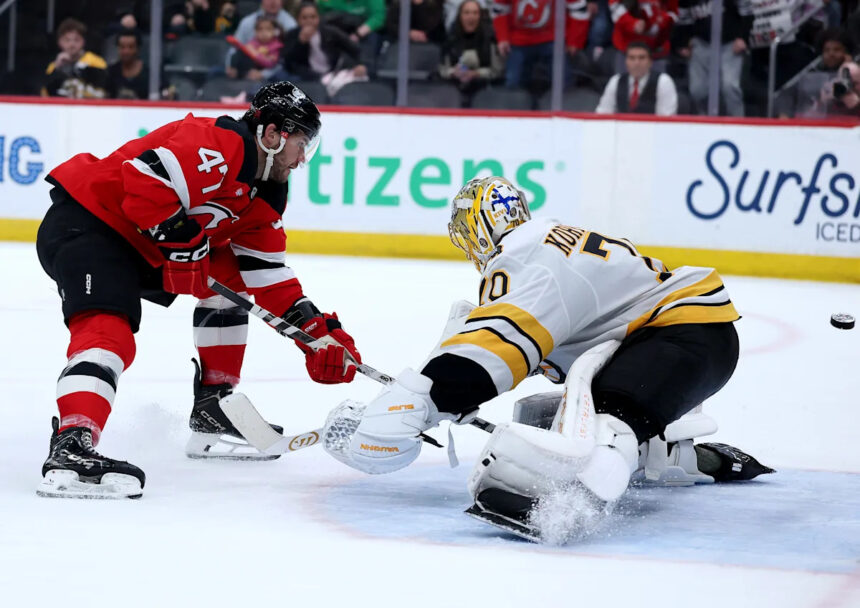
Devils Rally Past Bruins in OT: A Glimpse of a Brighter Future
In the hollowed-out, hope-deferred landscape of a lost season, a single game can feel like a cruel taunt. For the New Jersey Devils and their fans, Thursday night’s 3-2 overtime victory over the Boston Bruins was exactly that—a breathtaking, frustrating, and ultimately beautiful reminder of what this team was supposed to be. On a night when their opponent was fighting for playoff positioning and their own season was reduced to playing spoiler, the Devils authored a performance that felt ripped from October’s optimistic script, proving that even in the darkest depths of the standings, pride and potential can flicker defiantly to life.
A Tale of Two Teams, and Two Periods
The opening frame was a stark reminder of the bad habits that have plagued this Devils campaign. They were, to put it kindly, a hockey team struggling to get out of its own way. Passes were a half-second late and a foot off target. Breakouts were chaotic. The Bruins, crisp and desperate, capitalized. A defensive zone turnover led to Pavel Zacha burying a chance against his former team, and a later point shot through traffic found its way in. The 2-0 deficit felt familiar, the script of a directionless mess playing out on schedule.
But then, a switch flipped. The intermission reset morphed the Devils into the club that had the hockey world buzzing just six months ago.
- Speed became the dominant weapon, as New Jersey’s young legs began to stretch the Bruins’ disciplined structure.
- The forecheck, dormant in the first, turned ferocious, pinning Boston in its own end for sustained shifts.
- Most importantly, the fearless, skilled identity finally emerged. They stopped playing not to lose and started playing to win.
The Rally: Skill, Will, and a Goaltending Spark
The comeback was built on the pillars that were supposed to define this season. First, it was Jesper Bratt, the team’s most consistent offensive threat, wiring a wicked wrist shot off the rush to cut the lead in half. The goal injected palpable belief into the bench and the Prudential Center crowd.
The tying goal was a masterpiece of the advertised system: transition offense at its finest. A quick up-ice pass, a controlled entry, and a perfect seam feed from Timo Meier found a streaking Nico Hischier, who made no mistake. It was fast, it was skilled, and it was executed against one of the league’s best defensive teams. This was the Devils as advertised back in October.
None of it would have mattered without the performance of goaltender Jake Allen. Acquired at the deadline to provide stability, Allen was spectacular, particularly in the third period as the Bruins pushed. His series of clutch saves on high-danger chances allowed the Devils’ rally to reach its logical, dramatic conclusion.
Overtime Poetry and the “What If” Factor
Three-on-three overtime is built for a team with the Devils’ specific toolkit. With open ice, their elite skating and creativity are magnified. The winning play was a thing of beauty: Luke Hughes, with the poise of a veteran, held the zone at the blue line, danced around a defender, and fired a shot that created a rebound. There, crashing the net with the hunger of a playoff contender, was Dawson Mercer to shovel home the winner.
And that’s where the “what could have been” sentiment truly overwhelms. The Bruins are a veteran-laden team in a dogfight for the Atlantic Division crown. The Devils are mathematically eliminated, theoretically in the “scheduling second week of April tee times” phase. Yet, for the final 45 minutes, they were the better team. It forces the agonizing question: where was this resilience, this structure, this goaltending, in January and February?
This game was a microcosm of the Devils’ fatal flaw: a catastrophic inability to start games with urgency. The talent to compete with anyone is undeniable, but the consistent compete level has been absent. Tonight, they found it, but far too late for the 2023-24 campaign.
Looking Ahead: Building on the Blueprint
So, what does a meaningless win in April mean for the future? For General Manager Tom Fitzgerald and the coaching staff, it should serve as a vital, high-definition blueprint.
- The Core is Legitimate: Hischier, Hughes, Bratt, Jack Hughes, and Simon Nemec demonstrated they can dictate play against elite competition.
- Goaltending is Non-Negotiable: Allen’s performance underscored how competent netminding changes everything. Addressing this position with a long-term solution is the offseason’s paramount task.
- Mental Fortitude Must Be Addressed: The team must find a way to harness the desperation they played with while trailing and apply it from puck drop in Game 1 next fall. The culture needs to shift from skilled underachievers to relentless contenders.
Predicting next season is premature, but the mandate is clear. This roster, likely with a few key tweaks on the back end and in the crease, has the capacity to be a force. They must learn to bring this version of themselves—the fast, skilled, and fearless one—nightly, not just when pride is on the line in a spoiler role.
Conclusion: More Than Just a Spoiler Alert
The New Jersey Devils did not save their season against Boston. That ship had sailed. What they did was far more important for a fanbase yearning for proof of concept. They provided a tangible, emotional, and competitive reminder that the vision is not broken. The foundation, so often obscured by mistakes and malaise, remains solid and spectacularly talented.
This was more than just playing spoiler. This was a statement of identity, delivered late but delivered loud. The challenge now is to ensure that the team that dominated the Bruins for two periods and overtime isn’t just a fleeting apparition of a lost season, but the standard bearer for the next one. The “what could have been” from this night must become the “what will be” of tomorrow.
Source: Based on news from Yahoo Sports.