Diaz’s Panenka Nightmare: The Agonizing Penalty That Cost Morocco Afcon Glory
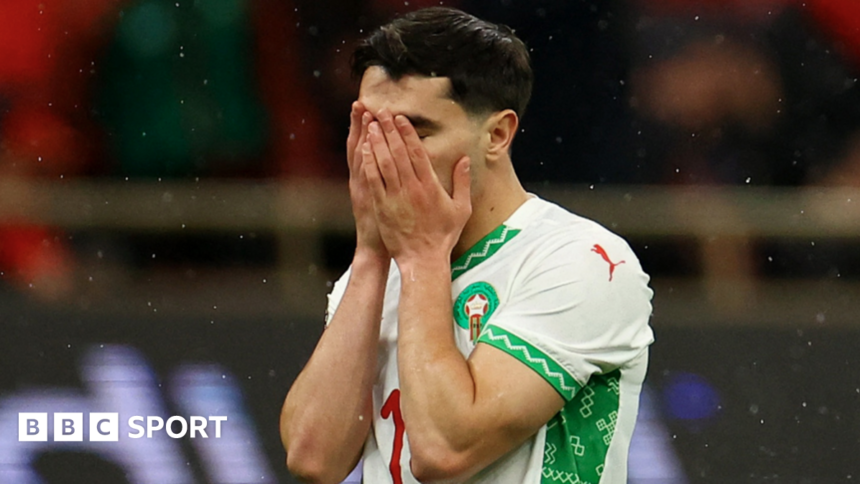
The weight of a nation’s 50-year dream rested on his shoulders. The clock had ticked into the 98th minute of a tense, goalless Africa Cup of Nations final. Brahim Diaz, the tournament’s leading scorer and host nation’s talisman, had just been fouled in the box. A penalty. A golden, storybook chance to etch his name into Moroccan folklore forever. What followed was not a hero’s strike, but a moment of such profound, public anguish that it instantly entered the pantheon of sporting heartbreak. Diaz, in a decision that will be dissected for generations, attempted a ‘Panenka.’ It failed. Catastrophically. And in that silent, suspended second as Senegal’s Edouard Mendy casually caught the softly chipped ball, a nation’s joy turned to dust.
The Anatomy of a Footballing Nightmare
To understand the magnitude of the failure, one must first appreciate the zenith of the opportunity. Morocco had not lifted the Afcon trophy since 1976. Playing at home, driven by a fervent, expectant public, they had battled through a grueling final against the defending champions, Senegal. Diaz, with five crucial goals, was the undisputed protagonist of their run. The late penalty was the narrative climax the script demanded.
Instead, the choice to Panenka—a technique of audacious coolness, chipping the ball delicately down the middle as the goalkeeper dives—revealed a fatal miscalculation. In that high-stakes environment, it was less an act of confidence and more one of hubris. Edouard Mendy, a veteran of elite pressure, did not bite. He stood firm, a pillar of composure, and collected the gift with an ease that magnified the embarrassment a thousandfold. The stadium, a cauldron of noise moments before, fell into a stunned, sickening silence. The whistle blew shortly after. Senegal would go on to win in extra time, their victory forever framed by Diaz’s miss.
Why the Panenka? Dissecting a Fateful Decision
In the cold light of analysis, the decision baffles. The Panenka is a weapon for moments of secured advantage, for when a player holds all the psychological cards. It is the ultimate expression of contempt for the goalkeeper’s anticipation. This was not that moment.
- Pressure Context: This was the final kick of normal time in a continental final, not a group stage match already won. The risk-reward calculus was severely skewed.
- Goalkeeper Profile: Mendy is not an impulsive, young keeper. He is a seasoned expert renowned for his calm decision-making. Banking on him to commit early was a fundamental error.
- Psychological Burden: The weight of history creates tension, not the clarity of thought required for such a delicate, arrogant technique. The safest, most powerful strike was called for.
- Legacy vs. Moment: Diaz seemed to be playing for the highlight reel, for the immortal clip of audacious genius, rather than for the certain, tournament-winning goal. He chose legend over victory, and got neither.
This was a tactical misjudgment of the highest order, a failure of in-the-moment processing that overrode a footballer’s basic instinct: to score. It was, as former professionals immediately noted, a “passenger” penalty, not a “driver’s” penalty.
The Haunting Aftermath: Scars and What Comes Next
The image is indelible: Diaz, frozen in his follow-through, hands moving to his head as reality dawns; Mendy, holding the ball aloft like a trophy already won; the despair on the faces of Moroccan fans. This is the kind of moment that defines a career, for better or worse. For Roberto Baggio, Chris Waddle, and Gareth Southgate, missed penalties in major tournaments became inseparable parts of their footballing identities, despite otherwise glorious careers.
Diaz will have nightmares. He will replay that walk from the center circle, the placement of the ball, his run-up, and the fatal lack of conviction ad infinitum. The question is not if it will haunt him, but how he manages the specter. The court of public opinion in Morocco will be merciless; from hero to scapegoat in the span of one misguided chip. The support system around him—teammates, family, coaches—will be critical in the coming weeks and months. Can he channel this profound disappointment into a relentless drive, or will it be a psychological anchor?
History offers a sliver of hope. Players like David Trezeguet, who missed a decisive Panenka in the 2006 World Cup final shootout, or even Lionel Messi, who missed a critical penalty in a 2016 Copa America final, found redemption. Their careers were not ended by failure, but their characters were tested and ultimately strengthened by it.
Lessons in the Crucible: The Fine Line Between Genius and Folly
Diaz’s Panenka serves as a brutal, masterclass in the fine margins of elite sport. It underscores several eternal truths:
- Respect the Moment: The biggest stages demand the highest percentage plays. Innovation is for the training ground or moments of clear advantage.
- Know Your Opponent: Mendy’s patience was his greatest weapon. Elite preparation involves understanding tendencies, and Mendy’s tendency is to stay big.
- Clarity Over Cliche: The desire to be “cool” or “cheeky” can cloud judgment. In finals, simplicity under pressure is the most sophisticated tool.
For young players watching, this will be a cautionary tale taught for decades. The Panenka failure is not just about missing a penalty; it’s about the catastrophic misreading of context. It was a gamble with the highest possible stakes, and the house—in the form of a steadfast Edouard Mendy—always wins.
Conclusion: The Unforgiving Legacy of a Single Kick
Football is a cruel historian. It remembers the miss as vividly as the goal. Brahim Diaz’s career, talented and prolific as it is, now has a defining, painful asterisk. The 2025 Afcon final will not be remembered for Senegal’s resilient defense or their extra-time winner in many corners of the world. It will be remembered for “The Panenka.”
His path forward is the hardest in sports: the walk of public atonement. It requires a resilience far beyond physical fitness. He must face his teammates, his nation, and, most difficultly, himself. Redemption is possible, but it is a long road that may never fully erase the memory of that soft, fateful chip into Mendy’s waiting hands. In the beautiful, brutal game, legends are born from such moments of high drama—but so too are ghosts. And for Brahim Diaz, the ghost of his Panenka will linger long in the Moroccan night.
Source: Based on news from BBC Sport.