Drake Maye Demands More From Himself After Patriots’ Ugly Playoff Win
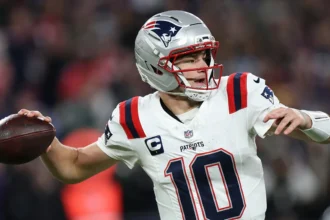
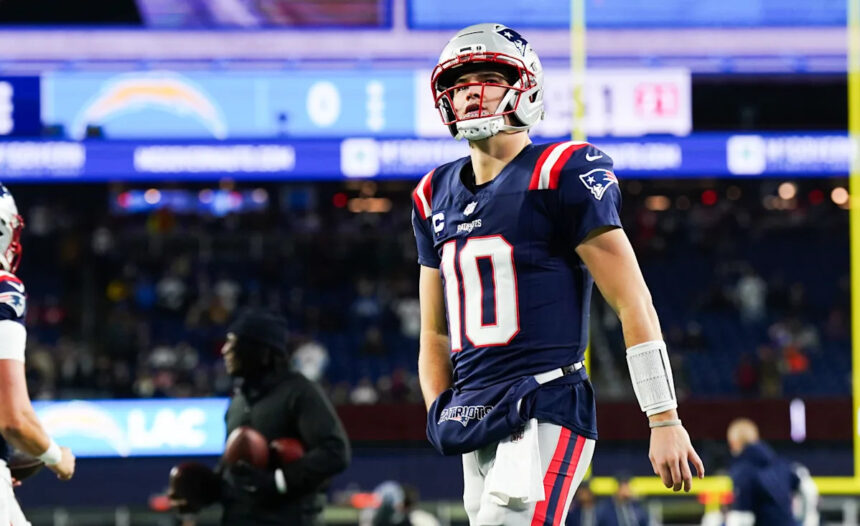
In the frosty crucible of the NFL playoffs, style points are irrelevant. Survive and advance is the only mantra that matters. For the New England Patriots, a 16-3 Wild Card victory over the Los Angeles Chargers at Gillette Stadium on Sunday night checked the survival box emphatically. But for the young quarterback who has been the team’s brilliant north star all season, the performance felt less like a triumph and more like a warning. While the defense authored a masterpiece, Drake Maye stood at the podium post-game and delivered a stark, self-critical assessment that resonated louder than any celebratory locker room music. “Wasn’t pretty, that’s for sure,” Maye stated, before turning the spotlight directly on himself. “I didn’t throw very well tonight. Need to be better.”
A Defensive Masterpiece Overshadows an Offensive Struggle
For much of the 2024 regular season, the narrative in Foxborough was simple: Drake Maye carries the Patriots. The Pro Bowl quarterback’s blend of arm talent, pre-snap intelligence, and explosive scrambling lifted an often-pedestrian offense to unexpected heights, securing the AFC East crown. In his playoff debut, however, the script was flipped. The Patriots’ defense, facing a potent Chargers attack, played a game for the ages, rendering Justin Herbert a non-factor with relentless pressure and suffocating coverage.
Maye’s final line was a study in contrasts, perfectly encapsulating the “mixed bag” nature of his night:
- 17 of 29 passing (58.6% completion rate, his second-lowest of the year)
- 268 passing yards and 1 touchdown
- 1 interception on an ill-advised deep shot into double coverage
- 69 rushing yards on 7 carries, including several critical scrambles
The numbers tell a story of sporadic efficiency marred by inconsistency. The touchdown—a perfectly placed 24-yard laser to Pop Douglas on a corner route—was a reminder of his elite playmaking ability. The interception and several other near-misses, however, highlighted uncharacteristic inaccuracy and hinted at ball security concerns under duress. In a game where every possession was magnified, Maye’s offense managed just one touchdown and three field goals, leaning heavily on the defense’s ability to create short fields.
Maye’s Maturity: Accountability in Victory
Perhaps the most telling moment of the night came not on the field, but in the press conference room. In an era where athletes often deflect, Maye’s immediate and unequivocal accountability was striking. “They won the game for us,” he said of the defense. This public self-flagellation is not a sign of weakness, but a hallmark of the championship-level quarterbacks New England has been accustomed to. It reveals a player who, even in the glow of a playoff win, holds himself to a standard that transcends the final score.
This maturity is what separates good quarterbacks from great ones. Maye understands that while a low-score win is acceptable against the Chargers, replicating this formula against the conference’s elite in the Divisional Round is a perilous path. His ability to diagnose his own flaws—the missed reads, the occasional lapse in footwork leading to errant throws—and vow to correct them is the first critical step in the playoff learning curve. He acknowledged the necessity, stating, “We did what we had to do. That’s what it takes in the playoffs,” but his tone made it clear that “what it takes” will need to be more the next time out.
The Path Forward: Adjustments for the Divisional Round
As the Patriots turn the page and prepare for a likely road test against a top-seeded opponent like the Kansas City Chiefs or Baltimore Ravens, the blueprint for Maye is clear. The defense has proven it can travel. The question is whether the offense can elevate from a supporting role to a co-star.
First, the Patriots must establish a more consistent rushing attack with their running backs to alleviate the pressure on Maye as a designated runner. His 69 yards were thrilling, but exposing him to repeated hits is unsustainable. Second, the passing game needs to rediscover its rhythm on early downs. Maye thrived this season on play-action and defined reads; against the Chargers, that timing seemed slightly off. Cleaning up his footwork in the pocket will be a focal point in practice this week, as many of his inaccuracies stemmed from failing to reset his base when moving.
Most importantly, Maye must harness the aggressive mindset that made him an MVP candidate while respecting the playoff turnover margin. The fine line between a heroic play and a catastrophic one is razor-thin in January. His challenge is to trust his defense, take the check-downs when they are presented, and pick his moments to unleash his elite talent without forcing the action.
Conclusion: A Win is a Win, But a Warning is Heeded
The New England Patriots’ victory over the Los Angeles Chargers was a testament to their identity: a resilient, defensively dominant team that finds a way. In the grand tapestry of a Super Bowl run, this ugly win will be remembered not for its aesthetics, but for its result and for the crucial lesson it imparted to its young leader.
Drake Maye did not play his best football, yet his team advanced. That is the ultimate luxury of a championship-contending roster. But Maye’s post-game message, echoing through the halls of Gillette, signals that he understands this luxury is not guaranteed. His public vow to “need to be better” is more than just a soundbite; it is a promise to his teammates and a warning to future opponents. The Patriots won with their quarterback playing B- football. If the defense maintains its level and Maye recalibrates to his A-game, the path through the AFC becomes far more daunting for anyone standing in their way. The lesson of his uneven debut was learned. The true test of his championship mettle begins now.
Source: Based on news from Yahoo Sports.