Duke’s Legal Blitz: The Lawsuit Against Darian Mensah and the New Contract War in College Football
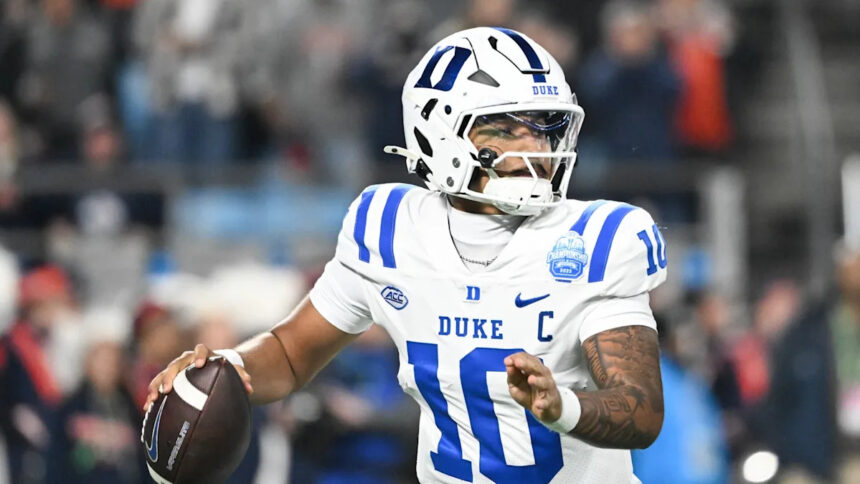
The genteel image of college athletics, where a player’s word was his bond and loyalty was paramount, has been irrevocably shattered by the era of name, image, and likeness (NIL) and the transfer portal. In its place, a stark, new reality is emerging: one of binding contracts, courtroom battles, and high-stakes financial gambles. No case exemplifies this brave new world more than the stunning legal showdown between Duke University and its star quarterback, Darian Mensah. In an unprecedented move, the Blue Devils have filed a lawsuit to block their championship-winning QB from transferring, arguing that his NIL contract is a legally enforceable agreement that mandates he stay in Durham. This isn’t just a dispute over a player’s next destination; it’s a foundational fight for the soul—and the rules—of modern college sports.
The Heart of the Dispute: Contract vs. Commitment
At the core of Duke’s aggressive legal complaint, filed in Durham County Superior Court, is a simple but potent argument: a signed contract is a signed contract. The university details a two-season NIL agreement with Mensah, signed in July 2025 and running through the 2026 season. This wasn’t a handshake deal or a vague promise; it was a document that, according to Duke, paid Mensah for the exclusive rights to market his NIL specifically tied to playing football for Duke.
The timeline is critical to understanding the tension:
- July 2025: Mensah signs the NIL contract with Duke.
- 2025 Season: Mensah leads Duke to an improbable Atlantic Coast Conference championship, skyrocketing his value.
- Post-Season: Mensah initially announces his intention to return to Duke.
- Three Days Before Lawsuit: He reverses course, signaling a desire to enter the transfer portal.
- Monday: Duke files its lawsuit, seeking a temporary restraining order to stop the portal move and enforce an arbitration clause.
Duke’s position, as stated in the complaint, cuts to the chase: “This case arises out of the decision of a star quarterback in the increasingly complex world of college athletics. But at its core, this is a simple case that involves the integrity of contracts.” They contend that Mensah cannot unilaterally void a deal because his market value has increased, just as the school couldn’t back out if his performance had declined.
The Legal Maneuvering: A Temporary Setback and a Major Hurdle
The immediate legal skirmish has already seen its first volleys. Duke sought a temporary restraining order (TRO) to prevent Mensah from even entering the transfer portal. According to Mensah’s attorney, the renowned sports-law expert Darren Heitner, that specific request was denied. This allowed Mensah’s name to technically enter the portal, opening communication with other schools.
However, Heitner’s subsequent social-media clarification revealed a significant caveat that represents a major win for Duke’s legal strategy. While Mensah can enter the portal, he “is not, for the time being” allowed to enroll or play football elsewhere. This interim ruling, pending a fuller hearing set for February 2, effectively places Mensah in a state of athletic limbo. He is a transfer without the ability to finalize a move, a quarterback without a team for the upcoming season unless the court rules in his favor.
This hinges on the contract’s arbitration clause. Duke is adamant that any dispute must be resolved through private arbitration, not public litigation or the portal’s administrative processes. By securing an order that blocks enrollment and play elsewhere, Duke has successfully used the court to force the dispute back into the contractual framework they prefer, buying crucial time and leveraging the ticking clock of the offseason.
Expert Analysis: A Precedent-Setting Case for the NIL Era
This lawsuit is a watershed moment, and its implications will be dissected by attorneys, administrators, and players for years to come. We are moving beyond NCAA eligibility rules and into the realm of state contract law.
The University’s Calculated Risk: Duke is not merely fighting for one player. It is sending a message to its entire roster and every recruit that its NIL contracts are serious, legally-binding investments. If they can enforce this, it could deter players from seeking greener pastures after a breakout season, creating a form of de-facto contractual stability. However, the risk is a reputational one: being seen as the institution that sued its own star player could have negative recruiting consequences.
The Player’s Dilemma: Mensah’s case highlights the double-edged sword of NIL. These contracts provide life-changing compensation, but they may also come with strings that limit traditional athlete mobility. Players and their representatives must now scrutinize NIL deals not just for dollar amounts, but for exclusivity clauses, arbitration requirements, and liquidated damages that could restrict future movement. Is an NIL deal truly an endorsement contract, or is it a thinly-veiled employment agreement that circumvents pay-for-play rules?
The “Collective” Conundrum: Most NIL deals for star athletes are facilitated by donor-led “collectives,” not the universities directly. Duke’s lawsuit suggests a tight, arguably inseparable alignment between the collective’s contract and the athlete’s ability to play for the school. This blurs the line the NCAA has desperately tried to maintain between institutional control and third-party NIL activity.
Predictions and Ramifications for the Future of the Sport
The February 2 hearing will be the next major chapter, but the final resolution of Duke v. Mensah will likely take much longer. Here are the potential outcomes and their seismic effects:
- Duke Prevails on Arbitration: If the court strongly upholds the arbitration clause, it will embolden schools and collectives to write ironclad, multi-year NIL contracts. The transfer portal’s “free agency” would become subject to contract law, favoring programs with deep-pocketed, legally-savvy boosters.
- A Settlement is Reached: This is perhaps the most likely outcome. Mensah may be allowed to transfer but could be required to repay a portion of his NIL earnings or agree to a financial settlement. This would establish a costly “buyout” model for college athletes, similar to professional coaches.
- Mensah Wins on Principle: If the court finds the contract overly restrictive or unenforceable as it relates to athletic participation, it would be a victory for player mobility. However, it would throw the nascent NIL contracting ecosystem into chaos, causing collectives to pull back from long-term deals.
Regardless of the verdict, the genie is out of the bottle. This case proves that the true regulation of college sports’ new economy will happen in courtrooms, not NCAA committee meetings. It will accelerate calls for a new governing structure, potentially one where athletes are formally recognized as employees, making their contracts and transfers a matter of standard labor law.
Conclusion: The Game Has Changed, and the Rules Are Being Written in Court
The lawsuit between Duke and Darian Mensah is more than a contractual dispute; it is the inevitable collision between college sports’ traditional model of transient amateurism and its new, commercially-driven reality. The university is fighting to preserve a semblance of roster continuity in an age of chaos. The player is fighting for the right to leverage his peak value in an open market.
This case marks the end of innocence in the NIL era. Moving forward, every major NIL agreement will be a potential legal document, every signature a weighty commitment with consequences beyond the field. The outcome will set a template, for better or worse, defining the balance of power between athletes and institutions in this multi-billion-dollar industry. One thing is certain: the days of a simple “thank you” and a entry into the portal are over. The new playbook is being drafted by lawyers, and the first chapter is being written in a Durham courtroom.
Source: Based on news from Yahoo Sports.