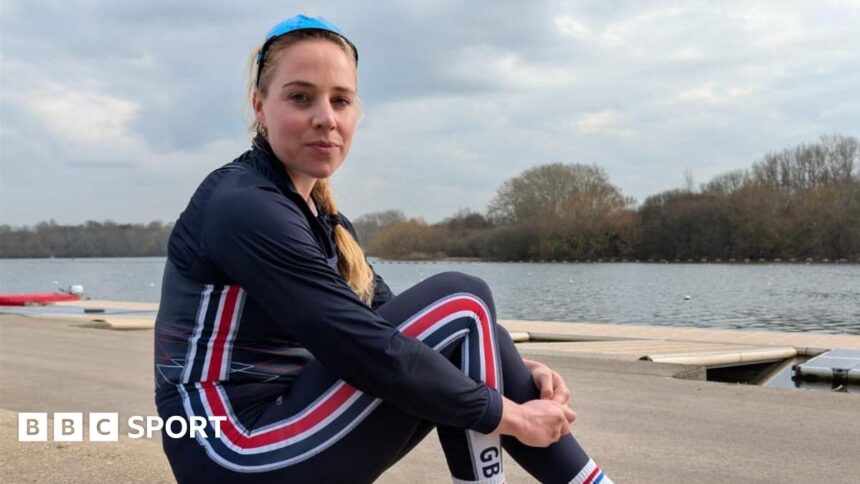
Team GB Rower Becky Wilde: How Confronting an Eating Disorder Led to Olympic Glory
The world of elite sport is built on a foundation of discipline, sacrifice, and an unwavering pursuit of excellence. For athletes, the line between peak performance and personal peril can be dangerously thin. For Team GB rower Becky Wilde, that line was blurred for years by an eating disorder she simply accepted as “my normal.” Her journey from a struggling teenager hiding her pain to an Olympic medalist is a powerful testament to the strength found not in silence, but in asking for help.
- From the Pool to the Podium: The Trigger Point
- The Hidden Struggle: Performance Masks the Problem
- The Turning Tide: “Asking for Help Was One of the Best Things I Ever Did”
- Expert Analysis and the Future of Athlete Welfare
- Predictions: A New Era of Holistic High Performance
- Conclusion: Redefining Strength on the Road to Paris and Beyond
Wilde’s story shatters the illusion that disordered eating is always visibly apparent or rooted in vanity. It reveals how a single, offhand comment can spiral into a debilitating condition, hidden in plain sight from coaches, parents, and friends. Now, by speaking out, she is pulling back the curtain on a pervasive issue in high-performance environments, advocating for a crucial shift in how we talk about athlete health, body image, and mental resilience.
From the Pool to the Podium: The Trigger Point
Becky Wilde’s athletic career began in the pool as a competitive swimmer. Like many young athletes, she was deeply invested in her performance, her identity intertwined with her sport. The turning point came during her teenage years with a seemingly innocuous comment about weight gain. In the high-stakes, weight-conscious world of swimming, such remarks are often mistakenly viewed as performance feedback.
“A comment over weight gain when I was a teenager was behind a change in my performance, which played a major role in triggering the condition,” Wilde recounts. This moment ignited a dangerous relationship with food and her body. The disorder became a misguided coping mechanism, a twisted form of control in a life dedicated to shaving milliseconds off a time. For years, she did not perceive her behavior as abnormal; it was simply her routine, her secret strategy, her “normal.”
This normalization is a hallmark of eating disorders, particularly in sports where leanness is often (rightly or wrongly) associated with aerodynamic or power-to-weight advantages. The condition became entrenched, following her as she transitioned from swimming to rowing—a sport with its own intense physical and nutritional demands.
The Hidden Struggle: Performance Masks the Problem
Remarkably, Wilde’s athletic progression continued. She secured a place on the prestigious GB Rowing Team, a testament to her raw talent and determination. Yet, internally, she was fighting a private war. She became adept at hiding her struggles, fearing judgment, deselection, or being seen as weak.
“For years Wilde hid her struggles from coaches, parents and friends before seeking help,” a reality that highlights the isolating nature of such illnesses. In the team environment, surrounded by strength and camaraderie, she felt alone. The very tools that made her a resilient athlete—stoicism, endurance, a high pain threshold—became barriers to seeking help. She powered through, believing her secret was a necessary part of her athletic identity, even as it undermined her true potential and well-being.
This period underscores a critical flaw in many high-performance systems: the focus on outcome over process, on medals over the individual. An athlete’s output can sometimes mask deteriorating input, allowing dangerous behaviors to persist because, on the surface, results may still come.
The Turning Tide: “Asking for Help Was One of the Best Things I Ever Did”
The breakthrough came not from a catastrophic performance drop or a physical collapse, but from a moment of profound self-realization. Wilde reached a point where the emotional burden outweighed the perceived benefit. The courage to vocalize her struggle, to break the cycle of secrecy, marked the true beginning of her recovery and her ascent to the top of the sport.
“Asking for help was one of the best things I ever did,” she states unequivocally. This step involved trusting her support network—likely involving medical professionals, nutritionists, and understanding coaches within the British Olympic system. Recovery is not a linear path, but a continuous process of rebuilding a healthy relationship with food, training, and self-perception.
Importantly, her recovery was not a departure from elite sport; it was the catalyst that unlocked her full capability. With proper fuel, a healthier mindset, and the energy no longer spent on hiding her disorder, Wilde’s performance transformed. She earned her place in the women’s eight and, at the Tokyo 2020 Olympics, claimed a historic silver medal—a tangible symbol of triumph over her greatest adversary, which had been within.
Expert Analysis and the Future of Athlete Welfare
Wilde’s experience is not an anomaly. Sports psychologists and nutrition experts point to a growing, if belated, awareness of the prevalence of eating disorders across sports, from aesthetic disciplines like gymnastics to endurance and weight-category sports.
- Language Matters: Experts stress that comments on an athlete’s body, even well-intentioned, can be deeply harmful. The focus must shift to performance metrics, energy levels, and health indicators, not aesthetics.
- Systemic Safeguards: Leading sports bodies are now implementing mandatory education on RED-S (Relative Energy Deficiency in Sport), which encompasses the physical and mental consequences of underfuelling. Prevention and early intervention are key.
- Culture Shift: The most significant change must be cultural. Creating an environment where vulnerability is seen as a strength, not a weakness, and where seeking help is normalized, is essential for athlete longevity and health.
Wilde’s story provides a powerful blueprint for this shift. It proves that addressing mental and physical health holistically is not a compromise—it is the ultimate performance enhancer.
Predictions: A New Era of Holistic High Performance
Becky Wilde’s public revelation is part of a broader, positive movement in elite sport. We predict several key developments in the coming years:
1. Integrated Support Teams: The role of sports psychologists and clinical nutritionists will become as standard as that of a strength coach, embedded within teams from a junior level.
2. Athlete-Led Advocacy: More champions like Wilde will use their platforms to destigmatize mental health struggles, creating a ripple effect that encourages younger athletes to speak up sooner.
3. Redefining the “Ideal” Body: Sport science will continue moving away from prescribed body types and toward individualized athlete optimization, celebrating diverse physiologies that are healthy and competition-ready.
The future gold medalist may not be the one who suffers in silence, but the one who is healthiest in mind and body, fully supported to thrive under pressure.
Conclusion: Redefining Strength on the Road to Paris and Beyond
Becky Wilde’s silver medal is a symbol of more than sporting excellence; it is a medal for resilience, for courage, and for redefining what it means to be strong. Her journey from accepting a disorder as “normal” to standing on an Olympic podium illuminates a profound truth: an athlete’s greatest victory often happens far from the public eye.
Her legacy will extend beyond her time in a boat. By framing the act of asking for help as “one of the best things I ever did,” she offers a new narrative for aspiring athletes everywhere. It is a narrative where health precedes medals, where speaking out is the first step toward standing tall, and where true performance is built on a foundation of well-being. As the sporting world looks ahead to Paris 2024 and future Games, Wilde’s story stands as an essential reminder that the path to the podium must be one that an athlete can walk with health, pride, and strength—inside and out.
Source: Based on news from BBC Sport.