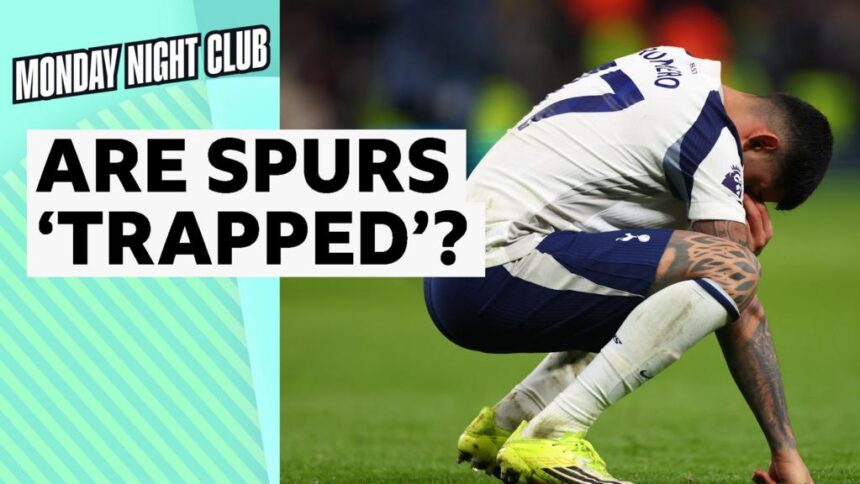
The Tottenham Trap: Why Everything Spurs Do Feels Like Disappointment
The story of Tottenham Hotspur in the modern era is not one of abject failure. It is a more complex, more agonizing narrative. It is the tale of a club that has done nearly everything right—built a world-class stadium, established a consistent top-four presence, played exhilarating football, and developed global stars—yet finds itself perpetually defined by a singular, haunting sensation. No matter the progress, the innovation, or the promise, the ultimate outcome for Spurs and their supporters is a profound, echoing sense of disappointment. This isn’t just a bad run of form; it is an identity, a gravitational pull that seems to bend even success back toward letdown. Why does this happen? The answer lies in a perfect, painful trap of their own making.
The Anatomy of a Modern “Nearly” Club
To understand Tottenham’s unique cycle, you must first acknowledge their genuine achievements. Under Mauricio Pochettino, Spurs became a model of intelligent, sustainable growth. They challenged for titles, reached a UEFA Champions League final, and did so with a vibrant, homegrown core. This period didn’t just raise the bar; it redefined the club’s potential. The problem with scaling such heights is that the view from the top makes the subsequent valleys feel deeper and more unacceptable.
The club’s infrastructure now matches its ambition. The Tottenham Hotspur Stadium is a breathtaking commercial and sporting engine. Yet, this magnificent asset creates its own pressure. It is a monument to a future that must be filled with trophies to justify its existence. Every match there is a reminder of the grand promise, making a league cup exit or a derby defeat feel like a betrayal of the very walls that surround the pitch. The club is trapped between its past as plucky challengers and its present as a fully-fledged super-club in everything but the trophy cabinet.
The Cycle of Hope and Letdown
Spurs’ operations have become predictable in their emotional rhythm. A new, progressive manager arrives—be it Jose Mourinho, Antonio Conte, or Ange Postecoglou—bringing a surge of tactical philosophy and renewed fan optimism. Early results spark talk of a “new Spurs,” a side finally ready to shed its fragile skin. The team plays well, scores goals, and sits in a promising position. Then, inevitably, the first major setback occurs: a crushing defeat to a rival, a collapse from a winning position, or an injury to a key player.
What follows is not just a dip in form, but a complete narrative collapse. The discourse shifts from title talk to questioning the manager’s “naivety,” the squad’s “mentality,” and the board’s ambition. This cycle repeats with chilling regularity. The club’s pursuit of glory is sincere, but the execution always seems to contain a critical flaw—a squad depth issue, a tactical rigidity exposed, or that infamous lack of a “killer instinct.”
- The Nearly Moment: Champions League final 2019, Premier League title races with Leicester and Chelsea.
- The Catalyst: A key injury, a controversial decision, or a individual error that triggers doubt.
- The Unraveling: A loss of form that exposes deeper structural or psychological issues.
- The Reckoning: Managerial fallout, fan frustration, and a summer of “critical” rebuilding.
This pattern has conditioned the fanbase and the media to expect the disappointment, to wait for the other shoe to drop even in moments of triumph. It has become a self-fulfilling prophecy where past failures actively undermine present confidence.
The Weight of History and Rival Success
Context is everything in football, and Spurs’ context is particularly brutal. Their local rivals, Arsenal and Chelsea, have spent the last two decades accumulating silverware. Arsenal’s Invincibles and recent resurgence under Mikel Arteta, coupled with Chelsea’s era-defining Champions League and Premier League wins, create a relentless comparative backdrop. Every step forward by Spurs is measured against a giant leap taken by a neighbor.
Furthermore, the club’s own history, while rich, has a long trophy drought at its heart. The “glory, glory” days feel increasingly distant. This creates a desperate, almost anxious yearning that permeates the club. It leads to short-term decision-making—appointing win-now managers like Conte—that often clashes with the need for a long-term project. The board is caught between trying to satiate an impatient fanbase and building something sustainable, often satisfying neither. The discussion, as highlighted in analyses like those on the Football Daily podcast, often centers on how the club is “trapped” by the very ambitions it has fostered.
Breaking the Cycle: Is There a Way Out?
So, can Spurs escape their own gravitational pull? The path is narrow and fraught, but it exists. It requires a radical commitment to patience—a concept anathema to the modern game. It means backing a manager like Ange Postecoglou through not just the bright start, but through the inevitable, painful downturn, trusting his long-term vision over immediate results. It demands transfer strategy that is philosophically aligned, not reactive.
Most importantly, it requires a cultural shift. The narrative must be broken from within. This means celebrating tangible progress—like consistent Champions League qualification or the development of young stars—as genuine success, not just consolation prizes on the road to “real” glory. The club must redefine its metrics for a season, understanding that the final step from brilliant contenders to champions is the hardest one and may require weathering more disappointment before the breakthrough.
Player recruitment must focus not just on talent, but on a specific psychological profile: players who are resilient to the unique pressure of the Spurs project. The stadium and revenue must be leveraged to build a squad with elite depth, finally moving past a reliance on a fragile first XI.
Conclusion: The Agony of Ambition
Tottenham Hotspur are not a disappointment because they fail. They are a disappointment because they have shown us, repeatedly, how close they are to magnificence. The world-class stadium, the thrilling football, the nights under the lights that feel like the future—they are all real. But they have constructed a reality where anything less than a trophy feels like a catastrophe. They are trapped between their impressive reality and their unfinished dream.
This is the agony of ambition. It is a more sophisticated pain than mere failure; it is the pain of perpetual proximity. Until the club can either lower its sights (an impossibility) or finally, decisively clutch the silverware that has glinted just out of reach, the cycle will continue. Every pass, every tackle, every season will be shadowed by the ghost of disappointments past and the fear of those yet to come. For Spurs, the greatest victory will be to finally make their reality feel as good as it looks.
Source: Based on news from BBC Sport.