FIFA Stands Firm: Iran’s World Cup Matches to Stay in U.S. Despite Geopolitical Storm
In a decisive move that places the sanctity of the sporting calendar above escalating geopolitical tensions, FIFA has effectively ruled out relocating Iran’s 2026 World Cup matches from the United States to Mexico. This comes after the president of the Football Federation Islamic Republic of Iran (FFIRI) publicly cited player safety concerns and confirmed negotiations for a move were underway. The decision, embedded in a terse statement looking forward to nations “competing as per the match schedule,” throws a spotlight on the immense pressure facing global sport as it navigates a world of conflict, and reaffirms the complex legacy of the tournament’s controversial host.
A Prize, A Presidency, and A Powder Keg
The backdrop to this footballing dispute is a world stage fraught with military confrontation. Recent months have seen a cycle of US and Israeli strikes on Iran, with Tehran responding through its proxies and direct attacks on Israel and U.S.-allied Gulf states. The shadow of this conflict now stretches across the World Cup, the first ever to be hosted across three nations: the United States, Canada, and Mexico.
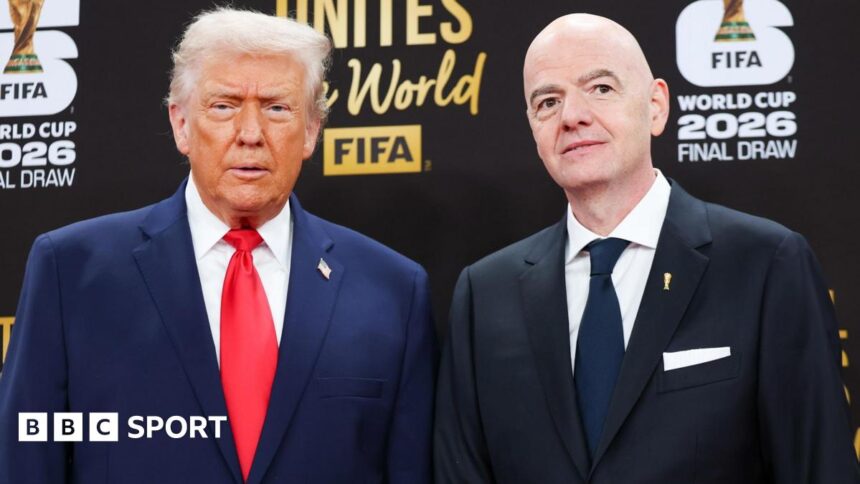
Adding a layer of profound irony is the figure of the U.S. President at the time of the award, Donald Trump. In December 2025, in a move that stunned diplomats and football purists alike, FIFA awarded its Peace Prize to President Trump, citing his administration’s role in brokering the “Framework for Peace” accords in the Middle East. Critics derided the award as political theater, while supporters hailed it as recognition of realpolitik achievement. Regardless, it cemented an inextricable link between the upcoming tournament’s primary host nation and a polarizing figure in global politics. For Iran, a nation Trump labeled a “leading state sponsor of terror,” the prospect of competing on soil whose leader was so honored is politically fraught, let alone the genuine security fears for their delegation and fans.
Safety Concerns vs. Sporting Integrity
The FFIRI’s request was grounded in a legitimate, primary concern: the safety and security of Iranian players, staff, and supporters. Traveling to a nation with which your country is in a state of undeclared conflict presents monumental logistical and security challenges. The federation feared potential protests, harassment, or worse. Moving matches to the tournament’s Mexican venues was presented as a pragmatic solution, leveraging the co-host structure to provide neutral ground.
However, FIFA’s apparent rejection underscores a core principle of competitive integrity: the neutrality of the sporting arena. Relocating matches based on political tensions sets a precarious precedent. If Iran’s matches are moved, what stops other nations embroiled in diplomatic spats from making similar demands? The tournament’s schedule and venue structure, years in the making, would become a political football itself. FIFA’s statement, while not directly addressing Iran’s fears, sends a clear message: the World Cup is a singular event, and its rules and schedule are immutable.
- Precedent Avoidance: Granting Iran’s request could open floodgates for similar claims.
- Operational Nightmare: Last-minute venue changes disrupt ticketing, broadcasting, and security planning.
- Symbolic Weight: Playing in the U.S. carries a powerful, if uncomfortable, message of sport transcending politics.
Expert Analysis: The Tightrope Walk of Modern Sport
“FIFA is walking its tightrope,” says Dr. Anya Petrova, a geopolitical sports analyst. “On one side, there is a genuine duty of care. On the other, there is the absolute necessity to prevent the World Cup from fracturing along political fault lines. By holding firm, they are betting on their security apparatus and the unifying power of the game itself. But this is a high-stakes gamble.”
The decision also reflects the enormous financial and political investment in the North American World Cup. The U.S., as the primary host, is set to showcase the majority of matches, including the final. Redistributing games due to political strife would be seen as an organizational failure and a slight to the host. Furthermore, with the shadow of the Trump Peace Prize looming, FIFA likely has no appetite to be seen bending to a nation that is a primary adversary of the award’s recipient. The optics would be disastrous, painting FIFA as either capitulating to Iranian pressure or undermining the very “peace” it recently celebrated.
Security experts believe the ultimate solution will be unprecedented, ring-fenced protection for the Iranian contingent. “Expect a bubble within a bubble,” notes a former FIFA security consultant. “They will travel under high-grade diplomatic-like security, with matches treated as mega-event security zones. The goal is to make the stadium and team hotels apolitical spaces for the duration of their competition.”
Predictions and Implications for the 2026 World Cup
The fallout from this decision will reverberate long before the first whistle blows in 2026.
- Heightened Security Theater: Iran’s matches will become the most heavily policed and complex security operations of the group stage, with a significant intelligence focus on threat mitigation.
- Protests and Counter-Protests: Stadium perimeters and fan zones in host cities for Iran’s matches will likely see demonstrations from Iranian opposition groups, pro-Israeli activists, and others, requiring meticulous crowd management.
- The Fan Experience: Iranian supporters may be dissuaded from traveling due to visa complexities and safety fears, potentially impacting atmosphere and raising concerns over empty seats.
- Player Mental Load: Iranian players will compete under a unique psychological burden, carrying the weight of national identity and personal safety concerns onto the pitch—a potential disadvantage or a powerful motivator.
Most significantly, this episode cements the 2026 World Cup as the most politically charged since the Cold War-era tournaments. It is no longer just a football festival; it is a global diplomatic stage where every handshake, anthem, and match location is parsed for meaning.
Conclusion: The Game Must Go On, But at What Cost?
FIFA’s firm stance on keeping Iran’s World Cup matches in the United States is a landmark moment in sport’s uneasy relationship with global conflict. It is a bet on protocol, security, and the idealistic notion that for ninety minutes, the world can be divided only into teams, not ideologies. By prioritizing the immutability of the match schedule, FIFA has chosen to absorb the political pressure itself rather than allow it to distort the competition’s framework.
Yet, this is not a clean victory for sport. It comes with real human anxiety for the Iranian delegation and their fans, and it risks turning moments of sporting celebration into fortressed events. The 2026 World Cup, already historic for its scale, is now historic for its context: a tournament born in the shadow of a Peace Prize for a divisive U.S. president, playing out on a stage where military strikes and football strikes will exist in jarring parallel. The world will be watching, not just the football, but how the beautiful game manages to survive in an increasingly ugly world. The final whistle on this story is far from blown.
Source: Based on news from BBC Sport.