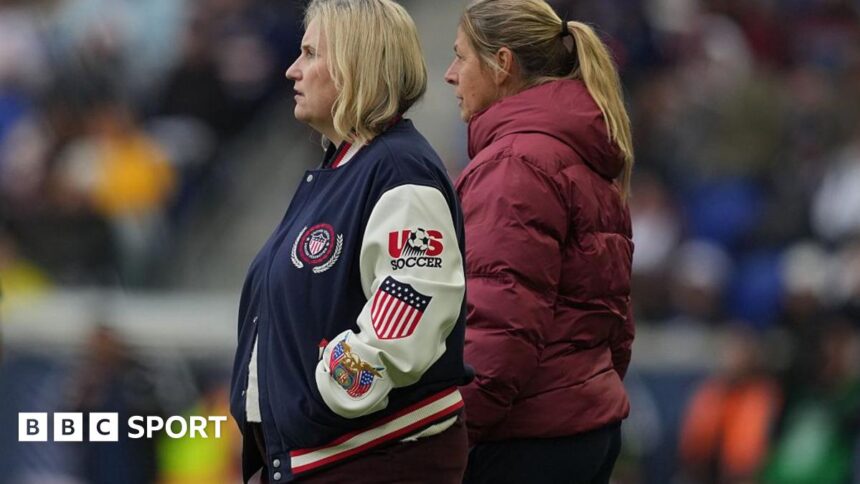
FIFA Mandates Female Coaches: A Watershed Moment or a Controversial Mandate?
The landscape of women’s football is undergoing a seismic shift, one that extends far beyond the pitch. In a landmark decision that has ignited passionate debate across the sporting world, FIFA has mandated that all teams participating in its women’s tournaments must include at least one female head coach or assistant coach. This isn’t a distant goal; the rule takes immediate effect for this year’s youth World Cups and the Women’s Champions Cup. More than a simple quota, this move represents a fundamental reimagining of the pathway to the technical area, forcing federations, clubs, and the sport itself to confront a glaring disparity. Is this the bold, necessary intervention to shatter the glass ceiling, or an overreach that risks sidelining meritocracy? The answer, as with most things in football, is complex and lies in the execution.
Decoding the Directive: More Than a Box-Ticking Exercise
At first glance, FIFA’s new regulation appears straightforward. To compete on the world’s biggest stages for women’s football, a female presence on the senior coaching staff is now non-negotiable. However, the implications run deep. This is a structural intervention aimed at the very pipeline of the game. For decades, the journey from elite player to elite coach in the women’s game has been fraught with obstacles—lack of investment in coach education for women, entrenched biases in hiring practices, and a stark absence of visible role models in top positions.
The rule cleverly targets the developmental tournaments—the U-17 and U-20 Women’s World Cups—where future stars and future coaches are forged. By mandating female representation here, FIFA is not just filling a seat on the bench; it is systematically creating a new generation of experienced, high-level female coaches. These women will gain invaluable tournament pedigree, build their tactical portfolios, and establish professional networks at the pinnacle of the sport, preparing them to ascend to the absolute top jobs. It transforms the technical area from a closed shop into a viable career destination.
The “Hayes Principle”: Why Creativity is Key to Implementation
The mandate’s success hinges on a critical concept highlighted by one of the game’s most successful managers, Chelsea’s Emma Hayes. She recently stated, “We have to think of creative ways to get women into coaching.” This sentence is the essential blueprint for federations worldwide. Simply appointing a token female assistant to satisfy the rule would be a catastrophic failure, undermining both the coach’s credibility and the rule’s intent.
True creativity means building robust support ecosystems. Federations must now invest in:
- Accelerated coach education programs tailored for former players.
- Meaningful mentorship schemes pairing aspiring female coaches with experienced managers.
- Clear career pathways within national federations that go beyond youth teams.
- Addressing the socio-economic barriers, like childcare, that disproportionately affect women pursuing full-time coaching licenses.
The rule provides the stick, but the “Hayes Principle” of creative empowerment provides the carrot. The goal is not just to have women on the bench, but to have them there as unequivocally qualified, respected, and influential leaders.
Navigating the Inevitable Controversy: Merit vs. Opportunity
Predictably, the mandate has sparked controversy. The most common critique is that it compromises meritocracy—that the best person for the job, regardless of gender, should be hired. This argument, while philosophically sound, ignores the historical context of a system that has been inherently un-meritocratic for women. When the pool of “experienced” candidates is overwhelmingly male due to decades of exclusion, the concept of a pure meritocracy is a myth.
This policy is not about preferring a less-qualified woman over a more-qualified man. It is about actively expanding the pool of qualified women to choose from. It is a corrective measure, akin to affirmative action in other fields, designed to accelerate change in a system resistant to it. The long-term strategy, as discussed by the FIFA Council, is to create a true meritocracy where the selection from a diverse, equally experienced candidate pool is genuinely competitive. The short-term mandate is the catalyst to build that future.
Future Forecast: Ripples Across the Football Ecosystem
The ripple effects of this decision will be felt far beyond FIFA tournaments. We can predict several key developments in the coming years:
- A surge in demand for top female coaches at club level, as federations seek to develop staff with the required FIFA tournament experience.
- Increased pressure on men’s clubs and federations to diversify their own coaching staffs, challenging the notion that women can only coach women.
- Potential for a “trickle-down” effect, where national associations implement similar rules for their domestic leagues, fundamentally altering the hiring landscape.
- A significant boost in commercial and sponsorship interest in women’s football narratives centered on leadership and breaking barriers.
However, risks remain. Poor implementation could lead to tokenism and burnout for pioneering coaches thrust into unsupportive environments. The pressure on the first wave of appointees will be immense. Their success is critical for the policy’s long-term viability.
The Final Whistle: A Necessary Game-Changer
FIFA’s mandate is a courageous and necessary game-changer. It acknowledges that left to its own devices, the football world has been painfully slow to provide equitable opportunities for women in leadership. This rule disrupts the status quo with the urgency the situation demands. It is not a perfect solution, but it is a powerful starting pistol for a race that has been delayed for too long.
The ultimate victory will not be measured by compliance reports, but by the day when the presence of a female head coach in a World Cup final is utterly unremarkable. By forcibly opening the door to the technical area, FIFA has taken a decisive step toward normalizing what should have always been normal: that women, who have driven the spectacular growth of their own sport, are also the architects of its tactical future. The mandate is the rulebook change; the beautiful game that follows will be written by the coaches it empowers.
Source: Based on news from BBC Sport.