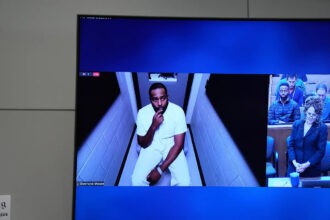
Sherrone Moore’s Career Implosion: A Plea Deal Ends a Sordid Chapter for Ex-Michigan Coach
The once-bright trajectory of Sherrone Moore has not just been derailed; it has been consumed by a scandal of personal ruin and criminal reckoning. The former University of Michigan head football coach, hailed just months ago for his leadership, reached a plea deal Friday to resolve a shocking felony case involving an alleged break-in at his mistress’s home. This resolution closes the legal chapter but opens a cavernous examination of a stunning fall from grace, revealing a story far removed from the gridiron glory of Ann Arbor.
Moore, fired by the university in December amid initial whispers of “personal conduct,” pleaded no contest to two misdemeanor charges. This deal dismisses the original, far more serious felony counts of stalking, breaking and entering, and home invasion. The case, as detailed by authorities and reported by Fox News correspondent Garrett Tenney on ‘Special Report,’ paints a portrait of a man whose personal life spectacularly combusted, threatening not just his career but the safety of others.
The Sordid Details: From the Sidelines to a Criminal Complaint
According to court documents, the victim was Moore’s own executive assistant, with whom he allegedly carried on an extramarital affair. The professional relationship blurred into a personal one, setting the stage for a catastrophic collapse. The incident that triggered the criminal charges occurred shortly after Moore’s dismissal from Michigan. Authorities state that Moore, allegedly blaming his assistant for his firing, went to her apartment uninvited.
The confrontation that followed was bizarre and deeply troubling. Police reports indicate Moore confronted the alleged mistress inside her home, leading to a heated argument. In a disturbing detail that underscores his reported mental state, Moore is accused of threatening to harm himself with butter knives in her apartment. This act, a futile and dramatic gesture, symbolized a total loss of control. The victim reportedly felt such fear that she eventually fled her own residence to call police from a neighbor’s home, while Moore allegedly remained inside.
The charges were severe:
- Felony Home Invasion: For unlawfully entering a dwelling with intent to commit a crime.
- Felony Breaking and Entering
- Misdemeanor Stalking: Behavior that would cause a reasonable person to feel fear.
These are not the accolades typically associated with a Big Ten head coach. They are the marks of a personal and professional catastrophe.
Legal Strategy and Career Calculus: The Meaning of the Plea Deal
Friday’s plea agreement is a classic example of damage limitation. By pleading no contest to reduced misdemeanors—often trespass and a lesser harassment charge—Moore avoids the life-altering stigma of a felony conviction. Legally, a no contest plea is not an admission of guilt but an acceptance of punishment, and it typically results in a sentence of probation, counseling, and possibly community service.
However, in the court of public opinion and the world of collegiate athletics, the outcome is scarcely better. “This plea deal is a technical win for Moore’s defense attorney, but a monumental loss for his reputation,” says a veteran sports law analyst who requested anonymity due to ongoing connections within the NCAA. “Universities and athletic departments can withstand a lot, but a police report detailing a coach threatening suicide with kitchen utensils in a subordinate’s home after an affair? That’s a third-rail scenario. The plea deal resolves the felony criminal case, but it also permanently archives the sordid allegations in public records.”
The deal spares the university, the alleged victim, and Moore himself the spectacle of a trial. But it also solidifies the narrative: Moore’s actions were severe enough to warrant criminal charges, and his judgment was so profoundly impaired that it led to his firing from one of the most prestigious jobs in American sports.
Expert Analysis: The Unraveling of a Coaching Legacy
Moore’s story is a stark case study in how off-field conduct can instantly obliterate on-field achievement. He was not a coach undone by recruiting violations or NCAA infractions; he was felled by a deeply personal moral and ethical failure that spilled into criminal behavior.
“The fired Michigan coach label will now forever precede his name,” notes Dr. Evelyn Marsh, a sports sociologist. “This incident touches on multiple explosive issues in athletics: the power dynamics between a head coach and a staff member, the pressure-cooker environment of major college football, and the often-dysfunctional personal sacrifices demanded by the job. Moore’s alleged actions represent a worst-case scenario of how to handle every single one of those pressures.”
The analysis extends to the University of Michigan’s swift and decisive action. Their decision to fire Moore in December, likely upon learning the preliminary facts of the case, was a necessary move to protect the institution. It highlights a growing, if reluctant, awareness in college athletics that the old model of shielding coaches from personal misconduct is untenable in today’s climate.
Predictions and Fallout: What’s Next for Moore and Michigan?
The road ahead for Sherrone Moore is bleak, at least within the confines of elite collegiate or professional football. Predictions for his future are grim:
- NCAA Coaching Exile: It is highly improbable any FBS program will hire Moore in any capacity for the foreseeable future. The liability and public relations nightmare are too great.
- Legal Obligations: He will likely face years of probation, mandatory counseling, and possibly a restraining order. Any violation could resurrect the original felony charges.
- Personal Reckoning: Beyond his career, Moore faces the monumental task of repairing his personal life and marriage, if that is even possible after such a public betrayal.
For the University of Michigan, the page has already turned. The hiring of a new head coach was executed with a clear mandate for character. The program will continue to promote its legacy and current success, hoping the Moore saga becomes a distant, unfortunate footnote rather than a defining stain. However, rival recruiters will undoubtedly use this episode to question the environment and leadership under the previous regime for years to come.
Conclusion: A Cautionary Tale Beyond the Football Field
The fall of Sherrone Moore is more than a sports scandal; it is a human tragedy with professional oblivion as its cost. The case was resolved after Friday’s plea deal in a legal sense, but the resolution for those involved is far from complete. It serves as the darkest kind of cautionary tale: about the corrosive effects of secrets and abuse of power, about the fragility of reputation, and about the fact that no amount of coaching acumen can compensate for a profound lapse in character and judgment.
His story ended not with a championship whistle but with the quiet acquiescence of a no-contest plea. The butter knives, the broken trust, and the abandoned office in Ann Arbor are the lasting symbols of a promise unfulfilled, a career incinerated by its own flames. In the end, the most successful play Sherrone Moore could make was to avoid prison, a pathetic final down for a man who once stood atop the college football world.
Source: Based on news from Fox Sports.