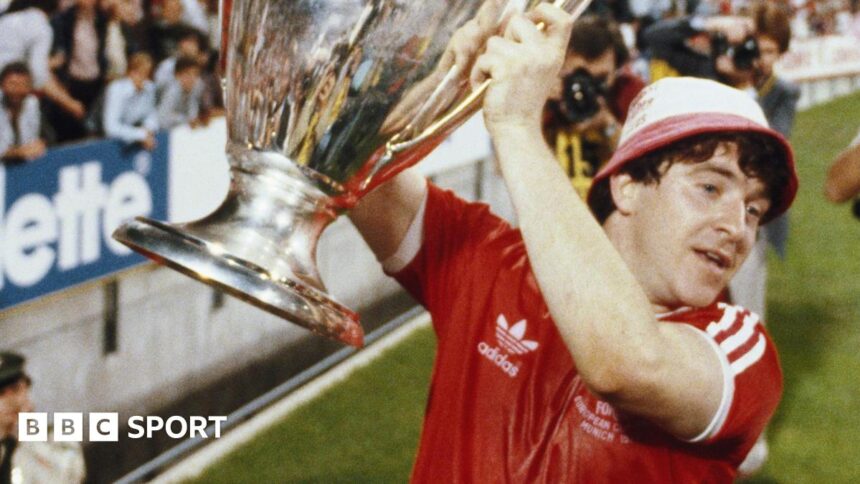
Forest’s Forgotten Genius: The Unlikely Rise of John Robertson, Clough’s Picasso
In the pantheon of footballing legends, the archetype is often one of chiseled athleticism and overt charisma. Then there was John Robertson. Portly, unkempt, and famously averse to training, he was the most improbable of superstars. Yet, with a magical left foot and a footballing brain that operated on a different frequency, he became the quiet architect of Nottingham Forest’s impossible dream. Described by the mercurial Brian Clough as “the Picasso of our game,” Robertson was the creative fulcrum of a team that conquered Europe not once, but twice. His recent passing at 72 is not just the loss of a Forest icon, but a reminder of a bygone era where sheer, unadulterated talent could trump all.
From Obscurity to Orchestrator: The Clough Transformation
When Brian Clough and Peter Taylor walked into the City Ground in January 1975, they inherited a club languishing in the Second Division. Among the squad was a disillusioned, overweight John Robertson, a player whose potential was buried under a lack of fitness and direction. Where others saw a problem, Clough and Taylor saw a masterpiece waiting to be unveiled. They recognized that Robertson’s unique talent was not in his engine, but in his mind and his left foot. Their genius was in building a team that compensated for his lack of pace, allowing his creativity to flourish.
Clough’s management of Robertson was a masterclass in man-management. He stripped the team of egos, instilled a relentless work ethic in others, and handed the keys of creativity to the Scot. The transformation was astounding. From a peripheral figure, Robertson evolved into the unbelievable outside-left who dictated play. He wasn’t a winger who simply hugged the touchline; he was a playmaker from the flank, drifting inside to devastating effect, his vision and passing range unlocking the tightest defences.
The Picasso’s Masterpieces: Defining Moments of Genius
Robertson’s influence was not measured in endless running stats, but in cold, hard decisive contributions. He was the ultimate big-game player, his talent shining brightest when the stakes were highest. His role in Forest’s golden era was not supportive; it was central and defining.
- The 1978 League Cup Final: In Forest’s first major final under Clough, it was Robertson who delivered a sublime, curling cross for John O’Hare to head the only goal against Liverpool, announcing Forest as a force.
- The 1979 European Cup Final: Against Malmö, a tense, tactical affair was settled by a moment of pure Robertson brilliance. Picking up the ball on the left, he drove infield, feigned to shoot, and slid a perfect pass for Trevor Francis to score the historic winner.
- The 1980 European Cup Final: A year later, against Hamburg, he was the match-winner himself. Cutting inside from his familiar left flank, he unleashed a low, driven shot that arrowed into the far corner, sealing back-to-back European triumphs.
These moments cemented his status as the team’s creative fulcrum. In a side built on a formidable defence and relentless midfield, Robertson was the spark, the unpredictable genius who turned solidity into glory.
Analysis: Deconstructing the Robertson Effect
From a tactical analyst’s perspective, Robertson’s effectiveness defied modern convention. His game was built on a trinity of rare qualities:
Uncanny Vision and Weight of Pass: Robertson saw pictures on the pitch before they developed. His crosses and through-balls were not hit and hope; they were geometrically perfect, often delivered with just the right pace and curve to bypass defenders and land perfectly for a teammate.
Two-Footed Deception (Despite the Legend): While famously left-footed, his ability to shift the ball onto his right, even if just for a feint, created the half-yard of space he needed. Defenders knew what he wanted to do, but his body shape and subtle movements made him impossible to stop.
Low-Centre-of-Gravity Dribbling: His stocky build, combined with close control, made him exceptionally hard to dispossess in tight spaces. He would glide rather than sprint, shielding the ball and drawing fouls in dangerous areas.
Clough’s system was perfectly calibrated to maximize these traits. The tireless running of wide midfielders like Martin O’Neill and John McGovern provided the defensive cover, while the telepathic understanding with striker Tony Woodcock gave Robertson a constant, intelligent target. He was the system’s luxury item, but one that paid dividends every single week.
The Modern Game: Could a John Robertson Exist Today?
This is the eternal question surrounding cult heroes of his ilk. In today’s football, dominated by data, gegenpressing, and athletic monsters, would John Robertson get a chance? The pessimistic view suggests his lack of defensive contribution and modest physical metrics would see him marginalized. However, a more nuanced analysis offers hope for the purists.
The modern game still has room for specialist creators, though their roles are more defined. Players like Kevin De Bruyne or Martin Ødegaard prove that vision and technical execution remain the ultimate currency. Robertson would likely operate as a classic number 10 or an inverted winger in a possession-dominant side that forgives defensive lapses for offensive output. A manager with the courage of a Clough—a Pep Guardiola or a Roberto De Zerbi—might relish unlocking such a unique talent, using structured systems to hide his weaknesses.
Yet, the true Robertson magic was born from an era of greater managerial autonomy and less media scrutiny. Clough’s faith was absolute and unshakeable. In today’s trigger-happy environment, would a manager be given the time to transform a rough diamond over several seasons? The journey of John Robertson stands as a powerful argument for the art of management being about more than just fitness drills—it’s about belief, psychology, and constructing a team as a mosaic where every piece, no matter how unconventional, has its place.
A Legacy Etched in History and Hearts
John Robertson’s story is one of redemption, genius, and the transformative power of belief. He was not a footballer who fit the mold; he broke it and created his own. In an age before social media and global celebrity, his fame was etched in the tangible history of the game: two European Cups, a league title, and a series of moments that defined an era for one of football’s greatest underdog stories.
His legacy is twofold. For Nottingham Forest, he is immortal, the talented, highly skilled architect of their greatest achievements. For the wider football world, he is a timeless testament to the fact that talent comes in many forms. In celebrating John Robertson, we celebrate the artistry in the game, the joy of the unpredictable, and the enduring truth that sometimes, the most potent force on a football pitch isn’t a powerhouse, but a poet with a left foot. Brian Clough called him his Picasso. The footballing world was simply lucky to witness the exhibition.
Source: Based on news from BBC Sport.