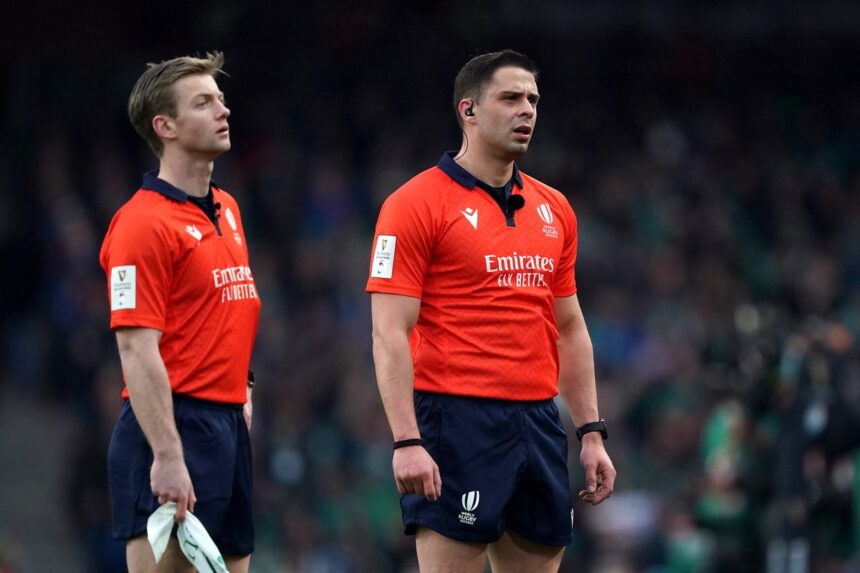
France vs England Referee: The Trailblazing Journey of Nika Amashukeli
The Six Nations Championship is renowned for its high-octane drama, historic rivalries, and moments of pure sporting brilliance. Yet, the narrative for the final weekend’s colossal clash between France and England in Paris took an unexpected turn, shifting the spotlight onto the man in the middle. With Australian official Nic Berry unable to travel due to the conflict in the Middle East, a new, history-making figure has been handed the whistle for one of rugby’s most anticipated fixtures: Nika Amashukeli. This appointment is far from a simple stand-in duty; it is the latest landmark in the extraordinary ascent of a referee who is rapidly redefining the boundaries of the game.
From Broken Dreams to a Whistle: Amashukeli’s Unlikely Path
To understand the significance of Nika Amashukeli’s appointment, one must first look at his unique journey. Unlike many top officials who transition from the amateur game, Amashukeli’s story is rooted in a promising playing career cut devastatingly short. A talented centre, he represented Georgia at junior level, embodying the fierce, running rugby spirit of his nation. However, a cruel series of concussions and other injuries forced him to hang up his boots at just 20 years old. For many, this would have been the end of their rugby story. For Amashukeli, it was an unexpected beginning.
Channeling his passion and profound understanding of the game from a player’s perspective, he picked up a whistle. His rise through the ranks was meteoric. By 2015, he was officiating in Georgia’s domestic league. His calm authority, clear communication, and athleticism caught the eye of World Rugby’s talent spotters. In 2021, he became the first Georgian to referee a Tier 1 nation, taking charge of Wales v Canada. This was merely a prelude to his historic breakthrough.
- Player Background: Georgian junior international centre forced to retire at 20 due to injuries.
- Rapid Ascent: Moved from domestic leagues to the international stage in just six years.
- Historic First: Broke barriers as Georgia’s first referee of a Tier 1 international match.
World Cup History and a Signature Style
The autumn of 2023 cemented Amashukeli’s status as a global officiating star. At the Rugby World Cup in France, he achieved two monumental firsts. He became the first referee from Georgia to officiate at the sport’s premier event. Furthermore, at 29 years old during the tournament, he was the youngest whistler since Wayne Barnes in 2007 to be appointed to a men’s World Cup panel. His performances, including the high-stakes pool match between Ireland and Scotland, were lauded for their composure and control.
Amashukeli’s officiating style is distinct. Analysts point to his exceptional player management. Having been in their shoes, he possesses a natural empathy and rapport with athletes, often seen explaining decisions with a quiet confidence that defuses tension. His communication is a hallmark—clear, concise, and delivered in excellent English. Furthermore, his fitness levels, a remnant of his playing days, allow him to maintain optimal positioning, ensuring he is always in the right place to make the critical call.
This combination of skills makes him perfectly suited for a fixture like France vs England. The game promises to be physically brutal, emotionally charged, and tactically intricate. It requires a referee who can command respect without being authoritarian, understand the dark arts of the forward battle, and manage the explosive personalities that will be on display. Amashukeli’s background equips him uniquely for this challenge.
The Stakes in Paris: More Than Just a Game
The context of this specific match amplifies the pressure on the officiating team. While the Championship may be out of reach, this is a monumental clash of pride, momentum, and World Cup healing. France, playing at home in the Stade de France, will be desperate to salvage a campaign that has fallen short of expectations. England, under Steve Borthwick, seek a statement victory in Paris to cement their recent progress.
Key refereeing flashpoints are easy to predict:
- The Breakdown Battle: With jackalers like Charles Ollivon and Sam Underhill likely involved, the contest at the ruck will be ferocious. Amashukeli’s consistency at the breakdown, particularly in judging the “clear release” before the contest, will be paramount.
- Scrum Dominance: The set-piece is a traditional war zone in this fixture. His management of the engagement sequence and interpretation of scrum penalties could directly influence the scoreboard and tactical kicking strategies.
- Discipline Under Fire: In the cauldron of the final round, with so much at stake, emotions will run high. Amashukeli’s ability to identify and sanction cynical play, especially in the red zone, could be the difference between a try and a penalty.
His appointment, while unexpected, is a testament to World Rugby’s confidence in him to handle this elite-pressure environment. He is not just filling a vacancy; he is being entrusted with the integrity of one of the calendar’s showpiece events.
Analysis and Prediction: A Referee Ready for the Moment
From an analytical perspective, Amashukeli’s promotion for this game is a masterstroke that adds a fascinating subplot. His journey from a Georgian junior player to officiating a Six Nations classic is a narrative that embodies rugby’s global growth. For the players, his presence signals a focus on flow and clarity. Teams will know that off-the-ball incidents and breakdown ambiguity are less likely to go unnoticed, potentially leading to a cleaner, faster game.
Predicting the impact of a referee is always nuanced, but Amashukeli’s tendencies suggest a match where quick ball is prioritized. His willingness to play advantage, coupled with a firm hand on persistent infringement, should reward positive, attacking rugby. This could slightly favor a French side looking to unleash their elusive backs, but it also suits an England team that has shown more ambition in this year’s tournament.
The biggest challenge for Amashukeli will be the weight of the occasion. A packed Stade de France, baying for English blood, is the ultimate test of nerve. However, his performances on the World Cup stage prove he is no stranger to big moments. Expect a performance defined not by the whistle itself, but by the respectful space he creates for the players to decide the contest.
Conclusion: A New Chapter in Officiating History
When Nika Amashukeli blows his whistle to kick off France vs England, it will be more than just the start of another rugby match. It will represent the culmination of a remarkable personal odyssey from injury-induced heartbreak to the pinnacle of his second career. It signifies World Rugby’s commitment to broadening its officiating talent pool, recognizing excellence irrespective of traditional rugby borders. For Georgia, it is a moment of immense national pride, showcasing their contribution to the sport beyond the fifteen players on the pitch.
This Six Nations appointment is not a consolation; it is a confirmation. Nika Amashukeli has arrived as a pre-eminent official in the global game. His story—of resilience, adaptation, and excellence—adds a rich layer to an already compelling sporting spectacle. All eyes will be on the players in blue and white, but the calm, authoritative figure in the middle, steering the ship with a Georgian accent, will be writing his own piece of history in Paris. The future of rugby officiating is here, and its name is Nika Amashukeli.
Source: Based on news from Yahoo Sports.