Gavaskar’s Grenade: Cricket, Commerce, and a Controversy That Crosses the Boundary
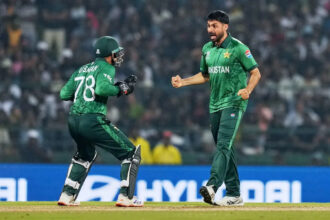
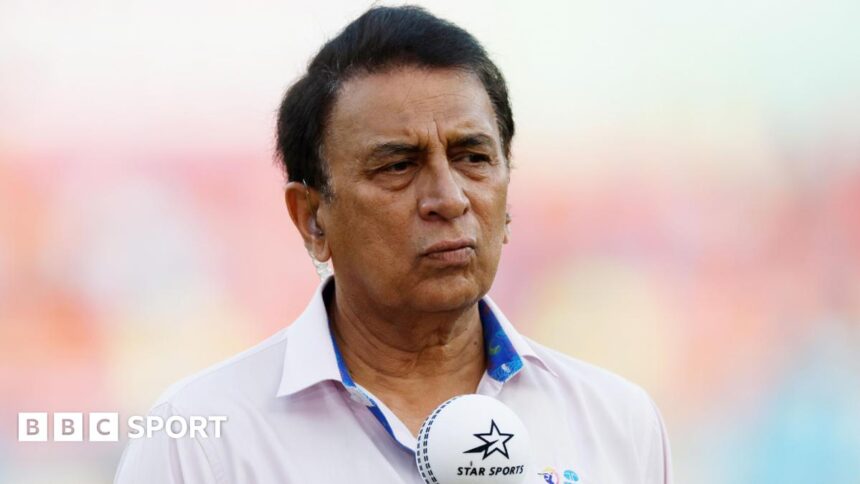
The gentleman’s game is no stranger to political tremors, but rarely does a comment from a legend detonate with the force of a verbal grenade. Sunil Gavaskar, the original “Little Master” and a bastion of Indian cricket, has hurled a statement that has shattered the uneasy peace between sport and diplomacy. His claim that Sunrisers Leeds’ signing of Pakistan spinner Abrar Ahmed for The Hundred “indirectly contributes to the deaths of Indian soldiers and civilians” is more than a critique of a franchise decision—it is a seismic intervention that questions the very soul of cricket’s globalized, commercialized era.
The Auction Bid That Echoed Beyond the Boardroom
At face value, last week’s Hundred draft was a routine affair of franchise strategizing. Sunrisers Leeds, one of the eight teams in England’s 100-ball competition, secured the services of Pakistan’s mystery spinner Abrar Ahmed for the 2024 season. A smart cricketing move for a team seeking an X-factor. Yet, the ownership matrix made this transaction profoundly symbolic. Sunrisers Leeds is owned by the Sun Group, which also owns the Indian Premier League (IPP) giant, Sunrisers Hyderabad. This connection dragged a decade-old unspoken rule into the harsh light of day.
Since the 2008 Mumbai attacks, political tensions between India and Pakistan have created a deep freeze in bilateral cricket. A consequential offshoot has been the effective ban on Pakistan players in the IPL since 2009. No IPL franchise has dared to sign a Pakistani player, a commercial sacrifice made in deference to national sentiment and, many believe, unofficial directives. By signing Abrar for their UK outfit, the Sun Group navigated around this embargo, utilizing the separate legal and sporting entity of The Hundred to access Pakistani talent.
This move was initially seen as a positive, pragmatic step. It allayed fears that the four Hundred franchises with IPL ties would blacklist Pakistani players, ensuring a truly global draft. Then, Gavaskar spoke.
Gavaskar’s Gambit: Patriotism or Provocation?
Sunil Gavaskar’s stature is unimpeachable. With 125 Tests and 10,122 runs for India, his voice carries the weight of history. His transition to commentary and punditry has often been marked by sharp, technical insight. This time, however, he ventured into a charged geopolitical arena. His argument is not about Abrar Ahmed’s bowling action, but about the flow of capital.
Gavaskar’s core contention is one of economic contribution. The logic follows a chain: money paid to Abrar Ahmed by Sunrisers Leeds ultimately benefits the Sun Group’s coffers. The Sun Group, through its ownership and revenue-sharing, contributes to the financial ecosystem of cricket. Pakistan Cricket Board (PCB) benefits from its players’ overseas earnings. The Pakistani state, in turn, collects taxes. Gavaskar implicitly links this financial chain to the military and non-state actors he holds responsible for cross-border hostilities.
This perspective is explosive because it frames a franchise cricket signing as an act of indirect national funding. It moves beyond the traditional “sport and politics shouldn’t mix” debate into a stark accusation of complicity. Critics of Gavaskar’s view argue it unfairly burdens an individual athlete and oversimplifies complex international relations. Supporters may see it as a brave articulation of a widely held, though seldom voiced, sentiment in India regarding any form of normalization with Pakistan.
- The Ownership Loophole: The Sun Group’s multi-franchise model exposes a gap between national sporting sentiment and global business strategy.
- The Athlete as Symbol: Abrar Ahmed, the cricketer, becomes Abrar Ahmed, the political pawn, through no fault of his own.
- The Commentator’s Power: Gavaskar’s comments demonstrate how iconic figures can shift a narrative from tactical analysis to national discourse overnight.
The Ripple Effect: What Happens Next in Global Cricket?
Gavaskar’s statement is not a mere opinion; it is a catalyst. Its repercussions will be felt across boardrooms, commentary boxes, and perhaps even foreign ministries. We can predict several potential outcomes.
Pressure on IPL-Linked Franchises: The other three Hundred teams with IPL ownership—London Spirit (Delhi Capitals), Oval Invincibles (Knight Riders Group), and Manchester Originals (Reliance Industries/Jio)—will now face intense scrutiny. Any move to sign a Pakistani player will be viewed through Gavaskar’s lens. They may choose to avoid controversy altogether, leading to a de facto segregation that The Hundred sought to avoid.
Player Dilemma: Elite Pakistani cricketers, already confined to a limited number of lucrative leagues, could see doors nominally open but practically shut by shadowy political pressures. Their market value becomes tied to geopolitical winds.
Broadcast and Sponsorship Reactions: In the hyper-sensitive Indian market, broadcasters and sponsors of both the IPL and The Hundred will be nervously monitoring public reaction. Gavaskar’s words could mobilize segments of the audience, turning a cricket match into a litmus test for patriotism.
Most importantly, this incident sets a dangerous precedent for athlete vilification. If a cricketer’s employment can be construed as funding hostility, then every transnational sports contract becomes subject to similar scrutiny based on the political relationship between the athlete’s home country and the franchise owner’s home country.
Conclusion: A Boundary Line Redrawn
Sunil Gavaskar has done more than criticize a signing; he has redrawn a boundary line. He has posited that in an interconnected world of sport, commerce cannot be divorced from consequence. Whether one agrees with his stark equation or finds it reductive and unfair, its power is undeniable. It has forced a conversation that franchise owners hoped to sidestep through corporate structuring.
The saga of Abrar Ahmed and Sunrisers Leeds is a microcosm of 21st-century cricket’s greatest conflict: the clash between the borderless, commercial juggernaut of franchise leagues and the enduring, often bitter, realities of national identity and conflict. The game’s administrators have long hoped the former would soften the edges of the latter. Gavaskar’s intervention suggests that for many, the memory of the soldier at the border outweighs the spectacle of the spinner at the crease.
The ultimate fallout remains to be seen. Will Gavaskar’s grenade lead to a renewed, rigid separation? Or will the relentless engine of global cricket commerce eventually overpower even this most profound of objections? For now, a simple franchise transaction hangs heavy under the weight of history, politics, and the formidable opinion of a legend who believes some lines should never be crossed, not even for a winning leg-break.
Source: Based on news from BBC Sport.