The No. 50 Legacy: Dan Gadzuric’s Brief but Telling Golden State Warriors Chapter
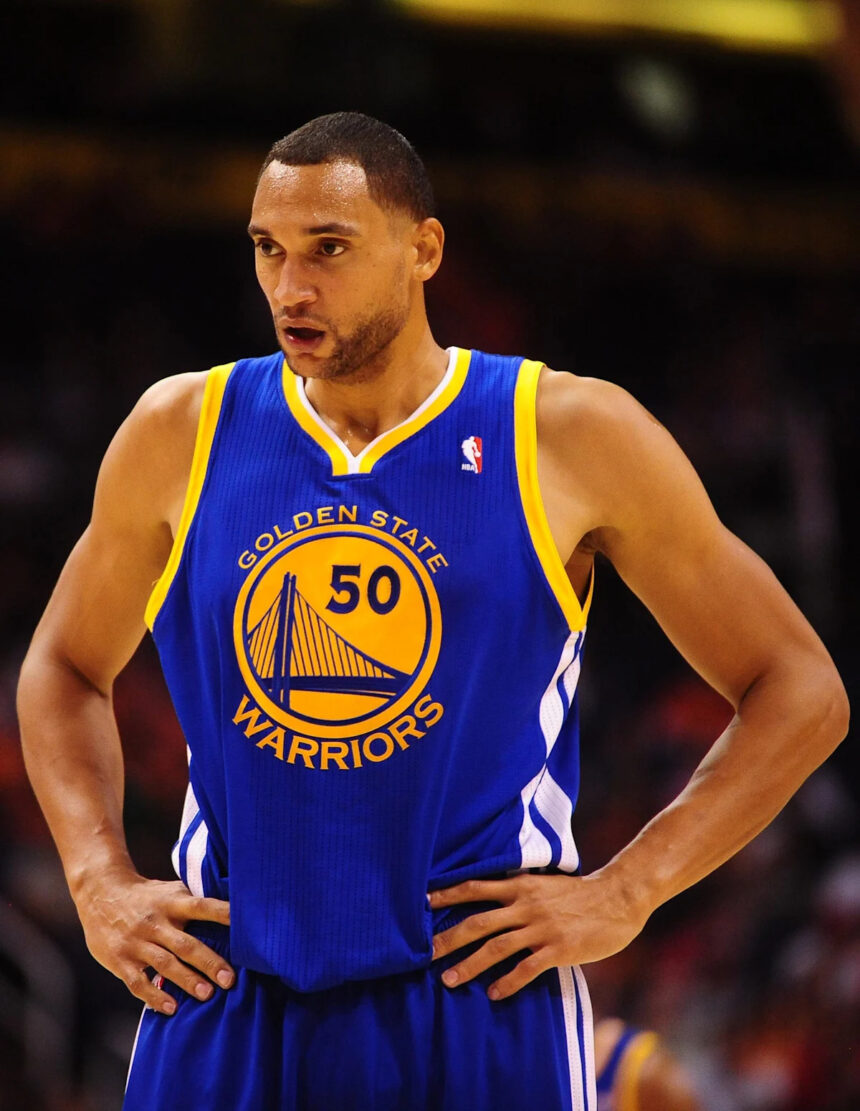
In the vast, echoing halls of Golden State Warriors history, where the jerseys of Wilt, Rick, and Steph hang in the rafters, every number tells a story. The franchise has seen over 600 players wear more than 60 different jersey numbers across its 75+ years, a journey that began in 1946 Philadelphia and wound through San Francisco, Oakland, and even a brief stop in San Diego. Some numbers are synonymous with legend, woven into the very fabric of the team’s identity. Others, like No. 50, serve as fascinating footnotes—brief stops on a longer basketball journey that reveal the undercurrents of an era. The eighth and final player to don No. 50 for the Warriors was not a star, but his tenure was a perfect snapshot of a franchise in the throes of a pivotal transition: Dan Gadzuric.
A European Pioneer Lands in the Bay
Before he was a Warrior, Dan Gadzuric was a trailblazer. Hailing from Den Haag, Netherlands, he carved a formidable reputation at UCLA, becoming a defensive anchor and shot-blocking presence for the Bruins. His selection by the Milwaukee Bucks with the 34th overall pick in the 2002 NBA Draft made him one of the era’s notable European big men. For eight seasons in Milwaukee, Gadzuric embodied the classic, energetic backup center: a relentless rebounder, a ferocious dunker in limited minutes, and a player whose athleticism often sparked highlights. However, by the summer of 2010, his contract—a remaining two years and roughly $14 million—was viewed around the league less for his on-court production and more as a significant salary cap consideration.
This financial reality collided with the Warriors’ own state of flux. The 2009-10 season had been disappointing, and new ownership, led by Joe Lacob and Peter Guber, was just taking the reins. The front office, led by Larry Riley, was tasked with navigating the aftermath of the Stephen Jackson and Al Harrington era while assembling pieces around a young core featuring Stephen Curry and Monta Ellis. It was in this climate of change that Gadzuric arrived in the Bay Area, traded to Golden State in a multi-player deal that was primarily about the Warriors acquiring a future first-round draft pick.
The Gadzuric Era: A Footnote in a Season of Change
Dan Gadzuric’s time with the Warriors was fleeting—just 19 games in the 2010-11 season. Statistically, his contributions were minimal: 2.0 points and 2.5 rebounds in about 8.5 minutes per game. To view his tenure through a simple box score lens, however, is to miss the point entirely. His role was emblematic of a specific type of NBA transaction and roster construction.
- Contract Alignment: Gadzuric’s deal was used to match salaries in the trade, a routine but crucial mechanism in NBA team-building.
- Roster Flexibility: His presence as a veteran big provided temporary depth behind Andris Biedriņš and David Lee, allowing the franchise to remain agile.
- Asset Acquisition: His acquisition was never about his play; it was about the draft capital (Brandan Wright was also acquired) that came with him, a sign of a front office thinking about the future.
On the court, Gadzuric’s limited minutes were a study in maximum effort. He was a defensive specialist in short bursts, using his size and veteran savvy to contest shots and clean the glass. In many ways, he was a placeholder, a living, breathing trade exception whose jersey number—No. 50—became a uniformed symbol of the complex financial machinery that operates beneath the game’s surface.
Expert Analysis: The No. 50 Jersey in Warriors History
Examining the lineage of No. 50 for the Warriors provides crucial context for Gadzuric’s place within it. The number has never been a staple for franchise cornerstones. Instead, it has been worn by role players, journeymen, and big men whose tenures often coincided with periods of rebuilding or transition. From the early days of center Joe Graboski to the likes of Robert Parish before his Celtics fame, the number has a quiet, workmanlike history.
Gadzuric’s chapter fits this pattern perfectly. His arrival and departure bookended a specific moment in the Warriors’ rebuild timeline. He was acquired by a management group working under previous ownership’s final moves and was traded away by a new regime actively reshaping the roster. His trade to the New Jersey Nets in February 2011 was part of a deal that brought Troy Murphy and a 2012 second-round pick to Golden State, another move aimed at financial flexibility and future assets. In the grand narrative of the No. 50, Gadzuric represents its modern incarnation: the player as a transactional asset, a brief stopover in the relentless churn of an NBA season.
The Legacy of Transitional Players and Predicting Future No. 50s
What does the future hold for the next Warrior to wear No. 50? The history of the number, capped by Gadzuric’s stint, suggests it will likely go to a player in a similar mold—a veteran big man on a short-term deal, a two-way contract player, or a project center. However, the modern Warriors operate from a position of championship contention, not the uncertainty of 2010. This changes the context entirely.
We can predict two potential paths for the next No. 50:
- The Veteran Minimum Contributor: A seasoned center, perhaps past his prime but with specific playoff skills (defense, size, fouls to give), could take the number for a season as a deep-bench option, much like Gadzuric was.
- The Developmental Project: With the rise of the G League, a young, raw big man on a two-way contract might inherit No. 50 as he shuttles between Santa Cruz and San Francisco, hoping to develop into a rotational piece.
The key difference is that today, such a player would be a final piece on a polished roster, not a byproduct of a larger financial maneuver. The number’s legacy of transition remains, but the franchise’s context has been utterly transformed since the day Dan Gadzuric took it off for the last time.
Conclusion: More Than a Number, A Time Capsule
Dan Gadzuric’s 19 games in a Golden State Warriors uniform will never be memorialized in a highlight reel or a retired jersey ceremony. Yet, his story is an essential thread in the rich tapestry of the franchise. He wore No. 50 not as a star, but as a symbol—a reminder of the intricate, often unglamorous business of building an NBA team. His tenure captures the Warriors on the precipice of a revolution, just months before the drafting of Klay Thompson and the trade for Andrew Bogut, moves that would set the stage for a dynasty.
In the end, the history of a jersey number is the history of the people who filled it. Dan Gadzuric’s chapter as the final Warrior to wear No. 50 is a brief but telling entry, a time capsule from a season where the foundation for future parades was being poured, one complex transaction at a time. It proves that in the NBA, even the most anonymous numbers carry the weight of an era’s hopes, strategies, and inevitable change.
Source: Based on news from Yahoo Sports.