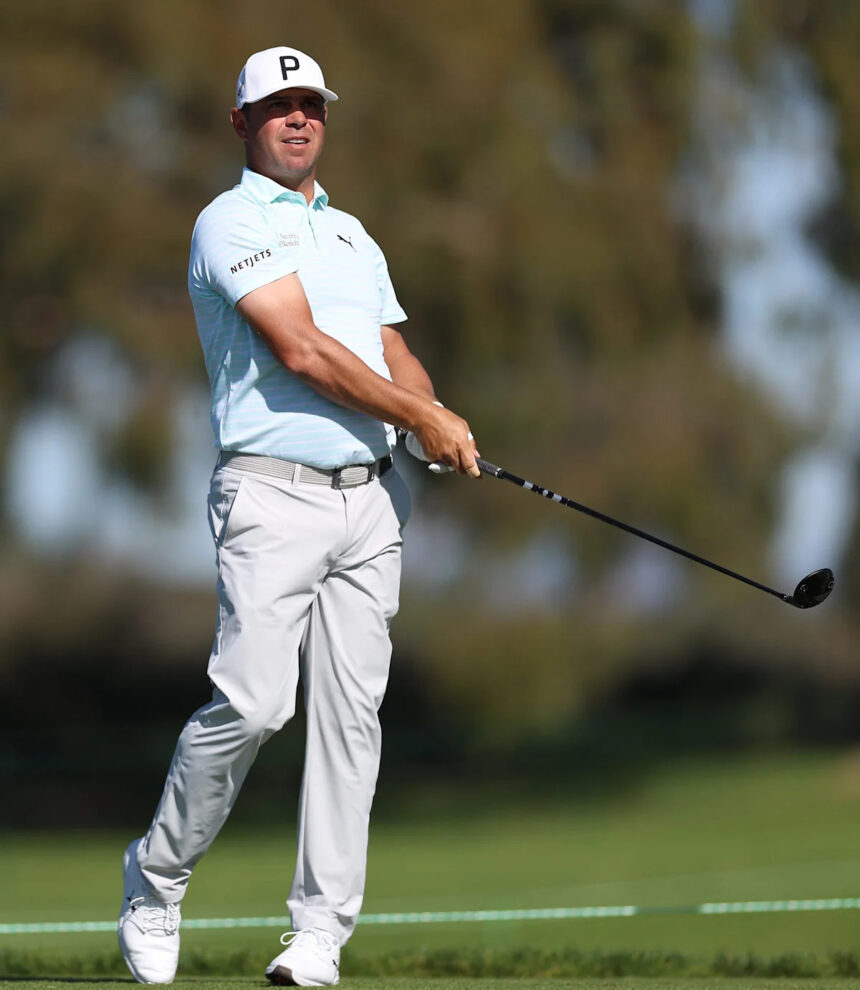
Beyond the Fairway: Gary Woodland’s Brave Confrontation with PTSD After Brain Surgery
The image of a U.S. Open champion is often one of unflappable calm, a stoic figure navigating the game’s cruelest pressures with a steely resolve. For Gary Woodland, the man who conquered Pebble Beach in 2019 with a powerful, athletic style, that exterior masked an internal battle far more daunting than any Sunday back-nine charge. In a raw and courageous revelation to Golf Channel, Woodland has shared that his return to the PGA Tour following life-saving brain surgery has been shadowed by a silent, profound struggle: a diagnosis of post-traumatic stress disorder (PTSD). His story shatters the archetype of the invincible athlete, offering a powerful lesson in vulnerability and the complex road to recovery that exists long after the physical scars begin to fade.
The Unseen Battle: From Brain Surgery to Psychological Scars
Gary Woodland’s journey into the shadows began long before his return to competitive golf. In September 2023, after tests revealed a lesion pressing on his brain, the four-time PGA Tour winner underwent surgery. While the procedure was successful, doctors were unable to remove the entire tumor. The physical challenge of recovery was immense, but as Woodland made his celebrated return to the Tour in 2024, a different, more insidious adversary emerged. The trauma of the diagnosis, the invasive surgery, and the ongoing reality of living with a brain lesion manifested as PTSD—a condition commonly associated with combat veterans or first responders, but one that can affect anyone who has experienced a severely traumatic event.
“Every week, I come out and everyone is so excited and happy that I’m back. I hear that every week: ‘It’s so nice to see you passed this. It’s so nice to see you 100%,'” Woodland confessed. “And I appreciate that love and support, but inside, I feel like I’m dying. I feel like I’m living a lie.” This stark admission highlights the chasm between public perception and private reality. The brain surgery was a discrete event; the psychological aftermath is a continuous, draining battle. His decision to no longer “waste energy hiding this” marks a pivotal moment, not just in his career, but in the broader conversation about mental health in professional sports.
Deconstructing the Pressure: Why Golf is a Unique Crucible
To understand the weight of Woodland’s revelation, one must appreciate the unique mental demands of professional golf. Unlike team sports, the golfer stands alone for four hours, with only his thoughts as company. Every swing is a self-contained test, and the margin for error is microscopic. For a player managing PTSD symptoms—which can include hypervigilance, anxiety, intrusive thoughts, and emotional numbness—the solitude of the course can amplify the internal noise exponentially.
- The Illusion of Control: Golf is a game of meticulous control. A brain lesion and its psychological fallout represent the ultimate loss of bodily and mental autonomy, directly attacking a golfer’s core competency.
- Performance Under Scrutiny: Every shot is televised, analyzed, and judged. For someone feeling internally fragile, this magnified scrutiny can feel unbearable, turning applause into pressure.
- The “Comeback” Narrative: The sports world loves a triumphant return story. Woodland’s honesty disrupts that linear narrative, revealing that recovery is non-linear and that being physically present does not equate to being psychologically whole.
Woodland’s experience underscores that the trauma isn’t just the surgery itself, but the ongoing confrontation with mortality and the fundamental disruption of one’s sense of self—a challenge he now faces on the most public of stages.
Expert Analysis: The Path Forward for Woodland and Sports Culture
Sports psychologists and mental health experts view Woodland’s disclosure as a watershed moment. “What Gary is doing is exceptionally brave,” says Dr. Leah Roberts, a clinical psychologist specializing in athlete mental health. “He is reframing strength. It’s not about gritting your teeth through pain; it’s about the courage to acknowledge your suffering and seek a path through it. In doing so, he is actively engaging in a crucial part of his recovery.”
For Woodland, managing his PTSD diagnosis will likely involve a multi-faceted approach tailored to the high-stress environment of the Tour:
- Specialized Therapeutic Interventions: Techniques like EMDR (Eye Movement Desensitization and Reprocessing) or trauma-focused cognitive behavioral therapy can help process the surgical trauma.
- Mindfulness and Grounding Techniques: Tools to stay present during competition, countering the dissociative or anxious states that PTSD can trigger.
- Redefining Success: Shifting his competitive metrics, at least in the short term, from leaderboard position to personal milestones related to focus, emotional regulation, and enjoyment.
His stance also pressures the sports ecosystem—fans, media, and sponsors—to evolve. It demands we move beyond superficial “comeback” stories and develop a more nuanced, patient understanding of an athlete’s holistic well-being.
Predictions and Implications: A New Legacy Beyond Championships
While the wins of Justin Rose at Torrey Pines or Chris Gotterup at the WM Phoenix Open capture headlines, Gary Woodland’s struggle may have a more enduring impact on the sport’s fabric. His journey forward will be closely watched, not for his score alone, but for the precedent he sets.
Prediction 1: A Catalyst for Broader Disclosure. Woodland’s honesty, following similar revelations by athletes like Michael Phelps and Naomi Osaka, will empower other golfers and athletes to prioritize their mental health without fear of stigma. The PGA Tour’s mental health resources may see increased utilization and advocacy.
Prediction 2: A Recalibrated Career Arc. Woodland’s dreams on Tour may look different now. His success will be measured in dual victories: moments of competitive brilliance intertwined with public demonstrations of resilience in managing his health. A made cut after a week of intense anxiety may represent a triumph greater than any trophy.
Prediction 3: Changing the Fan Dialogue. The fan’s role will evolve from simply cheering performance to respecting process. Support may sound less like “You’re back!” and more like “We’re with you,” acknowledging that the battle is ongoing.
Conclusion: The Ultimate Test of Resilience
Gary Woodland’s most formidable opponent was never another golfer; it was a lesion on his brain, and now, the psychological echoes of that fight. By choosing to stop “living a lie,” he has taken a swing at a far more insidious trap than any bunker. His PTSD diagnosis is not a sign of weakness, but a diagnosis of the profound trauma he has endured. In focusing his energy on recovery and his family, Woodland is modeling a new form of toughness—one rooted in radical honesty and self-preservation.
His legacy will undoubtedly include the iconic U.S. Open victory, a testament to his supreme skill. But it may ultimately be defined by this chapter: a champion who, when faced with an invisible enemy within, chose to step into the light and speak his truth, forever changing how we view strength, recovery, and the true price of a comeback. The fairways and greens are his office, but his battle and his bravery are teaching a masterclass in humanity far beyond the ropes.
Source: Based on news from Yahoo Sports.