Grayson Allen Ejected for Hard Foul on Chet Holmgren: A Flashpoint in a Blowout
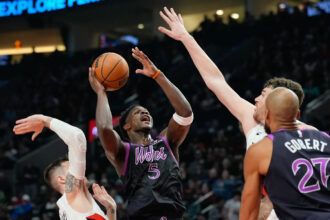
The NBA In-Season Tournament is designed to inject high-stakes drama into the early season calendar. In the West Quarterfinal between the Phoenix Suns and Oklahoma City Thunder, the drama arrived, but not in the form anyone anticipated. With the game long since decided, a moment of unnecessary physicality from Phoenix’s Grayson Allen on Oklahoma City’s Chet Holmgren sparked a brief skirmish and reignited the perennial conversation about Allen’s polarizing style of play. The incident, resulting in Allen’s ejection, became the defining moment of a lopsided Thunder victory, raising questions about composure, player safety, and the fine line between competitive fire and crossing it.
A Blowout Boils Over: The Sequence of Events
By midway through the third quarter, the Oklahoma City Thunder had built a commanding lead, approaching 40 points, in a game with tangible tournament implications. The Suns, frustrated and out of rhythm, were searching for any spark. That search took a dark turn during a routine offensive set for the Thunder.
As Chet Holmgren attempted to slide through the right corner to set a screen or receive a pass, he encountered Grayson Allen stationed on the wing. Allen, seeing Holmgren’s path, did not merely hold his ground. In a move that was immediately conspicuous, he braced himself, wound up, and threw his shoulder and upper body forcefully into the advancing Holmgren. The 7-foot-1 rookie center, caught off-balance, crashed into Allen and tumbled hard to the court.
The reaction was instantaneous. Thunder forward Jalen Williams, witnessing his teammate hit the deck, took immediate exception. He marched directly to Allen and gave him a two-handed shove, a clear message of disapproval. Players from both teams quickly converged, squaring up in a tense but brief confrontation. Officials and teammates intervened swiftly, preventing any escalation beyond the initial shove and heated words. The scene, however, was set for the officials to review the play under the microscope of instant replay.
The Official Ruling: Understanding the Flagrant 2 Ejection
After reviewing the monitor, crew chief James Williams delivered the verdict to a charged Paycom Center. Grayson Allen was assessed a Flagrant Foul Penalty 2, resulting in his automatic ejection from the contest. In explaining the decision, Williams pointed to two critical factors: “windup and follow-through.”
This terminology is key to understanding the NBA’s hierarchy of foul severity. A Flagrant 1 is defined as unnecessary contact, while a Flagrant 2 is reserved for unnecessary and excessive contact. The presence of a “windup”—a deliberate cocking of the body to generate force—and a “follow-through”—the continuation of that force into the opponent—transformed the play from a simple hard foul into an act deemed excessively dangerous by the officials.
- Windup: Allen did not absorb contact; he initiated it with a clear, preparatory motion.
- Follow-Through: The motion was not a stand-still brace; he propelled his body into Holmgren’s path.
- Context: The game situation—a non-competitive, blowout environment—made the aggressive play appear even more gratuitous.
The ruling was a clear statement that the league’s priority is player safety, especially protecting airborne and vulnerable players. For Holmgren, a foundational piece of the Thunder’s future, the sight of him hitting the floor in a meaningless moment of a decided game was a scare Oklahoma City did not need.
Grayson Allen: A History of Controversy Revisited
For observers of college and professional basketball, the incident felt familiar. Grayson Allen’s career has been punctuated by moments of on-court aggression that have sparked debate about his intentions. From his tripping incidents at Duke to physical plays in the NBA, Allen has cultivated a reputation as a player who consistently flirts with the edge of the rules.
His supporters argue he is a relentless competitor whose physical style is an asset, a player who does the gritty work often shunned by stars. His detractors see a pattern of dangerous plays that extend beyond hard-nosed defense. This latest episode against Holmgren fits squarely into that narrative. The question becomes: was this a basketball play gone wrong in the heat of frustration, or a deliberate act of aggression from a player with a known history?
Allen’s statistical line for the night—10 points, 4 assists on 3-of-9 shooting—was emblematic of the Suns’ overall struggle. His ejection was the final, fitting punctuation on a night where Phoenix’s effort and discipline completely unraveled. The play overshadowed his performance and, once again, made his style of play the central topic of discussion.
Ripple Effects: Implications for Suns, Thunder, and the Tournament
While the game’s outcome was unaffected, the fallout from the ejection carries potential consequences for both teams moving forward.
For the Phoenix Suns: The incident highlights a concerning lack of composure during adversity. A veteran team with championship aspirations cannot afford to have its role players—especially one relied upon for defense and shooting—lose their cool in a high-profile setting. Head Coach Frank Vogel now must address not just the tactical failures of the blowout loss, but also the emotional discipline of his squad. Furthermore, Allen’s history could make him a target for closer scrutiny from officials and the league office, potentially leading to supplemental discipline like a fine or suspension.
For the Oklahoma City Thunder: The response was telling. Jalen Williams’ immediate defense of his teammate sent a powerful message about the camaraderie and fight within this young team. More importantly, Chet Holmgren escaping serious injury was the paramount relief. The Thunder are a rising force in the West, and Holmgren’s rim protection and offensive versatility are irreplaceable. The event likely strengthens the bond within a locker room that already exhibits strong chemistry.
For the NBA In-Season Tournament: The league marketed this event as “winning time” with playoff-like intensity. This flashpoint, albeit in a blowout, proved that the games can indeed elicit high emotions. However, the league office will want the focus on competitive basketball, not on dangerous plays that risk injury. The swift ejection was a necessary measure to maintain the tournament’s integrity.
Conclusion: More Than Just a Foul in a Forgotten Game
The Grayson Allen ejection for his foul on Chet Holmgren will be filed away as a footnote in the Thunder’s dominant tournament victory. Yet, its significance lingers. It was a stark reminder of how quickly frustration can boil over in the NBA, and how a single, reckless decision can reframe a player’s narrative and a team’s moment.
For Allen, it is another chapter in a career-long story that he seems unable, or unwilling, to rewrite. For the Thunder, it was a test of solidarity they passed with flying colors. And for the league, it was a moment that demanded a firm response to protect its players and the spirit of its new showcase event. In the end, the play was deemed excessive and unnecessary by the letter of the law. In the court of public opinion, for Grayson Allen, it was simply business as usual—a reputation that grows heavier with each controversial incident.
Source: Based on news from Yahoo Sports.