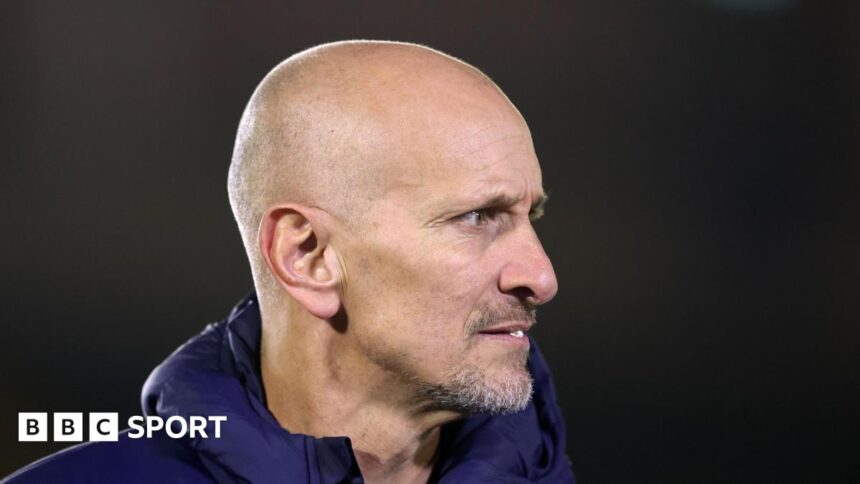
Alan Dickens’ Newcastle Exit: A Turbulent Tenure Ends as Stephen Jones Takes the Reins
The winds of change are howling through Kingston Park once again. In a move that surprises few but clarifies much, the Newcastle Red Bulls have confirmed that head coach Alan Dickens has left the club with immediate effect. This abrupt departure, framed as a mutual agreement to allow Dickens to “pursue other opportunities,” draws the curtain on a brief, turbulent chapter for the Gallagher Premiership side. It marks the second major coaching exit this season alone, plunging the club into a fresh period of transition and handing the reins to former Wales fly-half Stephen Jones for the remainder of the campaign.
A Promotion Born of Chaos: The Dickens Era in Review
Alan Dickens’ journey as Newcastle head coach was never part of the original script. Hired in the summer of 2024 to serve as an assistant under the formidable director of rugby, Steve Diamond, Dickens found himself thrust into the top job after just one game of the season following Diamond’s own sudden departure. From the outset, he was tasked with steadying a ship that had already begun to take on water. The statistics from his tenure paint a stark picture of the challenges he faced: five wins from twenty games in all competitions. This record, a winning percentage of just 25%, underscores a season of struggle for the Red Bulls, who have found themselves mired in the lower reaches of the Premiership table, grappling with inconsistency and a leaky defence.
Dickens, a respected coach with a strong pedigree in the academy and skills coaching spheres, inherited a squad in flux. The shadow of Diamond’s brief but impactful reign, followed by his exit, created an unstable environment. While Dickens was praised for his diligent work ethic and positive relationship with the players, translating that into results on the pitch proved elusive. Key areas of concern included:
- Defensive fragility: A consistently high points-against column plagued the team.
- Inability to close out games: Several promising positions were squandered in the final quarters.
- Lack of a consistent tactical identity: The team often seemed reactive rather than proactive.
With the club announcing Dickens was due to leave at the end of the season, the decision to accelerate his exit suggests a boardroom desire for a clean break and a new voice ahead of a critical summer rebuild.
Stephen Jones: The Interim Solution with a Point to Prove
Stepping into the breach is Stephen Jones, the current senior assistant coach and a man deeply familiar with the setup. The former Wales and Lions fly-half, who earned 104 caps for his country, brings a wealth of experience as a player and a growing reputation as a sharp tactical mind. His appointment as head coach until the end of the season is a logical, if safe, choice for the Newcastle hierarchy. It ensures continuity, commands the respect of the playing squad, and provides a seven-game audition for the permanent role.
Jones’ immediate mandate is clear: instill resilience, sharpen the team’s attacking structure, and build some momentum to carry into the 2025/26 campaign. His deep understanding of the club’s strengths and weaknesses from his assistant role is a significant advantage. However, the challenge is monumental. He must quickly imprint his own philosophy and find a way to galvanize a group whose confidence has likely been dented by a difficult season and yet another mid-term coaching change. All eyes will be on whether Jones can unlock the potential in Newcastle’s backline and forge a more robust game management strategy.
Expert Analysis: Why This Move Makes Sense for Newcastle
From a strategic standpoint, Newcastle’s decision, while harsh on Dickens, is a pragmatic one. Allowing an outgoing coach to see out a season with little left to play for beyond pride can sometimes lead to stagnation. By making the change now, the club achieves several objectives:
Early Assessment of Stephen Jones: These final games serve as a live, high-pressure interview for Jones. The board can evaluate his man-management, in-game decision-making, and ability to motivate, providing crucial data for their end-of-season review.
Clearing the Decks for Summer: It provides unequivocal clarity. Players, agents, and the recruitment team now know definitively that the club is moving in a new direction, allowing planning for next season to begin in earnest without ambiguity.
Injecting a New Energy: A new voice, even an internal promotion, can sometimes provide a short-term bounce. A fresh perspective on training and tactics might be the catalyst for an improved performance in the season’s finale.
However, this episode also raises serious questions about the club’s long-term planning. The revolving door at the coaching level—from Dean Richards to Steve Diamond to Alan Dickens in quick succession—points to a lack of a coherent, sustained vision. For Newcastle to climb the Premiership ladder, they must now commit to a plan and back their chosen leader, whether that is Stephen Jones or an external candidate, with time and resources.
Predictions and What Comes Next for the Red Bulls
The immediate future for Newcastle is a final sprint under Stephen Jones. Expect to see a renewed emphasis on attacking fluency, given Jones’ pedigree as a world-class fly-half. The development of young talents like Louie Johnson and the integration of key ball-players will likely be prioritized as Jones looks to build a platform for the future. Results in these final games, while important for morale, are arguably less critical than the evidence of a coherent style and renewed fight.
Looking ahead to the summer, the club faces a pivotal crossroads. The search for a permanent head coach or director of rugby will be the most significant decision of the off-season. The board must decide if Stephen Jones has done enough to earn the role full-time, or if they will look to the market for a more established name. Key priorities will include:
- Securing the long-term futures of marquee players.
- Strategic recruitment to address clear weaknesses in the squad’s depth and power.
- Establishing a definitive and modern playing philosophy for the entire club to buy into.
For Alan Dickens, his “other opportunities” will likely see him return to a specialist coaching role where his technical acumen can shine, free from the immense pressure of the Premiership hot seat.
Conclusion: A Necessary End, An Uncertain Beginning
The departure of Alan Dickens from Newcastle Red Bulls is the closing of a short, challenging chapter defined by instability. His promotion under duress and subsequent record reflect a club in search of an identity. While his dedication is not in question, the brutal economics of top-flight rugby demand results, and a change became inevitable.
All focus now shifts to Stephen Jones and the club’s hierarchy. Jones has a golden, if daunting, opportunity to state his case. But the larger task lies with the Newcastle board. They must now demonstrate the strategic vision and patience that has been lacking. They must appoint a leader, empower them, and build a sustainable model for success. The Newcastle faithful, renowned for their passion, deserve a project they can believe in—not another false dawn. The Dickens era is over; the true rebuild for Newcastle Red Bulls begins now.
Source: Based on news from BBC Sport.