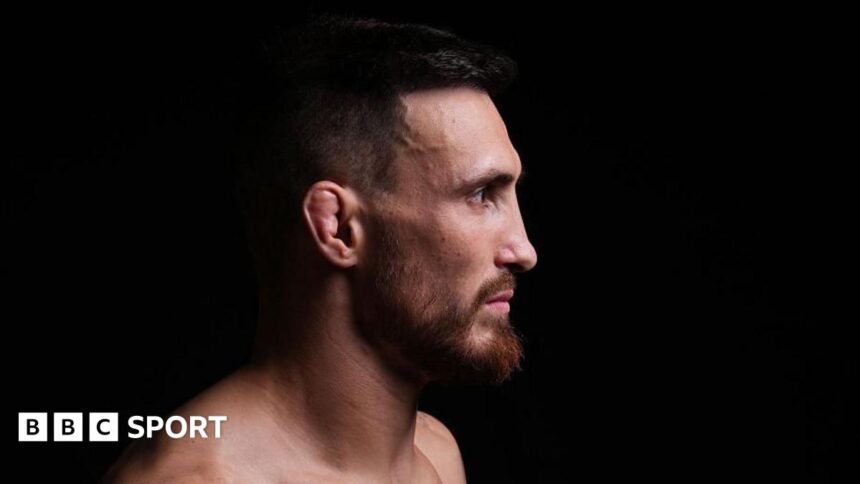
The Unbreakable Baltic Gladiator: How Heart Surgery Forged a UFC Warrior
In the cold, sterile glow of an operating room, a 19-year-old’s dreams hung by a thread—or more precisely, by a series of wires fed through his veins. Modestas Bukauskas, a fledgling athlete with the world of combat sports ahead of him, was awake. He stared at the ceiling, acutely aware of the doctors maneuvering catheters to correct a faulty heart, a procedure that would stretch for almost five agonizing hours. This was not a setback before the journey began; it was the forge in which the ‘Baltic Gladiator’ was truly tempered. From the darkest nights of medical uncertainty to the bright lights of the UFC octagon, Bukauskas’s path is a testament to a resilience that transcends sport.
A Heartbeat Out of Time: The Diagnosis That Threatened a Dream
For Modestas Bukauskas, the irregular rhythm wasn’t new. Since childhood, heart palpitations had been an unsettling part of his life, a sporadic flutter he learned to ignore. But as his athletic ambitions crystallized into grueling MMA training sessions, the condition worsened. The very engine of his potential—a fighter’s heart—was betraying him. “Many could have lived with the condition,” but Bukauskas was not just anyone. A life of cautious moderation was not an option for a young man determined to test his limits against the world’s best. The diagnosis: a cardiac arrhythmia requiring an ablation procedure. The risk: his career, before it even started.
The surgery itself was a unique trial. Remaining conscious, Bukauskas was an active participant in his own fate, forced to confront his physical vulnerability in the most visceral way. This was not an opponent he could strike or submit. It was a battle of stillness, of mental fortitude, laying a psychological foundation far tougher than any physical training camp could provide.
From Hospital Bed to Cage: The Forging of a Gladiator
Emerging from that ordeal, Bukauskas carried a new perspective. The professional debut he made in 2015 wasn’t just the start of a career; it was a victory lap for a spirit that refused to be broken. Each walk to the cage was a privilege denied to him in that operating room. His fighting style, a punishing blend of Muay Thai and kickboxing honed in the UK, became an expression of gratitude for a body now functioning at full capacity. The stats—19 wins and six losses across a career spanning multiple continents—tell only part of the story. The subtext is a man fighting with nothing to lose, because he had already faced the ultimate loss.
His resilience was tested again not by health, but by fate. After a promising UFC stint was interrupted by a severe knee injury and subsequent release, many fighters fade. For Bukauskas, this was merely another dark night. He rebuilt, dominated the European circuit, and fought his way back to the UFC roster in 2023. This UFC comeback story is unprecedented not for its trajectory, but for its bedrock: a profound, hard-won indifference to adversity.
Key Attributes of the Baltic Gladiator’s Style:
- Crippling Leg Kicks: A staple of his attack, used to systematically break down opponents’ mobility.
- Clinch Dominance: Utilizing his length and Muay Thai background to control posture and deliver damaging knees.
- Steel-Cored Composure: A psychological edge born from surviving far greater pressure than a three-round fight.
- Relentless Pressure: A forward-moving style that symbolizes his life’s approach: never back down.
Expert Analysis: The Psychological Edge Forged in Adversity
From a sports psychology standpoint, Bukauskas possesses an intangible weapon. Fighters often speak of “pre-fight nerves,” but how do those butterflies compare to the fear of a heart procedure? Combat sports mental toughness is built through overcoming hardship, and Bukauskas’s hardship is foundational. This experience has likely created a unique compartmentalization; octagon pressure is situational, not existential. When facing an opponent’s onslaught, he can access a deep well of calm, knowing he has endured worse. This isn’t bravado, but a settled, unshakeable confidence. His fighting spirit isn’t just about aggression; it’s about the absolute certainty that he can withstand anything, because he already has.
Furthermore, his journey instills a relentless work ethic. Training with an injury is one thing, but training with the gift of a healthy, capable body after fearing it might be taken away? That fuels a gratitude that translates directly into discipline. Every sprint, every sparring round, is a bonus round he wasn’t guaranteed.
Future Predictions: How Far Can the Gladiator Go?
Predicting the future in the volatile UFC light heavyweight division is a challenge, but Bukauskas’s trajectory points upward. His game is continually evolving, adding wrestling defense and grappling acumen to his striking base. More importantly, his narrative is one of continuous growth through failure. Bukauskas UFC potential is now less about raw talent and more about this hardened mindset meeting technical refinement.
We can anticipate Bukauskas becoming a formidable gatekeeper to the division’s top 15, a nightmare matchup for any prospect who lacks his depth of character. A title shot is a long road for any fighter, but for Bukauskas, the length of the road is irrelevant. He has already run a marathon before most fighters even lace their boots. His career resilience suggests he will consistently outperform expectations, pulling off victories in fights where he is counted out. He is the embodiment of the dark horse, fueled by a fire that was lit not in a gym, but in a hospital.
Conclusion: More Than a Fighter, A Testament to the Human Spirit
Modestas Bukauskas’s story transcends the typical sports comeback tale. It is not simply about returning from injury or a losing streak. It is about a man who stared into the abyss of his own mortality as a teenager and used that vision to forge an unbreakable will. The ‘Baltic Gladiator’ moniker is perfectly earned—he battles with the ancient stoicism of a warrior, but his true armor is invisible, forged in the fire of personal crisis. His fights in the octagon are merely the public manifestation of a private victory won years ago on an operating table. In a sport that sells brutality, Bukauskas represents its purest opposite: heart. And for him, that word is not a cliché. It is the scarred, steadfast muscle that powers every strike, every step, and his unforgettable journey from darkest night to bright lights.
Source: Based on news from BBC Sport.